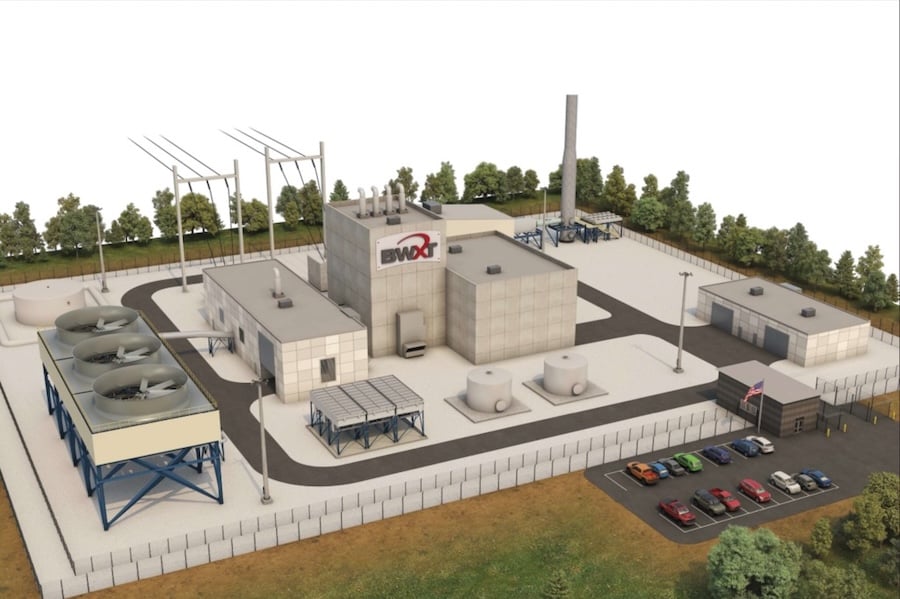
The Army aims to install more than 20 microreactors of various sizes across five bases under Janus, Geveden said. At Fort Campbell, BWXT and its partners are still working out what the project will cost, how to deliver it and how to run the plant.
BWXT’s reactor is designed to produce 22 megawatts of electricity and 75 megawatts of heat, and can be built in a factory and shipped by rail. “You can run large military bases with that,” Geveden said.
BWXT plans to make the TRISO fuel for Janus in Lynchburg, Virginia, on the same production line it has used for Project Pele. Geveden said the line had been able to produce about 200 kilograms a year and that BWXT could at least quadruple that output by adding capacity and changing how the fuel is made.
Geveden said the Army and the Defense Innovation Unit designed Janus to help build a commercial market for microreactors by giving developers a government customer. He said potential projects for BWXT’s reactor in Wyoming, Poland and Canada were moving in parallel behind Fort Campbell.