


The capability was demonstrated during a recent ground test, where sensor data was transmitted to a missile using Link 16 messaging. The software is part of GA-ASI’s Quadratix enterprise and has been validated in a Systems Integration Lab ahead of a live-fire demonstration planned for later in 2025.
“We continue to build on the innovative capabilities of SeaGuardian for the U.S. Navy,” said David R. Alexander, President of GA-ASI. “The targeting we’ve demonstrated will be especially valuable in contested environments, enabling an unmanned asset like SeaGuardian to be used for higher-risk missions instead of putting manned assets at risk.”
This new functionality expands the mission set of SeaGuardian, allowing it to operate as both a sensor and a shooter in complex maritime environments. GA-ASI previously demonstrated the aircraft’s targeting capabilities during the U.S. Navy’s RIMPAC 2024 exercise.
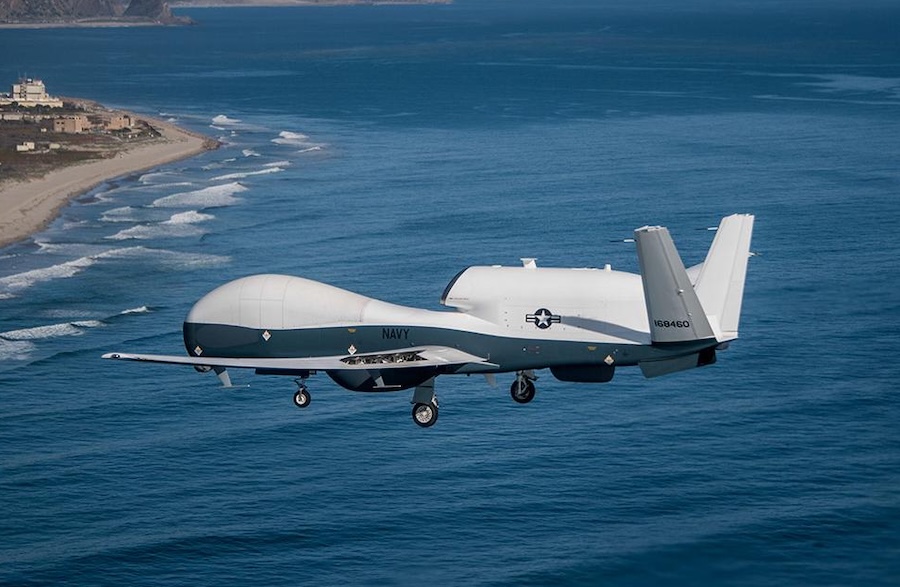
SeaGuardian, derived from the MQ-9B SkyGuardian, is the first unmanned aircraft system to offer multi-domain Intelligence, Surveillance, Reconnaissance, and Targeting (ISR&T) as an internal payload. It supports fleet operations by scanning both the ocean’s surface and its subsurface.
With demand growing, GA-ASI expects increased interest in the MQ-9B SeaGuardian, which delivers high-end maritime capabilities at a significantly lower cost than traditional manned platforms. The aircraft continues to position itself as a versatile and cost-effective solution for modern naval operations.






![CENTCOM chief says U.S. forces remain ready after ‘generational’ defeat of Iran despite fragile ceasefire [VIDEO]](https://defence-industry.eu/wp-content/uploads/2026/04/centcom-chief-says-us-forces-remain-ready-after-generational-defeat-of-iran.jpeg)
![Team Lynx details XM30 infantry fighting vehicle concept as U.S. Army program nears key decision [VIDEO]](https://defence-industry.eu/wp-content/uploads/2026/04/team-lynx-details-xm30-infantry-fighting-vehicle-concept.jpeg)