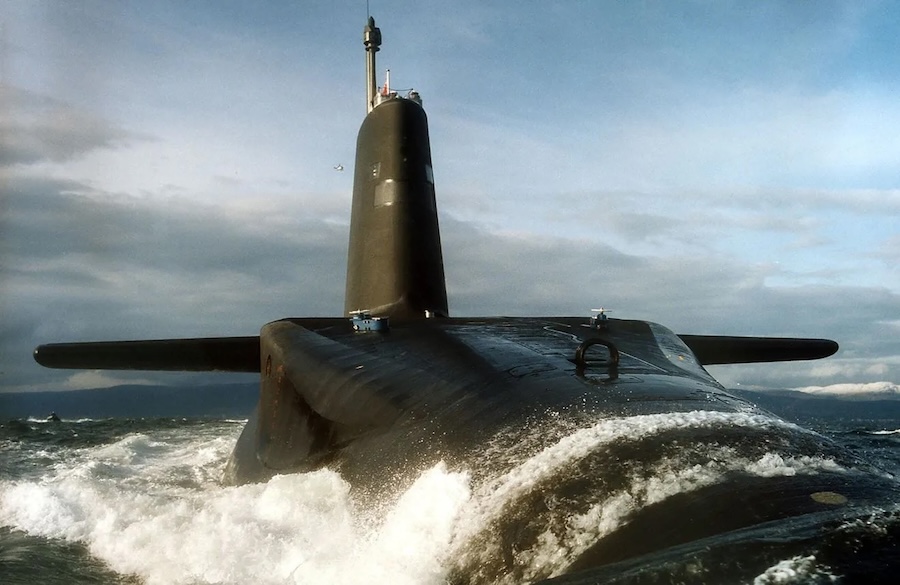


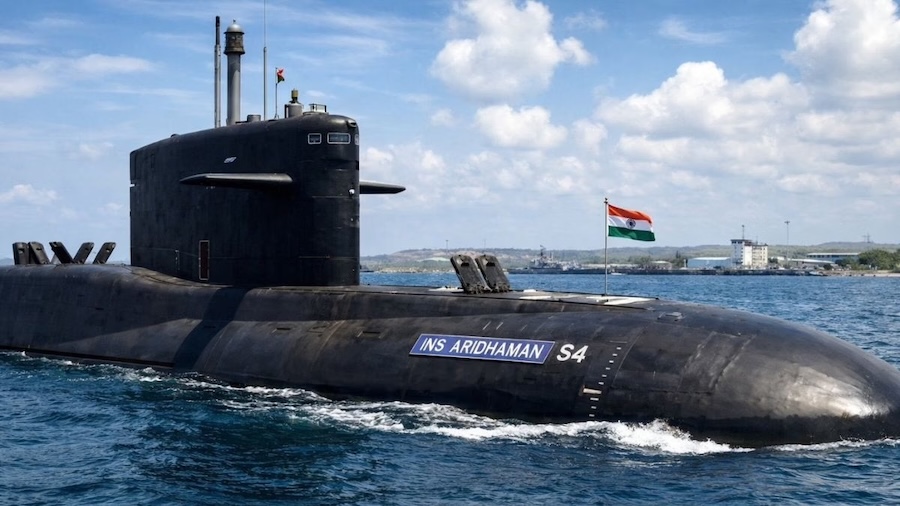
The induction of INS Aridhaman was not officially announced, but India’s Defence Minister Rajnath Singh indicated the development on social media and attended a brief ceremony. The submarine is part of India’s Advanced Technology Vessel programme and is designed as a strategic platform carrying nuclear-capable ballistic missiles.
INS Aridhaman represents an evolution in India’s SSBN fleet, following INS Arihant and INS Arighaat. Unlike earlier units with a displacement of around 6,000 tonnes and four missile launchers, the new submarine displaces approximately 7,000 tonnes and is equipped with eight vertical launch systems.
The vessel measures about 130 metres in length and is powered by a domestically developed CLWR-B1 nuclear reactor. It is capable of launching multiple ballistic missile types, including K-4 and K-5 missiles with ranges of up to 3,500 km and 8,000 km respectively, as well as shorter-range K-15 Sagarika missiles.
As part of India’s Strategic Forces, INS Aridhaman contributes to the country’s nuclear triad. A fourth submarine in the programme, INS Arisudan, is under construction and has reportedly begun sea trials.
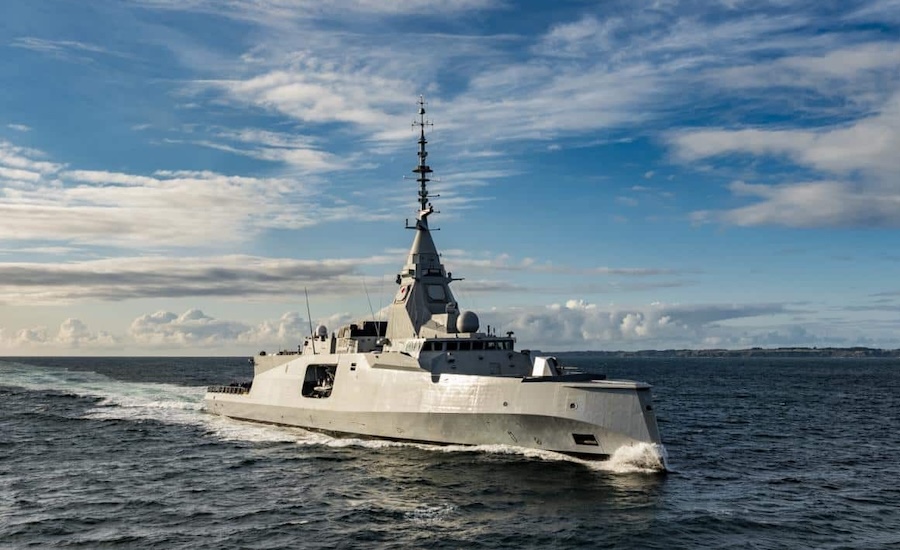
Alongside the submarine development, the Indian Navy also commissioned INS Taragiri, a Nilgiri-class (Project 17A) guided missile frigate. The ceremony took place publicly in Visakhapatnam, highlighting continued expansion of the surface fleet.
INS Taragiri is the fourth ship of its class and the third built by Mazagon Dock Shipbuilding Ltd. The vessel was launched in September 2022 and continues a lineage that includes an earlier British-built Leander-class frigate of the same name.
India has now inducted four of the seven planned Nilgiri-class frigates. Another vessel in the series, INS Dunagiri, has recently been delivered by Garden Reach Shipbuilders & Engineers Ltd and is expected to enter service soon.
The simultaneous addition of both a strategic submarine and a modern frigate reflects India’s ongoing efforts to strengthen its naval capabilities. Officials have indicated that these developments form part of a broader strategy to enhance deterrence and operational readiness.