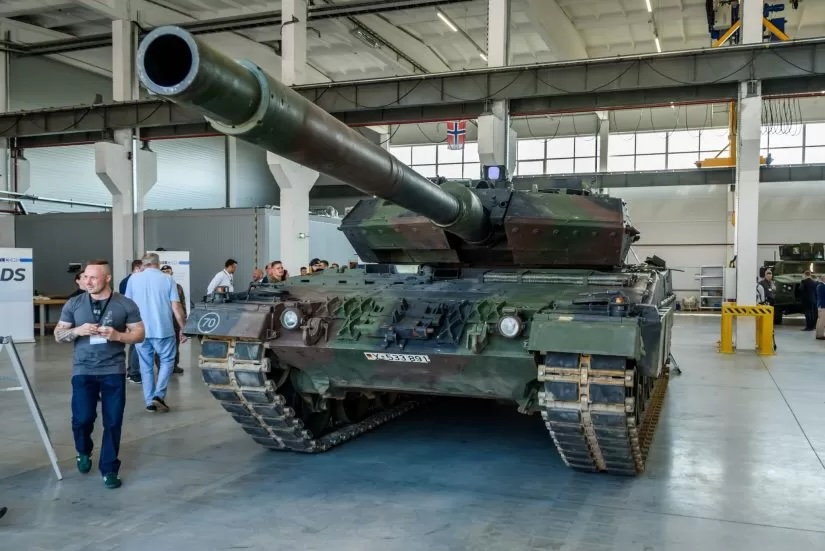
The programme has also been placed on Lithuania’s List of Large Projects. Vilnius considers it one of the country’s key defence initiatives aimed at strengthening national and European defence capabilities.
The assembly facility will be located in the Kaunas Free Economic Zone. Military equipment servicing company Lithuania Defense Services (LDS) plans to invest about EUR 50 million in the project and create up to 80 new jobs by 2028.
LDS is a joint venture between KNDS Deutschland and Rheinmetall Landsysteme. The company supports the operation of German-made combat vehicles used by Lithuania and allied countries and has carried out repairs of equipment supplied by partners to Ukraine since 2022.
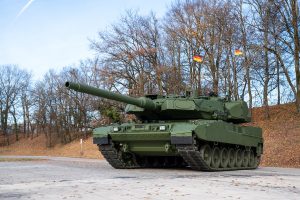
Lithuania ordered Leopard 2A8 tanks in December 2024, with the contract covering the delivery of 44 vehicles. Earlier reports indicated that 41 of these tanks would be assembled in Lithuania, with the first expected to leave the plant in early 2028 and the final deliveries planned by the end of 2030.
“For the first time, some of the advanced NATO-standard tanks will be assembled in Lithuania, and the infrastructure created will ensure their long-term technical maintenance and readiness. This strengthens the Lithuanian Armed Forces, promotes the growth of the defence industry and contributes to increasing Europe’s defence capabilities,” said Minister of National Defence Robertas Kaunas.
The infrastructure developed for tank assembly will also support long-term servicing and operational readiness of Leopard 2 tanks. The project is therefore intended to reinforce both Lithuania’s military capabilities and its domestic defence industry.
“This project is not only a significant investment in Lithuania’s defence industry, but also an important step in strengthening our state’s security. Tank assembly in Lithuania increases the resilience of supply chains, reduces dependence on external suppliers and creates long-term added value for the national economy. At the same time, it is a clear signal that the state is consistently helping to implement strategically important investments by creating conditions for them to grow and create high-value jobs in Lithuania,” said Minister of Economy and Innovation Edvinas Grikšas.
According to the ministry, the changing geopolitical situation and rising security threats in the region have made the strengthening of national defence industry capabilities a strategic priority. The ability to secure part of critical defence capabilities domestically is expected to enable faster equipment readiness, improve interoperability with NATO allies and support Lithuania’s long-term resilience.
The development is notable given the relatively limited size of Lithuania’s tank order. Despite this, the country has secured industrial benefits in the armoured vehicle programme, primarily related to assembly and operational support.