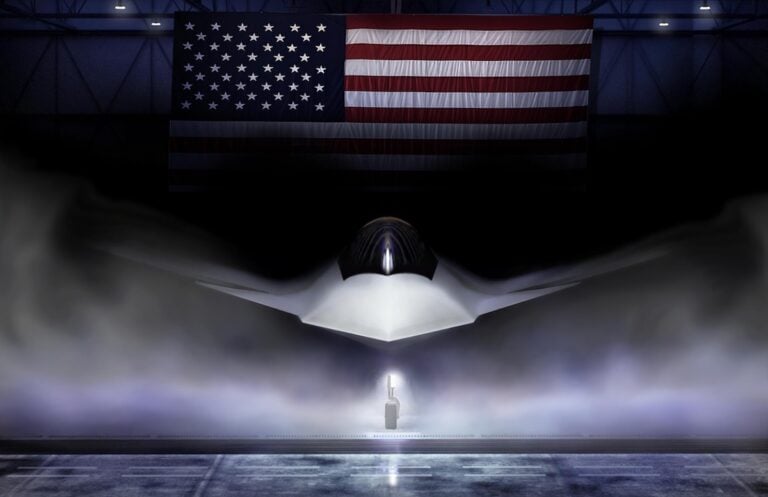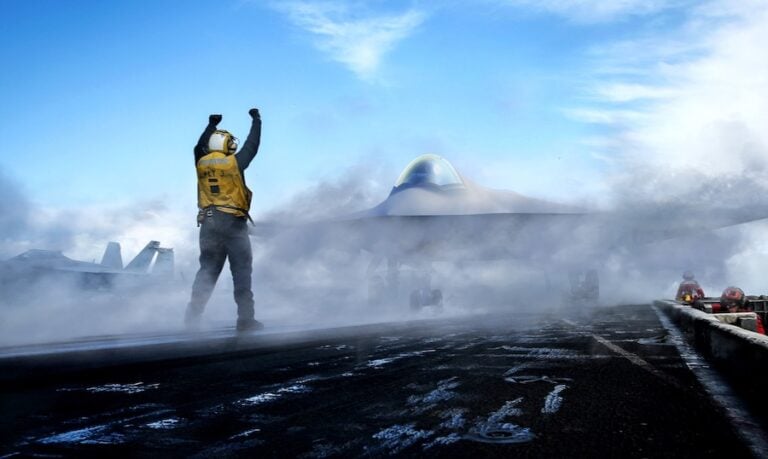
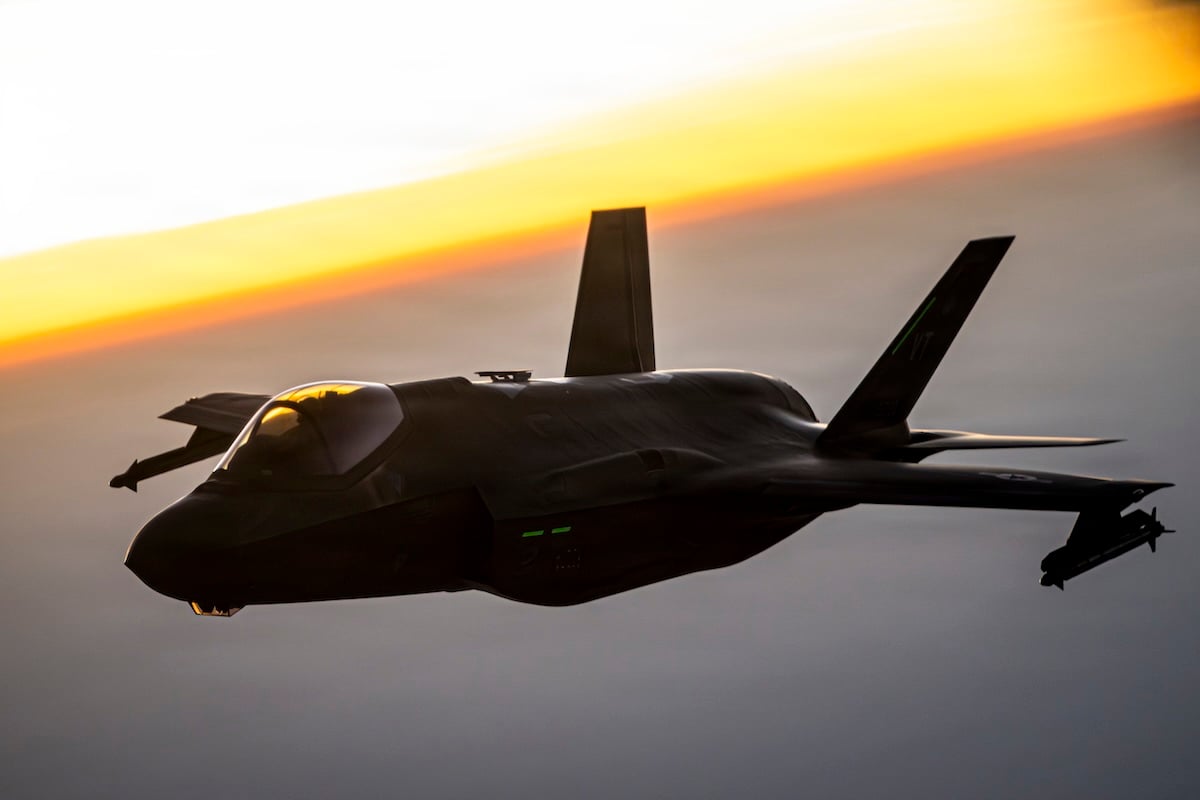
Taiclet outlined the ambition during the company’s third-quarter earnings call on October 22, placing further F-35 development alongside F-22 upgrades and the Vectis autonomous aircraft program. The aim, he said, is to increase the air combat power available to the United States and its allies at the most efficient cost.
“The second part of the F-35 solution is that will now enable us to add in sixth-generation key technologies and try to get to 80% of what a sixth-generation clean-sheet aircraft would look like at 50% of that clean-sheet aircraft cost,” Taiclet said. “That is something we actually think we can do at Skunk Works.”
Taiclet did not specify which technologies would be incorporated, when they would enter service or how the capability and cost targets were calculated. He presented the figures as an objective for Lockheed Martin’s development work.
The F-35 would account for the bulk of air combat power, particularly in air-to-ground missions, under the approach Taiclet described. Giving the program a longer planning horizon would help make it more efficient while supporting additional capabilities, he said.
Taiclet said the announced procurement arrangement establishes a path to 850 U.S. F-35s over ten years, with allied orders supporting total production of 156 aircraft annually. He said the benefits would extend through the supply chain, which accounts for 60% or more of the aircraft.
Longer commitments would give suppliers greater confidence to hire workers, improve factories and update software, Taiclet said. Better supplier performance would, in turn, help reduce the costs Lockheed Martin incurs from late deliveries and defective components.
The proposed contracting model would allow manufacturers to retain financial gains from efficiency improvements, with prices adjusted through an agreed escalation mechanism, he said. Taiclet argued that this would also encourage investment in testing equipment needed to introduce new capabilities more quickly.
“Then on modernization, when we input new capabilities, we will be able to have improved and enhanced test capabilities for us and our suppliers, because we can invest in those now too without risking price reductions later,” he said. “We will have faster modernization as a collective because of being able to do that.”
The arrangement would also cover sustainment, with parts purchasing pooled across production and maintenance requirements to improve pricing, Taiclet said. He identified fleet readiness as a central part of the agreement.
Chief Financial Officer Evan Scott said strong F-35 production performance provided a foundation for a potential ten-year procurement contract. He said a Lot 20 agreement signed before year-end would improve results beyond the company’s current financial forecast, although that award was not assumed in its guidance.
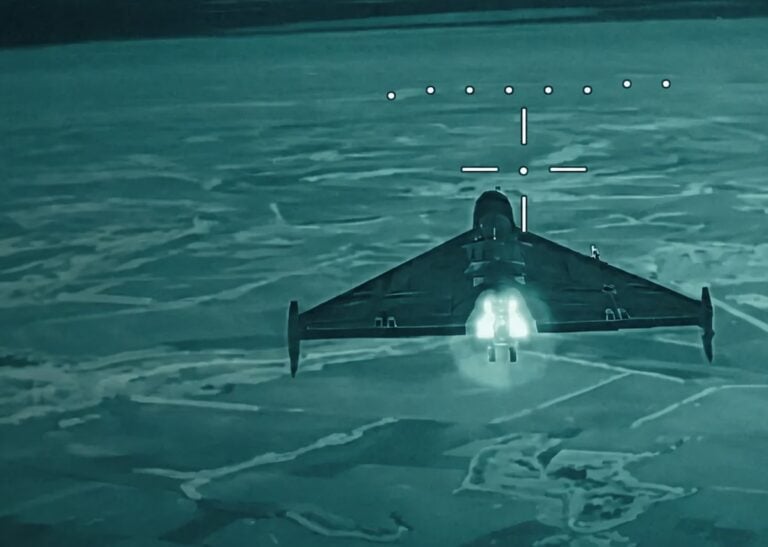
Alongside the F-35 effort, Taiclet described F-22 upgrades involving sensors, a distributed aperture system, data links and beyond-line-of-sight capabilities. Lockheed Martin is also funding five Vectis autonomous aircraft, which he identified as the third element of the company’s air combat strategy.