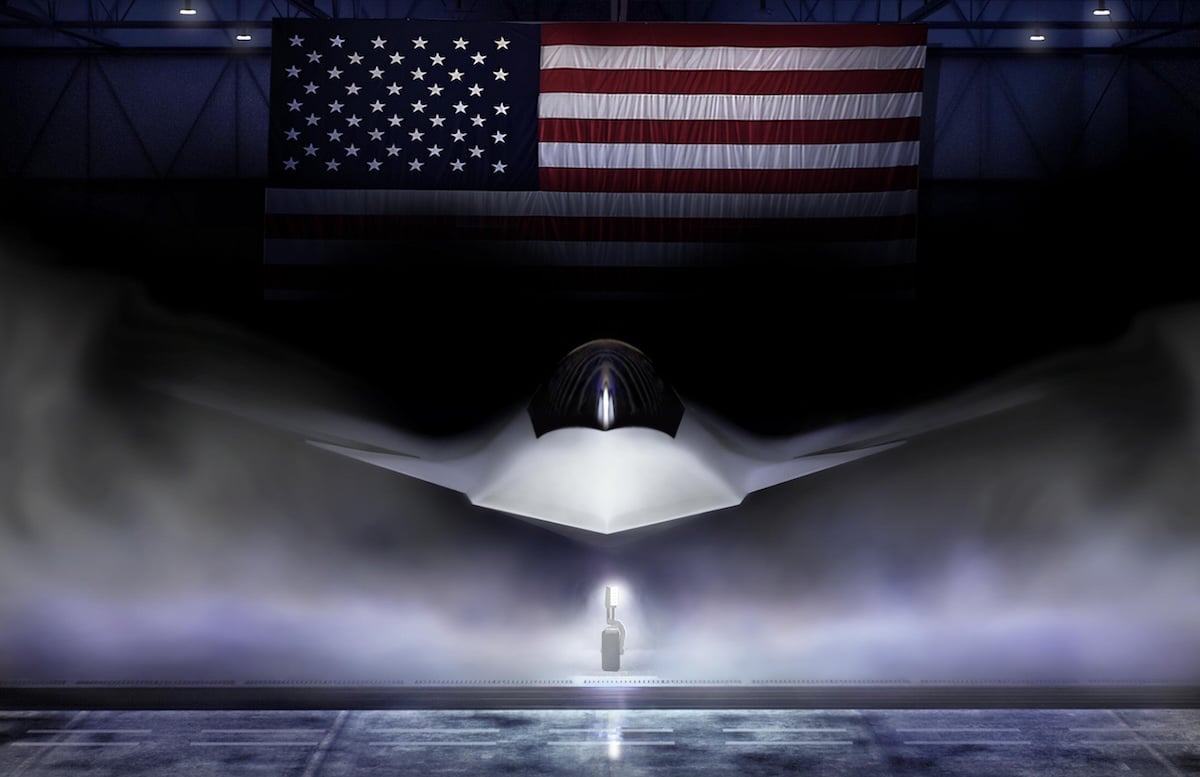
Boeing received the engineering and manufacturing development contract in March 2025 for the fighter, which is intended to replace the F-22. Its first flight is planned for 2028, although the schedule depends on development progress, technological readiness and testing.
The F-47 belongs to the Next Generation Air Dominance program, which also includes Collaborative Combat Aircraft drones and advanced electronic warfare systems. The drones are intended to work alongside crewed aircraft.
The fighter is expected to exceed Mach 2 and have an operational radius of more than 1,000 nautical miles. That range would be particularly valuable in the Indo-Pacific, where bases can be far from potential combat areas.
China’s development of fighters, long-range missiles and integrated air defenses presents additional challenges for U.S. forces in the region. Longer range would give commanders greater flexibility in basing aircraft and could reduce aerial refueling requirements on some missions.
Less dependence on refueling would matter when tankers and other support aircraft face the risk of attack. The F-47 is also intended to be more survivable than fifth-generation fighters in heavily defended airspace.
Its design combines advanced stealth with sensors, electronic warfare capabilities and integrated mission systems to reduce detection risks and improve threat identification. An open systems architecture is intended to make new software, sensors and other technologies easier to introduce.
Upgrading existing fighters has often proved complex and time-consuming. The F-22 has received successive radar, communications and weapons updates, while the F-35A is undergoing modernization through Technology Refresh 3 and Block 4.
Boeing will also produce the Navy’s sixth-generation carrier-based fighter under the F/A-XX program, following the Department of War’s September 29 announcement selecting its aircraft. The new fighter will replace F/A-18 Super Hornets operating from U.S. aircraft carriers.
Boeing said it had received an initial multibillion-dollar order to produce the first batch of F/A-XX aircraft. The company is therefore responsible for both the Air Force’s F-47 and the Navy’s next-generation carrier fighter.
Construction continues on Boeing’s secure manufacturing facility in St. Louis, which it describes as the largest of its kind in the United States. The company says the facility will be part of the world’s most advanced, all-digital aerospace design and manufacturing system.
Unofficial reports indicate that the Air Force plans to buy at least 185 F-47s, but the final quantity remains uncertain. Cost is a contentious issue, with estimates putting the price above $300 million per aircraft, compared with approximately $80 million for an F-35A.