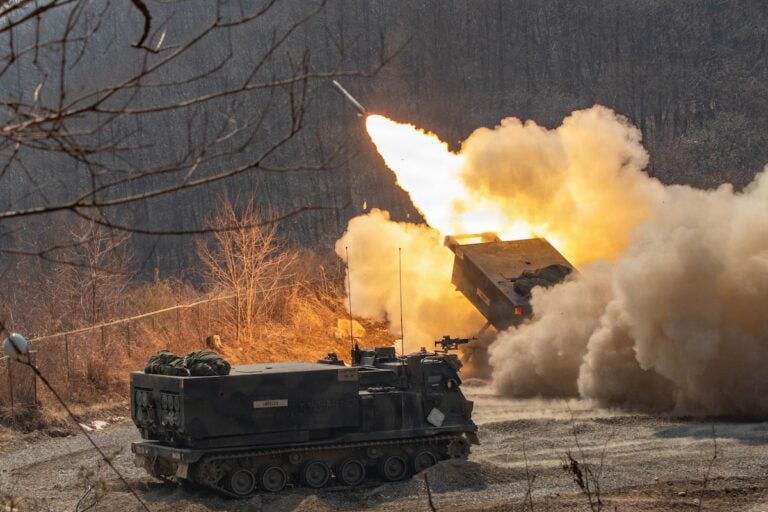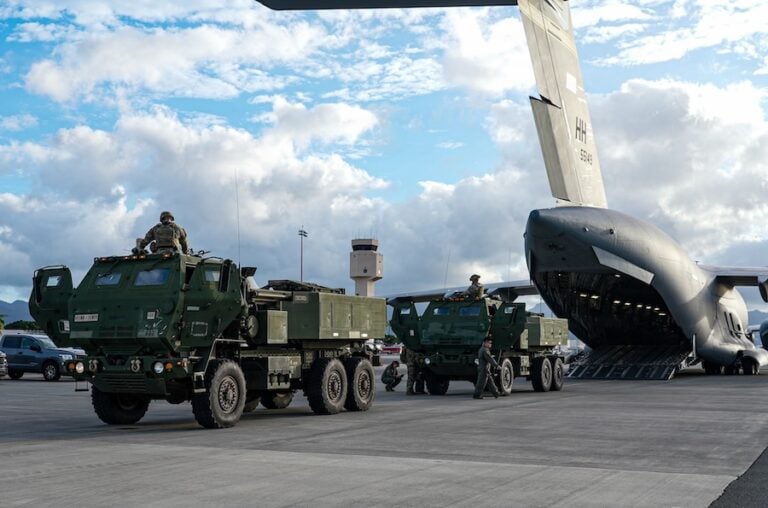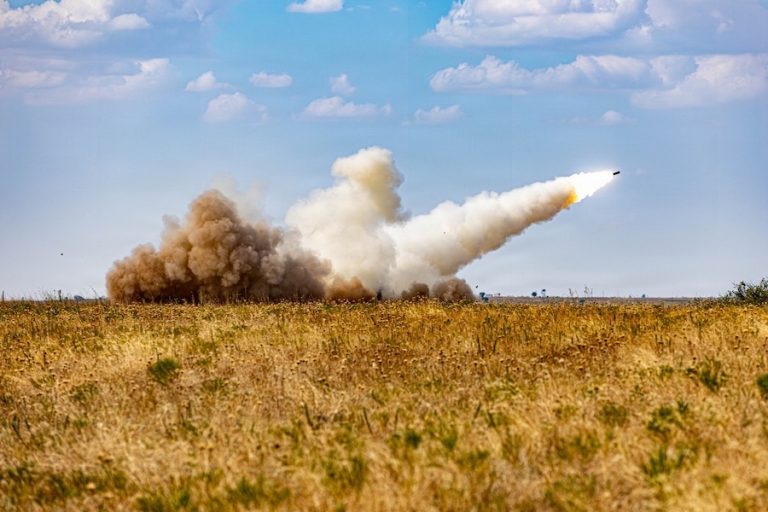
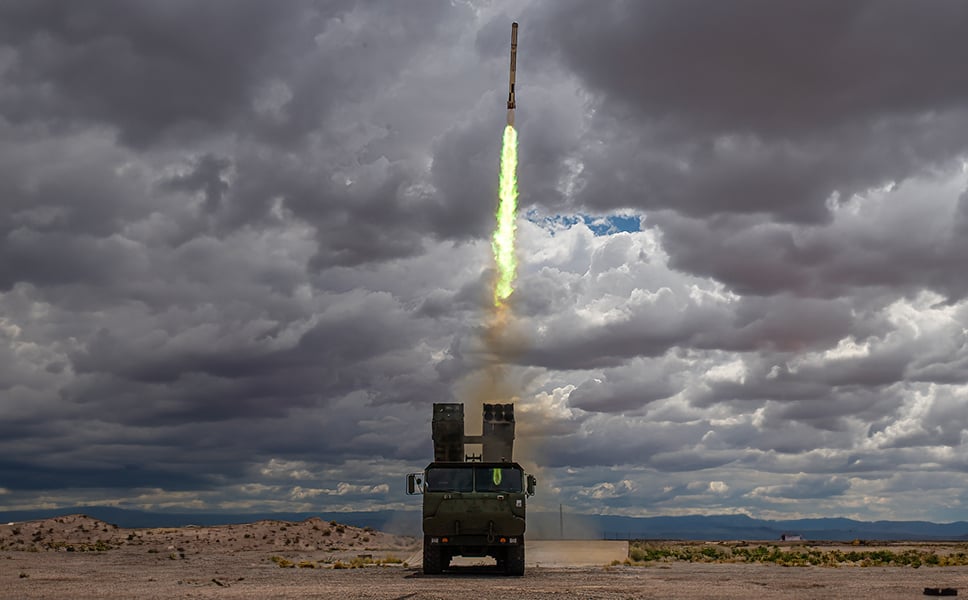
The November test included a full salvo and demonstrated the rocket’s range, trajectory, accuracy and marking-payload effects, the company said. It followed a second successful test in August, when JR3 rounds were launched from a HIMARS.
JR3 is being developed as a potential replacement for the current Reduced Range Practice Rocket for the U.S. Army and international partners. Its 24-round pod and new training round are designed to support high-volume firing exercises across different environmental conditions.
“Our new training round offers a scalable, very affordable solution built on mature rocket motor technology,” said Sabrina Barnes, vice president, Lockheed Martin Precision Fires Rockets. “With a 24-round rocket launch pod, our JR3 system meets the Army’s demand for higher training volume and lower cost without sacrificing performance.”
The design combines a low-cost motor based on mature rocket technology with an adaptable payload. Lockheed Martin said the reloadable tubes and reusable pods would reduce the cost per training round and allow repeated training cycles.
The company also designed JR3 for realistic live-fire drills on constrained ranges, during the day or at night and at multiple locations. Those features are intended to broaden the opportunities available to launcher crews without limiting training to a single location.
Lockheed Martin did not provide a unit price or quantify the expected savings in its announcement. The latest test demonstrated the system’s potential to provide affordable, scalable training, according to the company.
JR3’s modular architecture could also support future efforts to develop low-cost rockets suitable for mass production, Lockheed Martin said. For the current program, the focus remains on a training round for Army and international launcher crews.