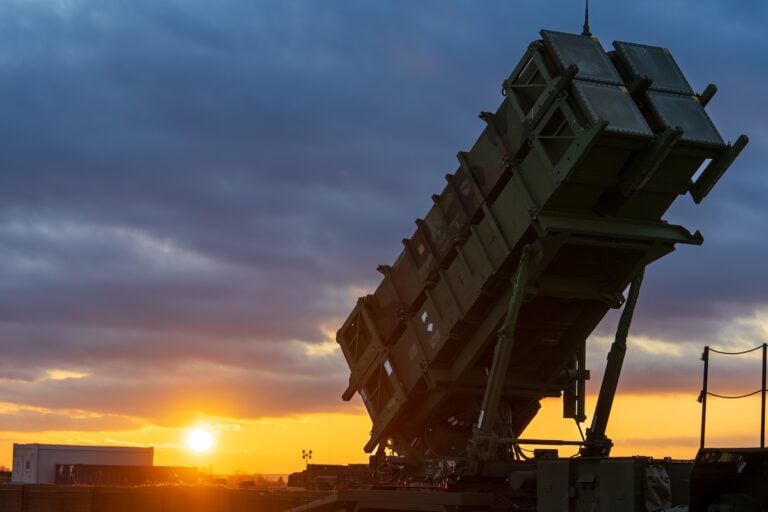
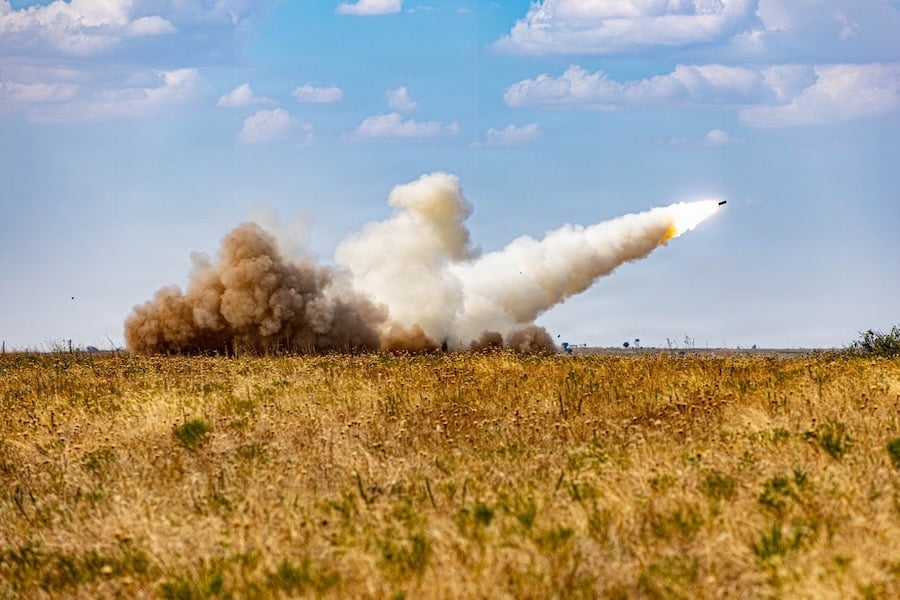
The training placed the battalion’s soldiers in demanding tactical conditions while the unit managed maintenance and staffing constraints. Several soldiers assumed launcher chief and gunner positions for the first time, giving junior leaders greater responsibility during simulated and live-fire missions.
“I feel that my battery did very well on this certification/qualification considering some of our maintenance and manning constraints,” said Army Capt. Rachele Smith, Bravo Battery commander. “We have mostly new leaders within our formation and some Soldiers stepping up to fill chief and gunner roles, so this was their first time having their feet to the fire.”
Smith required platoon leaders to meet operational timelines and complete key tasks under conditions intended to reflect how the unit would fight. The section-level qualification established the foundation for more complex platoon and battery training planned for the coming months.
“Our goal was to keep this training as tactical and realistic to how we’d fight as possible, so I was hard on the platoon leadership to stick to our hit times and key tasks,” Smith said. “The great part about these section qualifications is that it builds the training foundation for the battery and allows us to progress into our platoon and battery collective training in the upcoming months.”
While launcher crews refined their firing procedures, the battalion’s Headquarters and Headquarters Battery tested its ability to provide initial medical support during combat operations. On Aug. 27, medics established an aid station after dark and treated simulated blast trauma and severe hemorrhages under unscripted conditions.
“Role 1 training is beneficial to our medical section because it allows us to train as we would fight,” said Army 1st Lt. Monique Pilcher, battalion field medical assistant and medical exercise training lead. “It builds our ability to rapidly establish, operate and sustain a Role 1 capability while developing proficiency in casualty treatment, triage, evacuation, medical logistics and team coordination.”
The medical section was working with a new roster, making rehearsals central to building coordination among its personnel. The validation tested whether the team could treat and evacuate casualties while maintaining medical logistics in limited visibility.
“Most importantly, it gives our soldiers the opportunity to rehearse their individual responsibilities as part of a cohesive medical team, so when we encounter a real-world casualty or [mass casualty], we can respond quickly, confidently and effectively,” Pilcher said. “Rehearsals were very important due to having a brand-new team of medics training for the first time.”
Fire direction centers and signal specialists supported the effort by transmitting mission data and maintaining tactical networks. Their work connected the launcher, command and medical elements required for coordinated battlefield operations.
The battalion will next advance to Artillery Table XII platoon collective qualifications, shifting the focus from individual sections to synchronized platoon-level operations. Launcher crews, fire direction centers and support personnel will be required to integrate, communicate and operate together under tactical command.