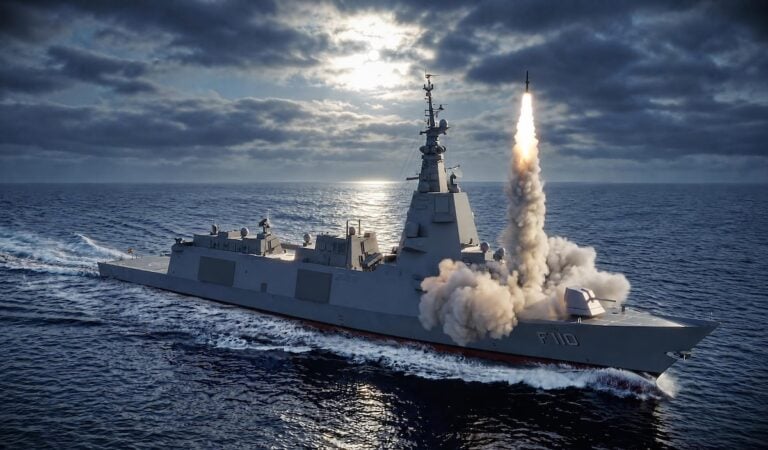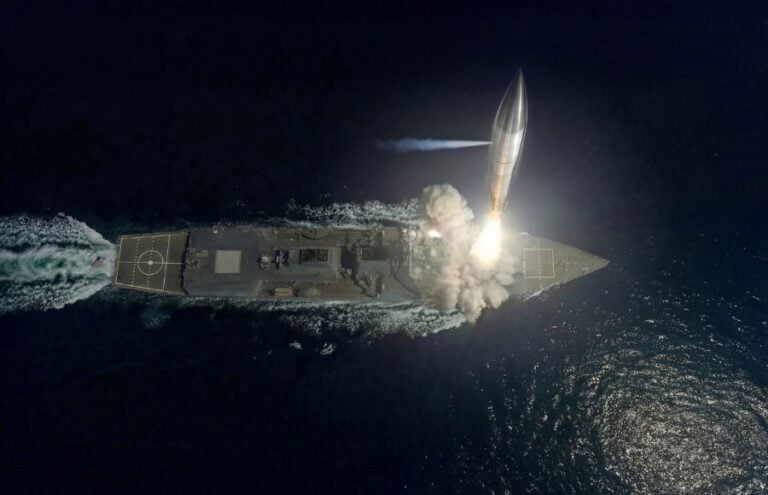
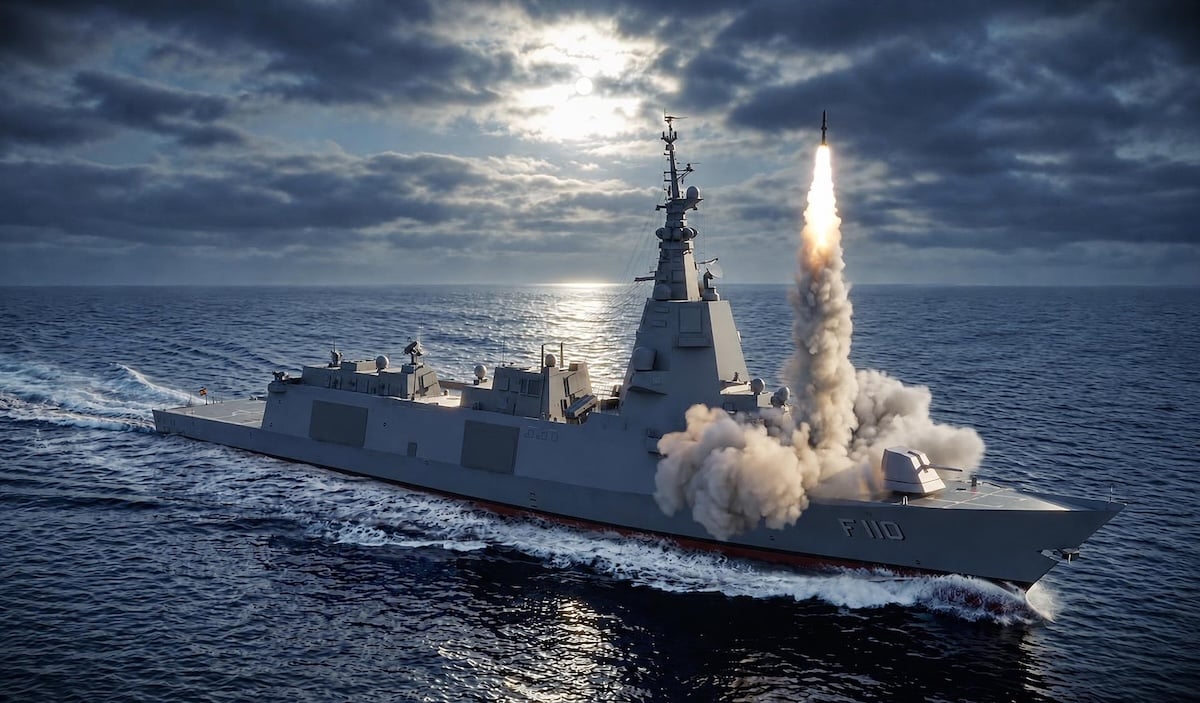
Navantia is building the current F-110 frigates with Lockheed Martin’s AN/SPY-7(V)2 radar and Aegis Combat System. The Spanish shipbuilder recently launched the F-112 Roger de Lauria as part of a plan to launch one frigate a year.
Lockheed Martin and Navantia have conducted the first live tracking exercise with the F-110’s radar. The next steps include integrating the radar with the International Aegis Fire Control Loop on several F-110 frigates and at a land-based test facility.
Spain first introduced Aegis air defense on its F-100 frigates, and Lockheed Martin says the system is being fielded on more than 120 ships across six countries. The company says a common interface allows Spain’s frigates to combine SPY-7 radar data with information from allied ships, aircraft and NATO command centers.
The SPY-7 is built from modules, so radar capacity can be increased by adding modules without redesigning the system. Lockheed Martin says the radar uses polarization diversity to help distinguish complex threats.
In separate live-fire exercises, SPY-7 technology detected and tracked threats and supported engagements against multiple targets at once, according to Lockheed Martin. The company lists defense against ballistic and hypersonic threats among the radar technology’s roles.