
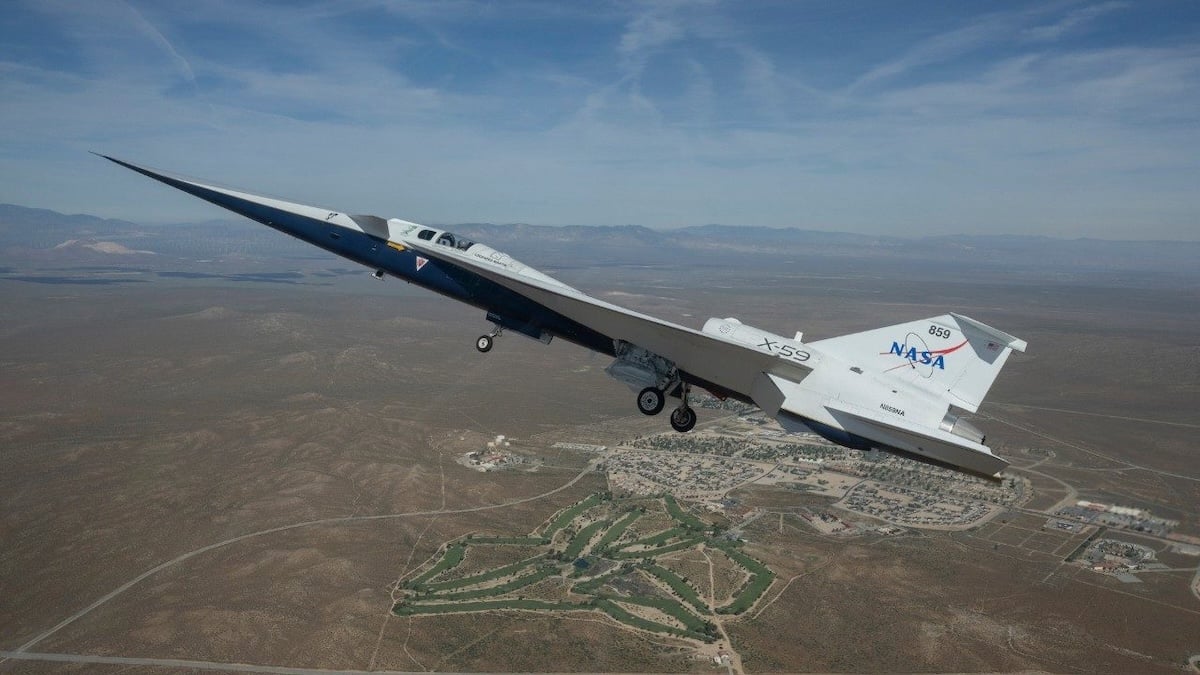
The X-59 is designed to fly faster than sound while turning the loud sonic boom into what NASA calls a quieter “sonic thump.” Through its Quesst mission, NASA aims to gather data that could help make commercial supersonic flights over land possible.
Lockheed Martin helped design the aircraft and led its construction and testing. The company retained ownership as flight tests continued while it worked with NASA on the aircraft acceptance review, a key step in closing out the contract.
The X-59 made its first flight on Oct. 28, 2025, from Lockheed Martin Skunk Works’ facility in Palmdale, California, to Edwards. It has been based at Armstrong since then.
“To someone outside the flight test, this might seem like a subtle change,” said Cathy Bahm, Low Boom Flight Demonstrator project manager. “But for NASA, this is another big moment for the X-59 showing how far we have come, how much our hard work has paid off, and how much closer we are to providing the data to hopefully make commercial supersonic flight over land a reality.”
NASA has also announced the X-70, which will join the X-59 in its experimental aircraft program. The agency says the projects will expand its capacity to test emerging aviation technologies in flight.