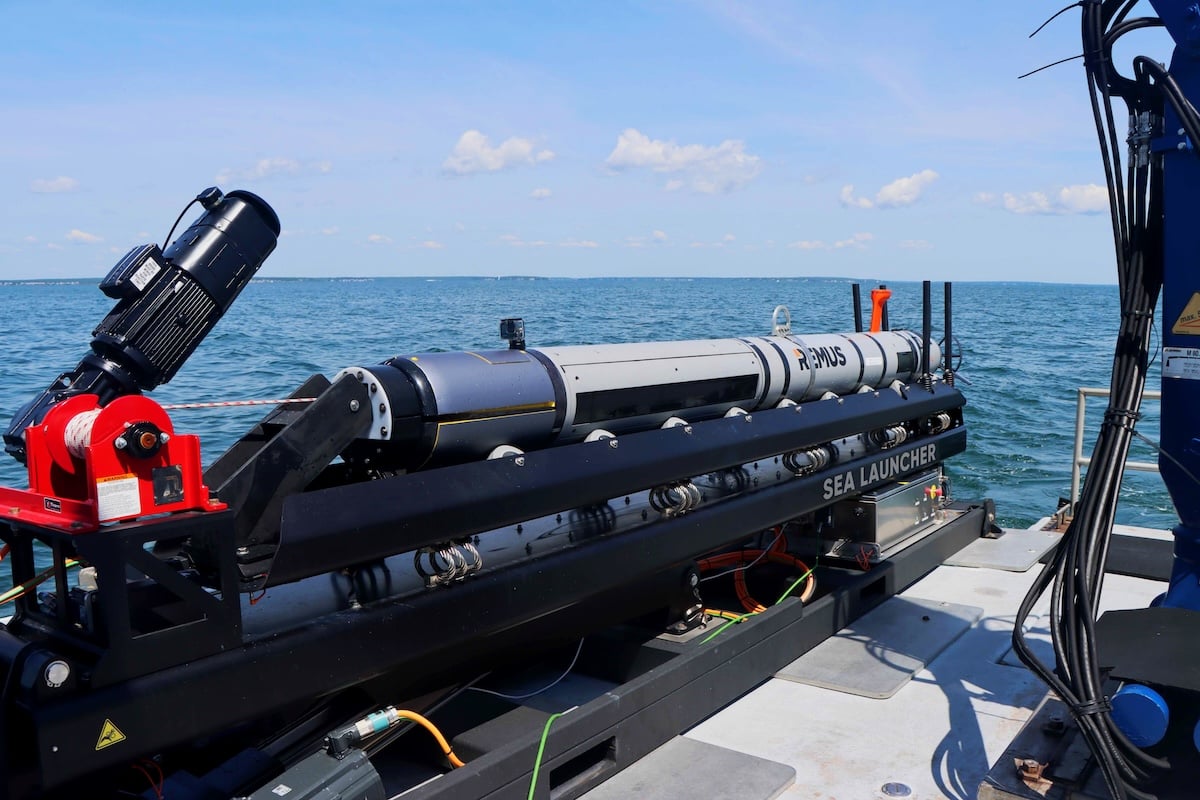
The UK’s National Armaments Director Group chose HII after an international competition. The contract covers the vehicles, HII’s Sea Launcher automated launch and recovery systems, other equipment and support services.
Support work previously carried out overseas will move to Britain, where HII expects it to improve equipment availability and support 15 jobs. The Ministry of Defence said Portchester would be among the locations to benefit.
The Royal Navy already uses REMUS vehicles to search for sea mines, survey the seabed and locate wrecks. The Ministry of Defence said the new drones would allow crews to search suspected minefields from farther away, reducing the risk to sailors.
The REMUS 620 can spend up to 110 hours on a single mission, travel at up to eight knots and dive to 600 meters, the ministry said. The vehicles will work with SeeByte SeeTrack and Neptune, British-developed software the navy already uses.
The drone order follows a separate £90 million agreement between Britain and Norway for three minehunting motherships. The Royal Navy plans to operate the vehicles alongside offshore support ships as part of its Hybrid Navy concept, which combines crewed vessels with uncrewed systems.
“This investment strengthens our ability to protect freedom of navigation, which is critical to our security and our economy,” Defence Secretary Wes Streeting said. He said the equipment would help keep vital shipping routes open while reducing the danger to sailors.
The government is investing more than £5 billion in autonomous systems under its Defence Investment Plan. The Ministry of Defence said the spending was intended to change how Britain’s armed forces operate by 2030.
“HII is proud that the Royal Navy has selected the REMUS UUV and Sea Launcher to support its critical mine countermeasures missions,” said Duane Fotheringham, president of HII’s Unmanned Systems Group. “This selection reflects the Royal Navy’s confidence in our proven technology and our shared commitment to maritime security.”
HII said it has delivered more than 750 vehicles to customers in more than 30 countries, including 14 NATO members. More than 90% of REMUS systems remain in active service, the company said.