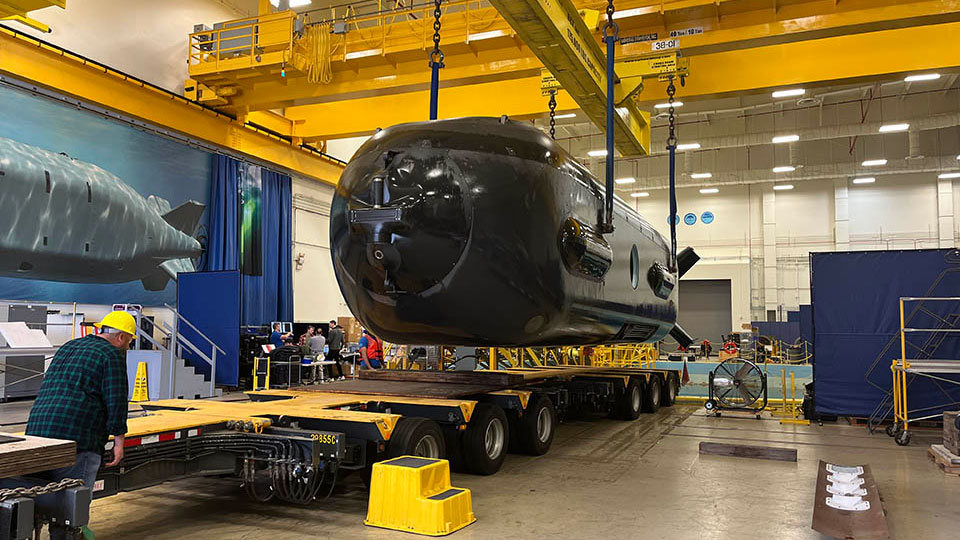
The Navy said the voyage was completed in July but did not disclose when it began or the exact route. According to the statement, it was the first transit exceeding 1,000 nautical miles by an XLUUV-class unmanned system.
The operation was conducted in cooperation with teams from the Program Executive Office for Unmanned Small Combatants. The milestone comes amid Pentagon efforts to expand the scale and operational role of unmanned systems across the Pacific.
Orca uses a diesel-electric propulsion architecture and must periodically surface to recharge its batteries during extended missions. Its diesel-powered range extender generates about 18 kilowatts, allowing endurance to depend primarily on available fuel rather than battery capacity alone.
The vehicle has a stated range of about 6,500 nautical miles. That endurance is intended to support extended missions across the large operating distances associated with the Pacific theater.
The announcement followed a July 30 meeting between Cavanaugh and Rear Adm. Marcos Jasso, commander of Carrier Strike Group 9, aboard the Nimitz-class aircraft carrier USS Theodore Roosevelt. Their discussions focused on closer integration between submarine and surface operations, including how undersea forces can support carrier strike groups.
The commanders also considered a broader role for unmanned undersea vehicles in carrier strike group operations. One concept discussed involved using UUVs to covertly transport parts and components between submarines and aircraft carriers without requiring the submarine to surface or return to its home port.
COMSUBPAC also cited the June 2025 operational testing of the Yellow Moray system by the Virginia-class attack submarine USS Delaware near Norway as an earlier milestone in tactical UUV integration. Those trials formed part of the Navy’s wider effort to incorporate unmanned undersea systems into operational forces.
Orca had previously completed a two-day mission that ended on October 17, 2024, representing an earlier step in testing the platform over extended periods. The latest long-distance transit significantly expands the operational experience accumulated with the XLUUV.
Orca is among the largest unmanned undersea vehicles operated by the U.S. Navy and was designed for offensive and defensive missions associated with an urgent joint operational requirement focused on the Pacific. Its planned roles include intelligence, surveillance and reconnaissance, mine warfare, seabed operations and support for expeditionary missions.