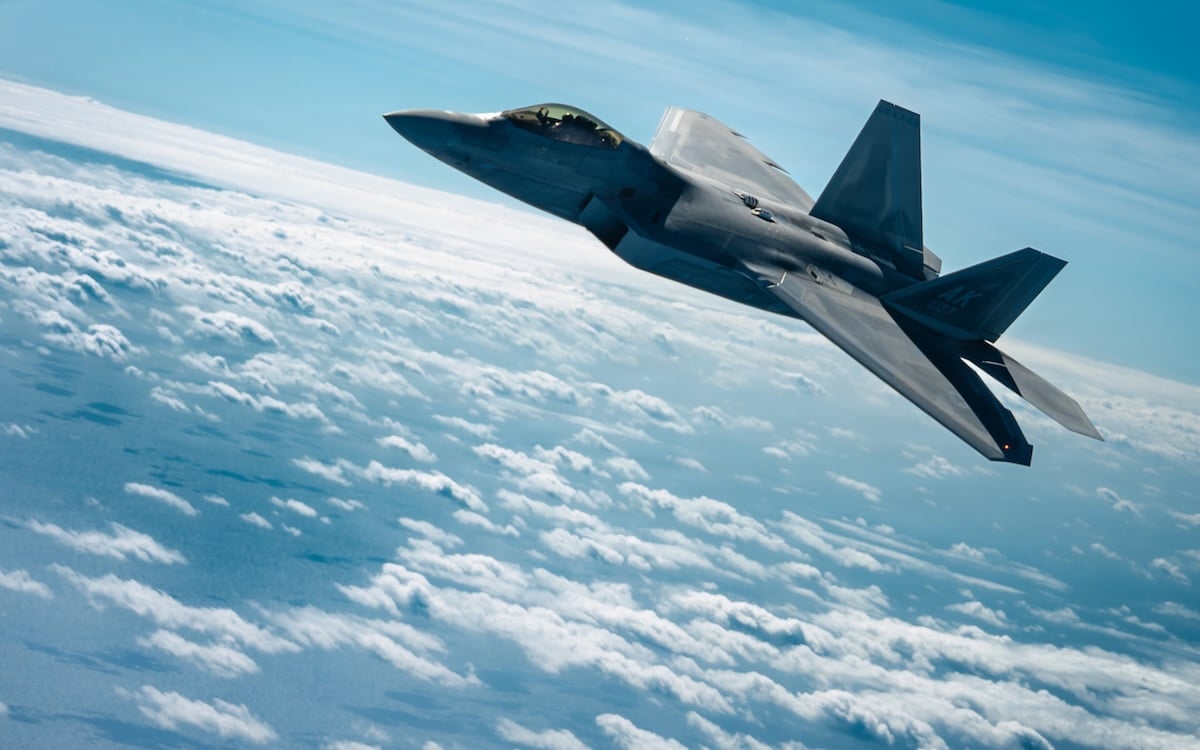
Speaking during Lockheed Martin’s third-quarter earnings call on October 22, Taiclet identified F-22 modernization as one of three priorities for increasing air combat power at the most efficient cost. He said the work was underway at Skunk Works in conjunction with the U.S. military.
“One is modernizing the F-22, especially with sensors, distributed aperture system, data links, and beyond line of sight capabilities that the original F-22 did not have,” Taiclet said. “That will take the F-22 to a fifth generation plus type of capability.”
Taiclet did not provide a fielding schedule, contract value or detailed performance specifications. He also did not identify the individual systems being installed.
The company is drawing on technology from across its divisions for the upgrades, Taiclet said. As an example, he cited the introduction of a sensor developed by Lockheed Martin’s Missiles and Fire Control business into the F-22.
That work reflects a broader change in the company’s engineering approach, he said, with teams examining how existing aircraft, sensors and networks can be combined to improve military missions. Lockheed Martin aims to introduce incremental mission improvements every three to six months, although Taiclet did not give that timetable for the F-22 effort.
The other elements of the company’s air combat strategy are further F-35 development and Vectis, an autonomous aircraft being funded internally ahead of formal customer requirements. Taiclet said Lockheed Martin’s experience with the F-22 and F-35 helped it anticipate how crewed fighters would connect with autonomous aircraft.
Lockheed Martin has increased its investment in Vectis to build five aircraft, with flight demonstrations scheduled for 2027. Taiclet identified air-to-air combat and strike as its intended missions and said the design was informed by expectations of future requirements for range, payload and survivability.
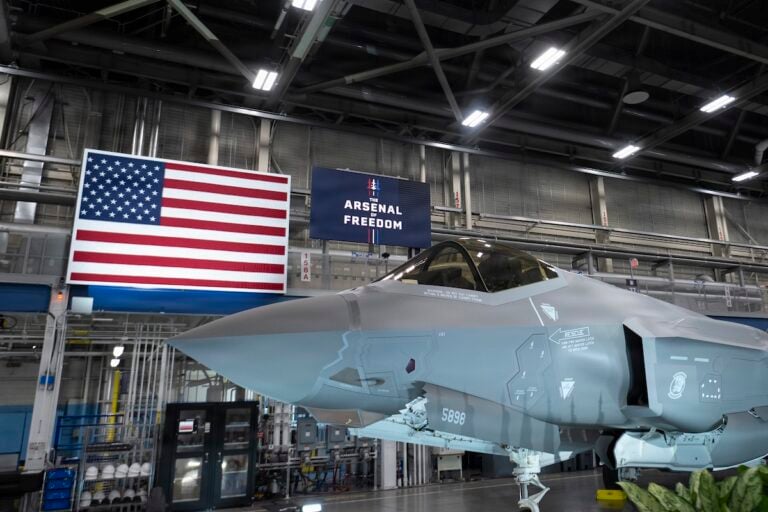
For the F-35, Taiclet said the company wants to incorporate sixth-generation technologies to deliver 80% of the capability of a newly designed sixth-generation fighter at half the cost. He presented the three efforts as a combined approach to increasing the combat power available to the United States and its allies.