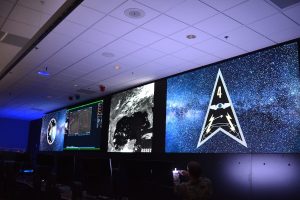
The exercise, led by the U.S. Space Force under its Space Safari Tactically Responsive Space (TacRS) program, aimed to refine and codify processes for rapid launch missions. It was designed to strengthen the service’s ability to respond to urgent warfighter requirements and evolving threat scenarios.
VICTUS DIEM was structured in two phases, including a tabletop exercise in late 2025 and a field training exercise in early 2026. These activities focused on establishing repeatable processes and integrating commercial partners into government-led rapid launch operations.
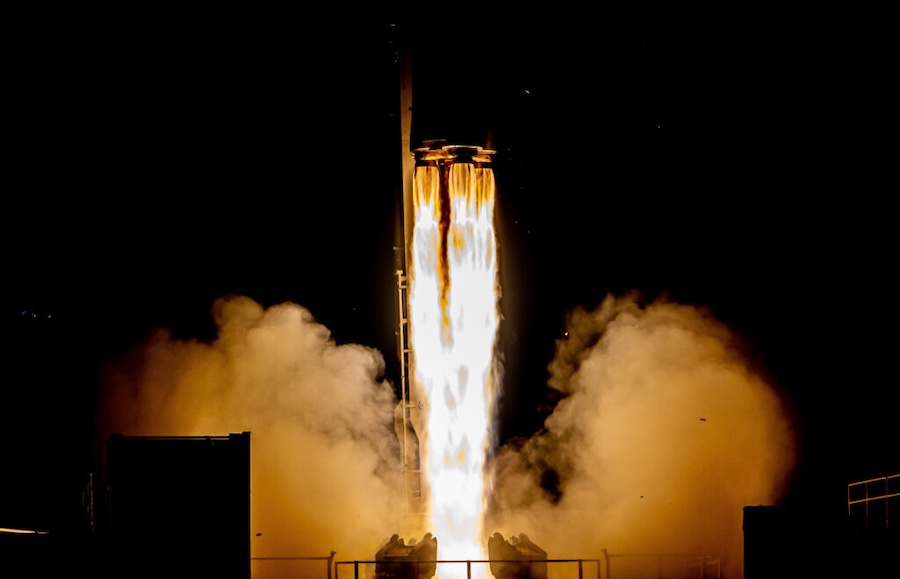
During the tabletop phase, Lockheed Martin and Firefly Aerospace demonstrated rapid payload processing, completing spacecraft arrival, checkout, mating, and encapsulation in under 12 hours. The companies also carried out a 36-hour rapid launch simulation during the field training phase, executing all launch operations tasks following a simulated notice to launch.
The exercise involved coordination across multiple U.S. Space Force units, including Space Systems Command’s System Delta 89 (Space Safari), Space Launch Delta 30, and the Rocket Systems Launch Program. It also incorporated collaboration with U.S. Space Command to align operational and combatant command requirements.
“Speed in space operations has never been more critical,” said Kate Watts, vice president of Enterprise Strategy at Lockheed Martin Space. “This exercise showcased our rapid payload processing capability and provided valuable feedback from our government customer on our demonstration efforts.”
“This exercise was powerful demonstration of what is achievable through swift collaboration and the strategic leveraging of our commercial partners to meet critical government needs—providing invaluable insight into the future of responsive space,” said U.S. Space Force Lt. Col. Cliff Johnson, Space Safari’s director of operations.
U.S. Space Force officials said the exercise helped define command relationships and operational structures needed to transition from urgent mission requirements to launch. It also supported efforts to accelerate delivery timelines and improve coordination between launch providers, operational units, and combatant commands.
“At the Western Range and SLD 30, we play an important role in supporting these exercises,” said U.S. Space Force Col. James T. Horne III, commander of Space Launch Delta 30. “We did the tabletop exercise to establish the command relationships between the various entities that have to execute the mission. We set that up like a Joint Task Force, leveraging the way we conduct combat operations to work through all the relationships so that we can go from an urgent need to liftoff quickly.”
“You are starting to see those two pieces come closer together and work more collaboratively to get the capability on orbit, and execute it almost immediately compared to a standard delivery timeline,” Horne said. “We are increasing the pace at which we can field capabilities and execute them for urgent combat needs.”
The Rocket Systems Launch Program also contributed technical expertise to ensure readiness for real-world execution. Officials said the coordinated approach supports the development of standardized processes for future TacRS missions.
“Launch is a team sport, so my RSLP team was at the tabletop exercise alongside SLD 30 to make sure we were bringing the base part of this, the rocket part of this—all of this together to make sure we have the processes and procedures in place to be able to respond when that customer is ready,” said U.S. Space Force Col. Eric Zarybnisky, acting Portfolio Acquisition Executive for Space Access.
U.S. Space Force officials said the outcomes of VICTUS DIEM contribute to the ongoing development of the TacRS program. The effort is intended to enable faster deployment of critical space capabilities and maintain operational advantage in contested environments.
“This exercise, in close collaboration between SSC, USSPACECOM, and our industry partners at Lockheed Martin and Firefly, proves that critical space capabilities can be delivered on accelerated timelines to meet the most urgent national security and warfighter demands,” Johnson said. “The end result is advancement of the service’s ability to posture for rapid on-orbit delivery of capabilities that meet those demands, and maintain the superiority and advantage against evolving threats.”