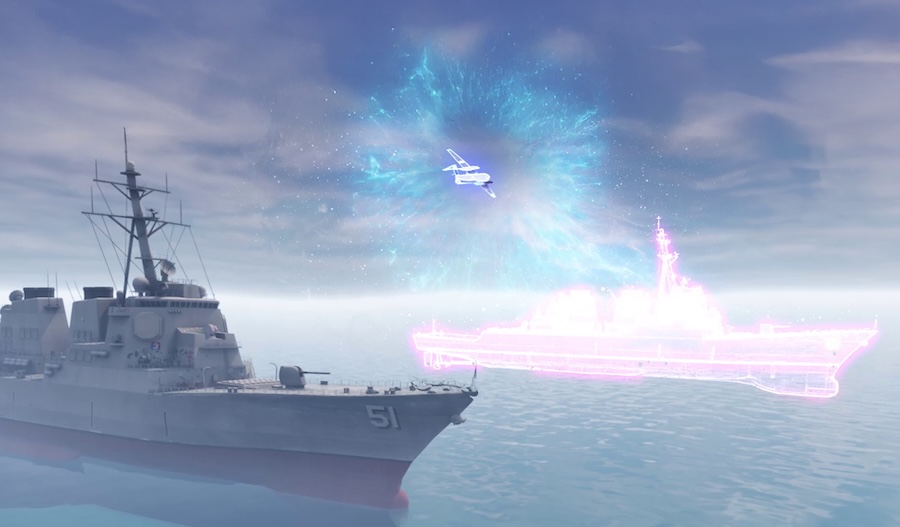
The evolving threat environment places greater emphasis on the ability to sense, decide and act faster than an opponent. Electronic warfare is presented as a core enabler across the operational chain, linking environmental awareness with the ability to deny adversary engagement and defeat threats.
The company emphasized that many adversary systems rely on access to the electromagnetic spectrum to function. Controlling that spectrum enables forces to disrupt the entire engagement sequence, from detection through to targeting and assessment.
Lockheed Martin highlighted that this capability is particularly important in conflicts where munition availability is constrained. By relying on electronic warfare effects, naval forces can conserve kinetic weapons and extend their operational endurance.
Electronic warfare also provides commanders with greater decision space when determining how and when to employ kinetic assets. This flexibility allows naval surface combatants to remain engaged for longer periods while adapting to changing operational conditions.
The company described electronic warfare as a key component of the U.S. Navy layered defense approach. It enables non-kinetic responses that can be used independently or integrated with other systems to neutralize threats.
Modern electronic warfare capabilities are designed to operate across multiple platforms rather than as isolated systems. This integrated approach supports a comprehensive and layered defense against both current and emerging threats.
Lockheed Martin identified its AN/SLQ-32(V)6 and AN/SLQ-32C(V)6 systems as advanced electronic support solutions. These systems provide early warning of threats in the operating environment and contribute to building a real-time battlespace picture within the Aegis Combat System.
The ability to generate a real-time operational picture enables faster and more informed decision-making by commanders. The company noted that success in electronic warfare depends on understanding the electromagnetic spectrum and developing systems capable of operating effectively within it.
Lockheed Martin is also developing a Scaled Onboard Electronic Attack system designed to expand electronic attack capabilities. The system is intended to provide an affordable and rapidly deployable solution for onboard soft-kill terminal defense.
The Scaled Onboard Electronic Attack system is based on an open-architecture design that integrates electronic support capabilities with other shipboard systems. This approach is expected to enhance a vessel’s ability to operate in contested electromagnetic environments.
The company highlighted that modern electronic warfare systems require high levels of sophistication and adaptability to detect and respond to threats in real time. This includes integrating advanced radio frequency technologies and maritime expertise into operational systems.
Open architecture was described as a foundational element for maintaining agility in rapidly evolving threat environments. Standardized interfaces and data formats enable faster integration of new sensors, countermeasures and capabilities.
This approach allows systems to evolve at the pace of software development rather than traditional shipbuilding timelines. It also supports collaboration across industry, government, academia and smaller technology providers.
Lockheed Martin stated that open architecture enables an ecosystem that encourages innovation from third-party developers. As a result, electronic warfare systems can adapt continuously to customer requirements and changing operational demands.
The company noted its more than 60-year history in electronic warfare development, including capabilities in electronic surveillance, attack and protection. These technologies are currently used by the United States and allied forces.
Ongoing investments are focused on advanced sensors, artificial intelligence and decision-support tools. These technologies are designed to enhance situational awareness and support operations across multiple domains.
Lockheed Martin also highlighted work on training and simulation systems to improve readiness. These tools aim to provide realistic environments for naval operators to prepare for complex and evolving threats.
The company concluded that the electromagnetic spectrum is becoming a decisive domain for maritime superiority. Advanced electronic warfare capabilities are expected to play a central role in enabling naval forces to operate effectively in contested environments.
Lockheed Martin added that integrated electronic warfare solutions, combined with advanced technologies such as wideband radio frequency sensing and programmable countermeasures, are critical to maintaining operational advantage. The company emphasized that control of the electromagnetic spectrum will shape the tempo and outcome of future maritime operations.
Source: Lockheed Martin.