

The contract, announced on March 31, runs through September 2032 and includes an initial funding tranche of $492 million. It covers engineering work, system integration, programme management and the procurement of components and materials for production.
Lockheed Martin will also prepare tooling and industrial capabilities needed to support manufacturing and integration onto naval platforms. Officials said the contract reflects a shift from testing and validation toward fielding and sustaining the system.
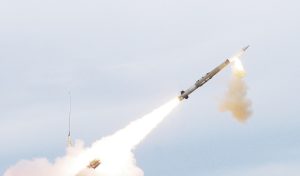
The CPS programme is intended to provide long-range, non-nuclear strike capability at distances of around 3,000 kilometres. The missile is expected to reach speeds exceeding Mach 16 and is derived from the U.S. Army’s Long-Range Hypersonic Weapon programme.
After launch, the system follows a ballistic trajectory before deploying a glide vehicle capable of manoeuvring at hypersonic speeds. This approach combines the range of ballistic missiles with the precision of conventional warheads.
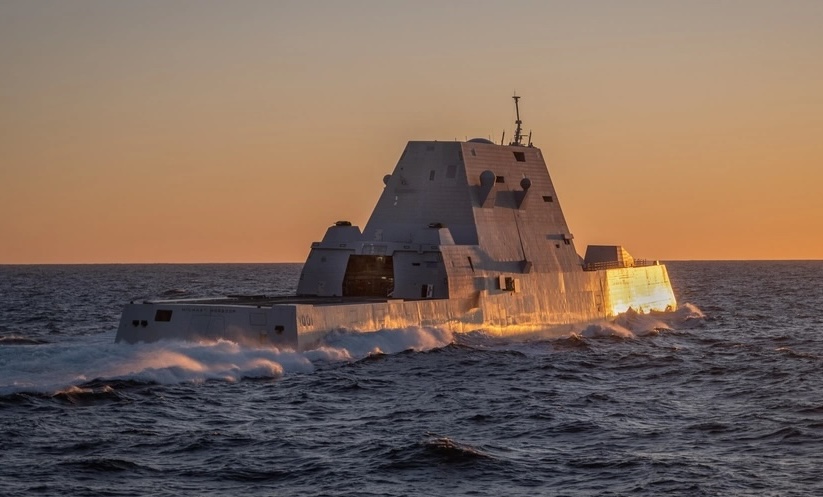
The first platforms expected to carry CPS missiles are Zumwalt-class destroyers. One vessel, USS Zumwalt, has completed modifications to support the system and recently conducted sea trials following a major refit.
During the upgrade, the ship’s 155 mm Advanced Gun System turrets were removed and replaced with 12 launch tubes designed for CPS missiles. The refit began in August 2023 and marks a significant reconfiguration of the vessel’s role.
If programme costs remain within projections, the CPS integration could add approximately $452 million to each Zumwalt-class ship. This would increase the total cost per vessel to around $9.5 billion, highlighting the programme’s scale.
The Zumwalt programme has previously faced cost overruns and reductions in scope. Originally planned for 32 ships, production was reduced to three vessels following technical and budgetary challenges.
The CPS system is also planned for integration on Virginia-class nuclear-powered attack submarines at a later stage. Officials said this phased approach will expand deployment options across the U.S. Navy.
The development comes amid increasing global focus on hypersonic weapons. Other countries, including China, North Korea, Russia and Iran, are advancing similar capabilities, adding pressure on the United States to accelerate its own programmes.
Officials said the latest funding signals a shift in priorities. Hypersonic weapons are now viewed as a central element of future naval warfare rather than experimental systems.