

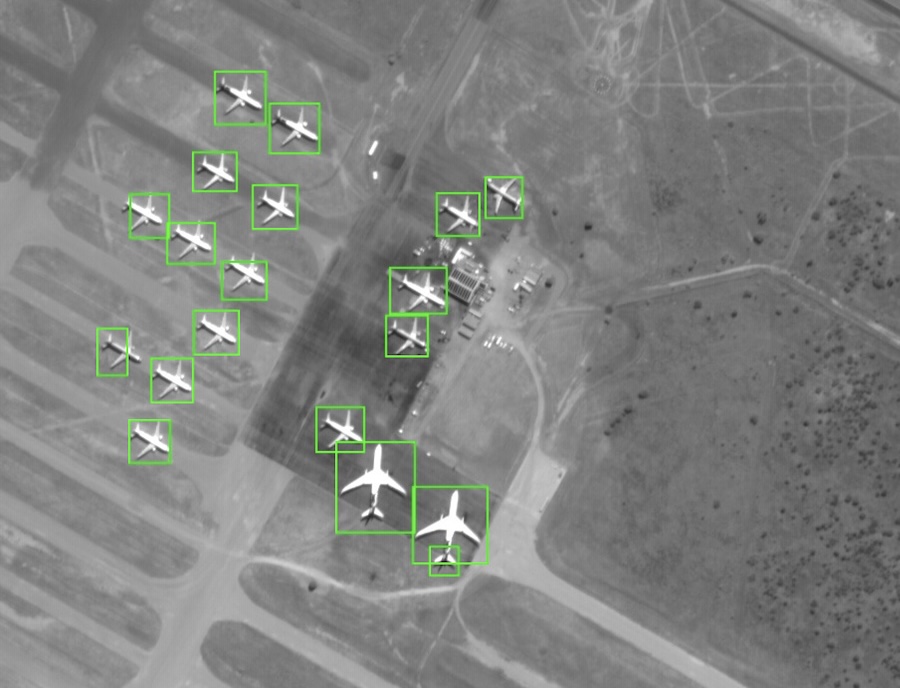
The demonstration took place on March 25 at an altitude of 500 kilometers over Alice Springs, Australia. The satellite captured an image of an airport and used an onboard NVIDIA Jetson Orin module to detect aircraft within moments.
The company said this represents one of the first instances of onboard AI inference on an Earth observation satellite. The capability moves beyond traditional data collection toward in-orbit analysis.
“This success is a glimpse into the future of what we call Planetary Intelligence at scale,” said Kiruthika Devaraj, Vice President of Avionics and Spacecraft Technology. “By running AI at the edge on the NVIDIA Jetson platform, we can help reduce the time between ‘seeing’ a change on Earth and a customer ‘acting’ on it, while simultaneously minimizing downlink latency and cost.”
Devaraj said the approach could improve response times and operational efficiency. “This shift toward integrated AI at the edge is a technological leap that can help differentiate solutions like Planet’s Global Monitoring Service (GMS), providing valuable insights for our customers and enabling rapid response times when it matters most,” she added.
Will Marshall, Chief Executive Officer and Co-Founder, said the technology could accelerate access to actionable data. “This step with NVIDIA can help speed the pace of insight, reducing the time to potential answers from hours to minutes.”
Marshall added that the development has broader implications for Earth observation systems. “This can be the critical difference-maker for our customers from disaster response to security and beyond,” he said.
He described the milestone as part of a larger shift in satellite capabilities. “Bigger picture: this is an exciting milestone towards delivering Planetary Intelligence. We’re moving AI from the internet into the physical realm, effectively connecting the ‘eyes’ of our satellites with an onboard ‘brain’ to create a nervous system for the planet.”
Planet said the breakthrough supports development of its Pelican and upcoming Owl satellite constellations. The company aims to create a near-real-time intelligence network using onboard processing and inter-satellite communication.
The system is designed to reduce reliance on ground-based data processing. Instead, satellites would generate insights such as GeoTIFF and GeoJSON outputs directly in orbit.
Planet said this could allow customers to receive actionable information within minutes of image capture. The end-to-end process includes data collection, object detection and geospatial processing carried out entirely in space.
The company noted that onboard AI models are still in early development stages. However, it said the successful test demonstrates the potential for greater flexibility and responsiveness in satellite operations.
Planet said embedding computing capabilities in orbit could enable faster and more efficient Earth intelligence systems. The development is intended to support applications ranging from disaster response to security monitoring.