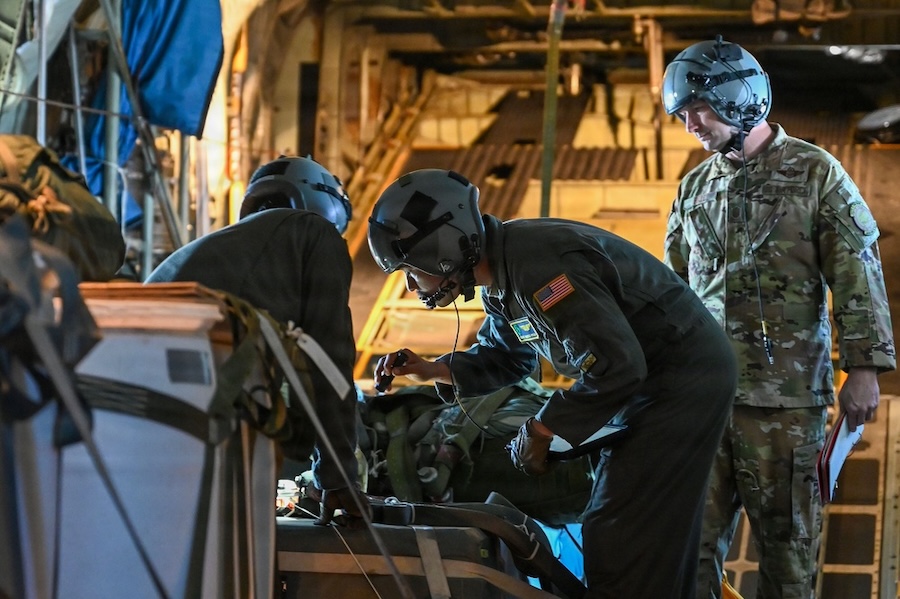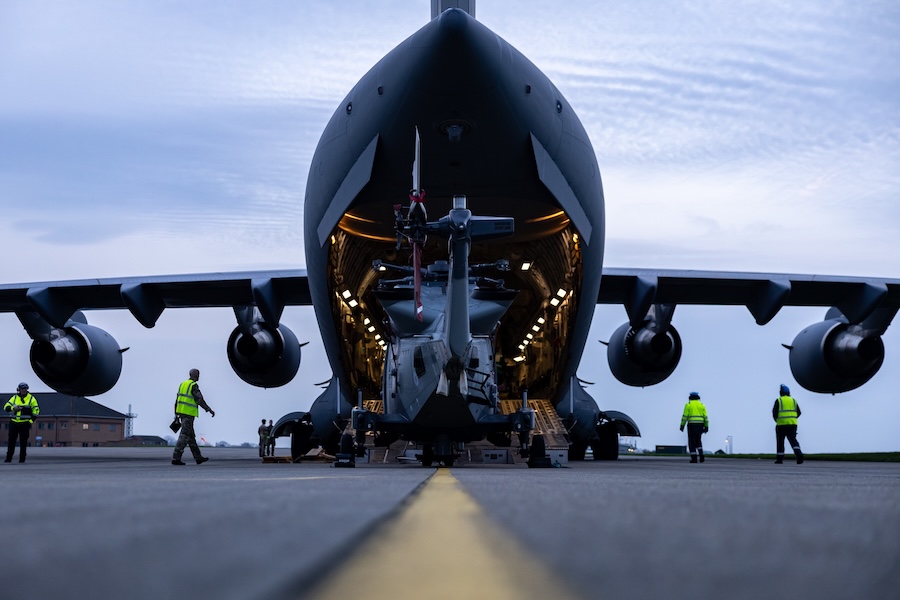
The helicopter had to be dismantled before being loaded onto a C-17 Globemaster aircraft operated by 99 Squadron. The operation required careful coordination because Yeovilton is not designed to handle large transport aircraft such as the C-17.
Flight Lieutenant Oliver, operations officer for 99 Squadron, said the circumstances required detailed preparation. He stated: “The airfield at Yeovilton is not designed for large transport aircraft like the C 17, so the planning had to be meticulous.”
Despite the operational complexity and tight timelines, the aircraft completed the transport mission within a single 24-hour cycle. The C-17 departed from RAF Akrotiri, collected the helicopter in the United Kingdom and returned to Cyprus with the cargo.
Flight Lieutenant Oliver explained the challenges involved in moving such equipment by air. He said: “Twenty four hours from the C 17 departing Aki, we picked up the cargo and returned to Aki with the Wildcat,… It’s not unusual freight, but as you can imagine this cargo takes a lot of time and planning to move.”
He added that the mission reflected the flexibility of the RAF’s transport capability. Oliver stated: “For Air Mobility, it’s another impressive response to a dynamic tasking.”
Wing Commander Nic Lofthouse, officer commanding 99 Squadron, praised the rapid response of the unit. He said: “I’m immensely proud of the squadron’s short notice response — from our Engineers, Ops and Aircrew — to dynamically re task assets in support of ongoing Defence requirements.”
The helicopter deployment forms part of broader UK defence activity in the region. British forces routinely operate jointly across maritime, land and air domains to protect deployed personnel and support regional security.
The Wildcat helicopters are deploying alongside a Royal Navy unit operating near Cyprus. Their presence is intended to support defensive activity and improve protection for UK forces stationed on the island.
Wildcat crews from 815 Naval Air Squadron regularly work with Royal Navy ships, including Type 45 destroyers. These aircraft provide situational awareness and defensive support during maritime operations when required.
The mission also illustrates the role of RAF Air Mobility in supporting UK defence operations worldwide. The capability enables the rapid movement of personnel, equipment and supplies to support operations, exercises and humanitarian missions.
RAF Air Mobility aircraft operate from established runways as well as austere or semi-prepared airstrips. They can also deliver equipment or personnel by parachute, providing flexibility when ground or sea transport routes are restricted.
According to the RAF, such missions allow deployed forces to maintain operational readiness. Delivering the Wildcat to RAF Akrotiri at short notice ensured that personnel in theatre retained the equipment needed to continue their tasks.
The operation also highlights the close cooperation between the RAF, Royal Navy and British land forces. Even while responding to urgent tasking, 99 Squadron continues to support operations across multiple regions around the world.