


Originally introduced in 1981, the Stinger is a versatile weapon capable of both surface-to-air and air-to-air engagement, but its range has been limited by its traditional solid rocket motor. The Red Wasp initiative, developed by the U.S. Army Combat Capabilities Development Command Aviation & Missile Center (DEVCOM AvMC), seeks to overcome this limitation.
“When we first explored the concept, several industry propulsion experts expressed concerns about the feasibility of applying solid fuel ramjet technology to the Stinger form factor,” said John Gibbs, Capability Area Lead for Air and Missile Defense. “The team took that as a challenge and within 18 months, successfully demonstrated the concept in a flight test.”
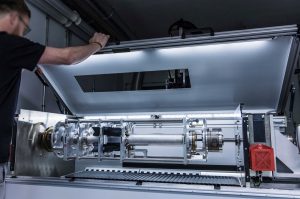
The integral rocket solid-fuelled ramjet works by combining two propulsion phases: an initial boost from a standard rocket motor and a follow-up air-breathing ramjet phase that extends flight duration and range. Because it draws in external air during the ramjet phase, the missile does not need to carry all its oxidiser onboard, allowing for improved performance.

Described as a “high risk, high reward” effort by Chappell Ray, Deputy Capability Area Lead, Red Wasp is a government-owned programme demonstrating the value of in-house engineering. “It also points to the hands-on engineering happening at the Center every day – engineering that when handled in-house, can accelerate a program’s technology readiness level,” Ray said.
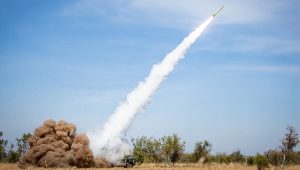
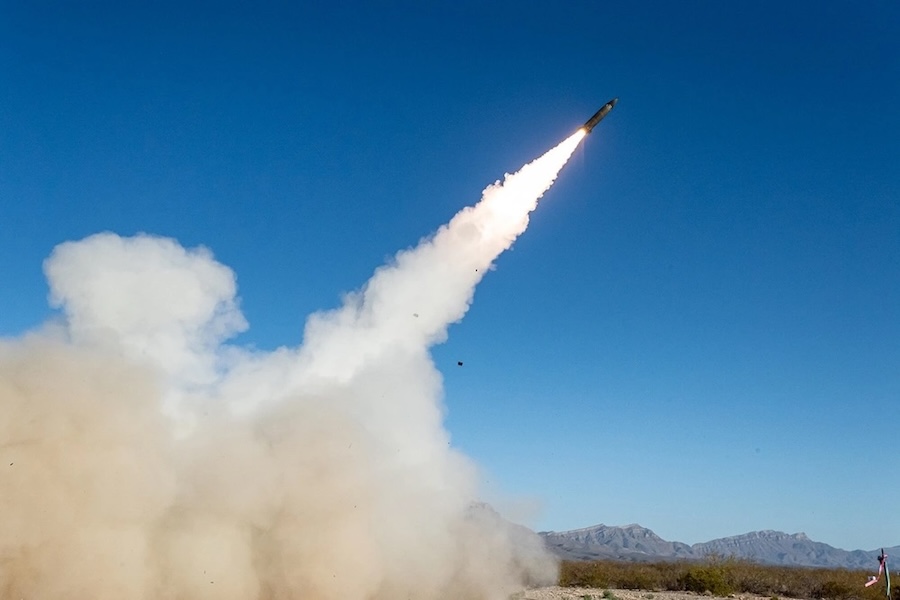
Following a successful test at Dugway Proving Ground in 2024, the team is preparing for further trials in July. “We’ll have a few different ramjet fuels, looking at the delivered performance of several different formulations, and we’ll have some different insulators in them,” said Dr. Brian McDonald, Principal Investigator for Red Wasp. “The idea is to take six motors out there, each with a little bit of variance from what we had in May 2024 and see what we get in an actual flight test.”
Although currently under government control, the team anticipates expanding the programme to involve industry partners. “We are looking at just the propulsion with this effort,” said Ray. “The greater goal is to work with outside partners to integrate a full air defence interceptor, while DEVCOM AvMC engineers continue to mature our in-house design to further develop technologies that may benefit industry concepts.”
The Red Wasp aligns with the U.S. Army’s broader strategy to modernise its acquisition process by delivering effective capabilities quickly and cost-efficiently. “Red Wasp will enable soldiers to engage Short Range Air Defense, or SHORAD, threats such as unmanned aerial systems with Intelligence, Surveillance and Reconnaissance, or ISR, capabilities at much longer ranges,” Gibbs said. “Denying adversarial UAS with ISR packages the ability to target us increases our survivability.”
“So, with Red Wasp, we can reach out and touch them at greater distances,” he added.
Following a successful technology transition, the propulsion design is expected to be scaled up for broader Army applications.
Source: U.S. Army.