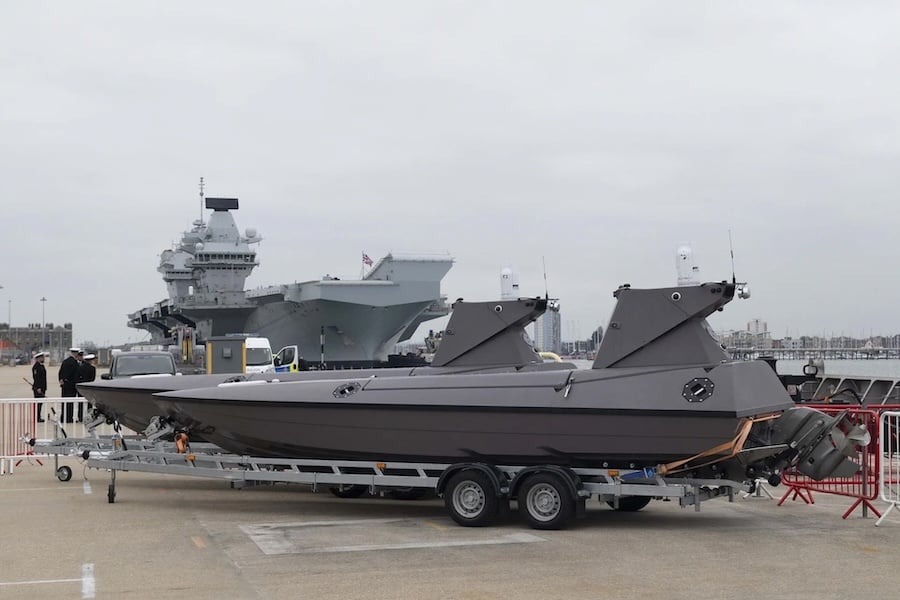
The 1st Autonomous Squadron was commissioned at His Majesty’s Naval Base Portsmouth on 5 November, with operators manoeuvring Kraken and Rattler boats around the harbour from a control hub during the ceremony. The Portsmouth-based unit has around 180 personnel, roughly the complement of a Type 23 frigate, split into two watches to sustain operations around the clock.
The unit replaces Project Beehive, the navy’s initial programme to acquire uncrewed boats and test the technology. “Our job now is to put these vessels to work, whether on their own or as part of a task group alongside our allies, and to bring new uncrewed systems into the Fleet as quickly as we responsibly can,” said Commander Helen Coxon, the squadron’s commanding officer.
“For generations, the Fleet has been built around ships, submarines, and aircraft, manned by sailors and Royal Marines,” said Fleet Commander Vice-Admiral Steve Moorhouse. “From today, an autonomous squadron takes its place alongside them.”
Defence Secretary Wes Streeting said the investment would put autonomous technology in sailors’ hands to help protect Britain and its NATO allies. “A major determinant of military power now is who can innovate fastest,” he said.
The squadron will work with Navy Develop, the Disruptive Capabilities and Technologies Office and the navy’s Capability Accelerator to bring more uncrewed vessels into service. The accelerator was set up in 2025 with partial funding from UK Defence Innovation and has opened a hub at the Portsmouth base.
The Kraken and Rattler boats are examples of how the team has adapted off-the-shelf technology for military use. “The Capability Accelerator has been established to help the National Armaments Group get new technologies into the hands of our sailors faster, reducing the time between identifying an operational need and delivering a capability that makes a real difference,” said Commander James Wagstaffe, who leads the team.
The commissioning came ahead of two meetings in Oslo, the Atlantic Future Forum and the International Sea Power Conference. Military and political leaders were due to discuss Northern European security and the pace of technological change.