

European defence in a changed strategic environment [EDA Annual Report 2022]
The European Defence Agency (EDA) has stepped up its support to our EU governments as they debate the way forward for European defence.
The European Defence Agency (EDA) has stepped up its support to our EU governments as they debate the way forward for European defence.

German Rheinmetall is the biggest producer of artillery ammunition in Europe. Currently, the company is producing up to 450,000 artillery rounds per year.

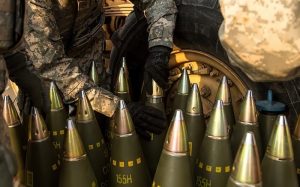
The European Union’s executive wants to set aside more than €500 million to increase ammunition production to help Ukraine and replenish the stocks of EU member countries.

Europeans need to take urgent steps to ensure a larger and more certain supply of ammunition to Ukraine – and thereby alter the military balance on the ground.
The Russian invasion of Ukraine on February 24 has acted as a wake-up call for most EU member states.

German Defence Minister Boris Pistorius has laid out the challenges facing the Bundeswehr and how he plans to solve them.
The challenge is to not only ramp up production to satisfy an immediate peak of demand, but also to enhance industrial preparedness for possible future crises.

Poland was the first European country to conclude such big contracts with South Korean industry, but Hanwha is also looking at other markets in the region based on Poland, which the South Korean company sees a hub base for the European/NATO markets.
A new report by Politea entitled set out to analyse emerging transatlantic defence innovation systems and the extent to which EU and NATO efforts in the domain overlap, are in conflict or have potential synergies.

European defence is built on cooperation: between NATO and the EU; between the EU and its partners; and a myriad of multilateral and bilateral defence cooperation agreements among EU Member States and beyond, writes Jan Joel Andersson, Senior Analyst at the EUISS.

"We are paying the price of the European Union not having an internal market for armament products, no common technical standards, no common export policy for arms," writes Klaus Welle, a member of the Martens Centre’s Academic Council).

Germany is working to strengthen the European pillar within NATO and enhance the EU’s military capacities and capabilities, said Boris Pistorius, Defence Minister of Germany.
Categories: