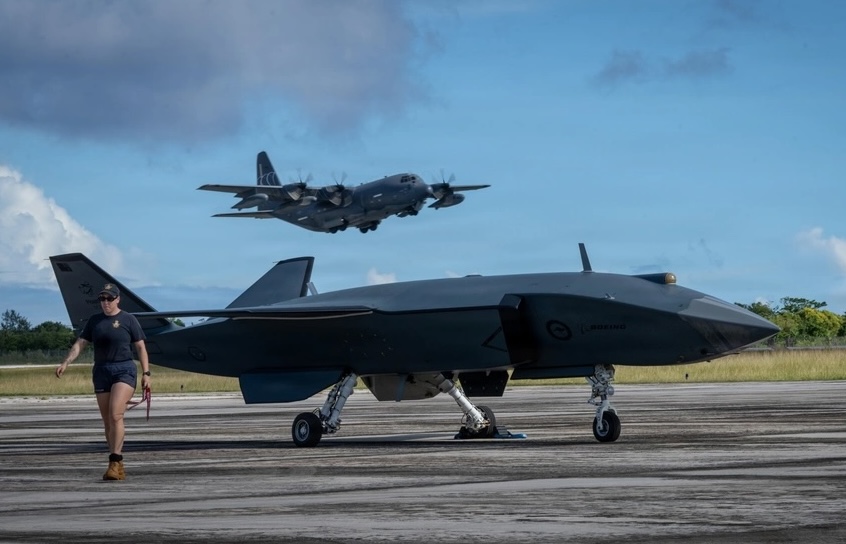
The uncrewed aircraft will fly in concert with crewed fighter platforms during the exercise. The activity is intended to help the joint force refine tactics, techniques and procedures for the next stage of airpower development.
Collaborative Combat Aircraft will conduct a range of missions during Valiant Shield 2026. These missions will include defensive and offensive counter-air operations.
“The future of airpower is a partnership between our greatest assets: our skilled warfighters and the technology that empowers them,” said U.S. Air Force Maj. Daniel Pesich, Experimental Operations Unit collaborative combat aircraft detachment officer in charge. “By advancing human-machine teaming, we are increasing our power projection while building a more resilient, capable, and lethal joint force.”
The Department of the Air Force and its partners will assess the MQ-28’s role as a force multiplier. The analysis will examine how the aircraft can extend the reach, awareness and survivability of crewed platforms in contested environments.
Collaborative Combat Aircraft are semi-autonomous aircraft operating under the oversight of human operators. The Department of the Air Force said it remains committed to the ethical development of these systems, with a human remaining in the loop for all critical decisions.
The platforms are designed to increase sortie generation while reducing strain on maintenance and personnel. The Air Force said this approach is intended to make the overall force more lethal.
Valiant Shield is a biennial, multinational joint exercise focused on integrating the joint force in a multi-domain environment. The routine training is designed to build real-world proficiency in sustaining joint forces across a range of mission areas.
The exercise includes detecting, locating, tracking and engaging units at sea, in the air, on land and in cyberspace. For the MQ-28 Ghost Bat, the event provides a significant opportunity to test human-machine teaming with U.S. and allied forces in the Indo-Pacific theater.