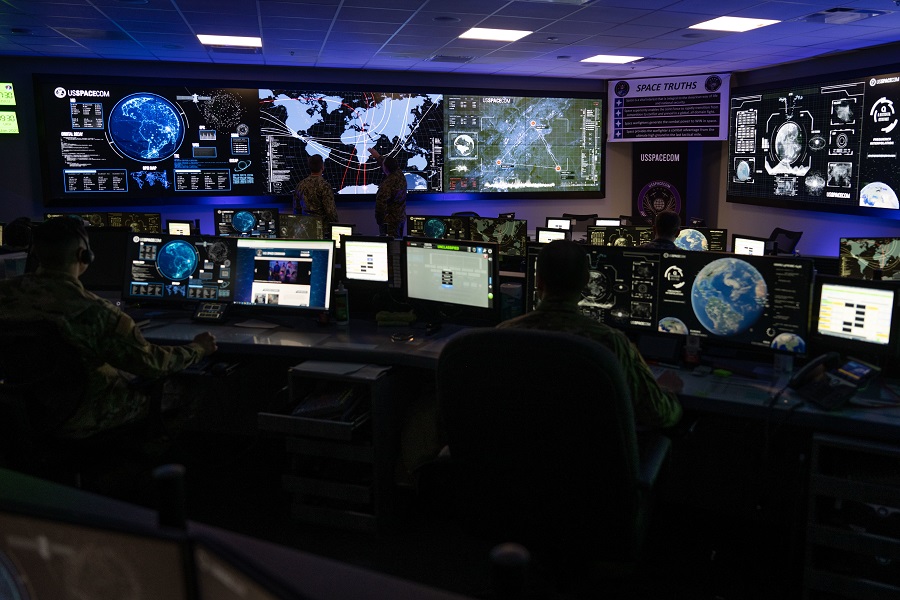
The centre will focus on research, development and engineering in directed energy strategic weapons technologies, alongside other elements of the Army’s modernisation programmes. Officials said the facility will enhance computational and analytical capabilities across the SMDC Technical Center’s laboratories.
“DSAC is a space to do things differently; increase learning, move at a faster pace, and make our Army more lethal on the battlefield,” said Lt. Gen. Sean A. Gainey, SMDC commanding general. “This building may look normal, and that is okay, but the magic happens inside, with our great people and cutting-edge technology. This center will support the detailed work for the tech center’s hypersonic, directed energy, tactical space and high-altitude laboratories.”
“DSAC gives us and our partners the space and tools to stay at the front of technology change and keep winning for the Army,” he added. “SMDC is the Army’s space and missile defense warfighting headquarters and part of what we do is take science and technology outputs and weave them into the fabric of Army units, creating formation-based transformation that comes with some teeth, improving lethality.”
Gainey highlighted the importance of continuous transformation through smart and efficient research, development, tests and evaluations. He noted that DSAC will reduce costs using modelling and simulation while increasing Army capabilities.
“This doesn’t happen without scientists and engineers who do the tough work,” Gainey said. “Your depth of knowledge and specialized skills and ability to adapt to complex challenges is foundational to our success; continuous transformation in the Army depends on smart and efficient research development, test and evaluation. DSAC creates opportunities for data integration, early modeling and simulation for our customers. This drives down the cost while accelerating capabilities.”
“We will learn early, take stock of our failures in a digital environment, and go to prototyping with more confidence,” he added. “Technology is a force multiplier from the start for the Army, but modeling and simulation is a technology multiplier. It turns a normal building like this into a learning laboratory. Digital engineering uses simulation architecture, which allows us to do thousands of tests, far more than we ever could in the real world.”
Nicole Olbricht, director of the tech center’s systems engineering directorate, said the DSAC is a crucial part of the SMDC Technology Complex. She stated that its mission is to provide secure and accredited government computing services supporting science, technology and test communities of interest.
She explained that the centre will enable warfighter dominance by supporting the characterisation and testing of prototype components and systems in space, high altitude, missile defence, hypersonic and directed energy. “The ribbon cutting signifies the future for the tech center,” Olbricht said. “The integration environment that DSAC will provide allows for a more streamlined process from concept to fielding, providing capable products to the warfighter.”
Olbricht said DSAC is an 8,000-square-foot facility designed to host analytical and computational capabilities for modelling, simulation, analysis and integration. She emphasised that DSAC will help enable collaboration across Team Redstone, the Army and industry to sustain the nation’s competitive edge.
“This collaborative government environment, when integrated with the various tech center, Army and joint community laboratories and capabilities, will support technology development, integration efforts and programs of record in air, space and missile defense to achieve capability overmatch,” she said. “Our warfighters need the best we can provide, and DSAC allows our researchers and engineers to give them that.”
Source: U.S. Army.