
The U.S. Air Force has previously stated it plans to acquire a minimum of 100 B-21 bombers. Former leaders of U.S. Strategic Command have also supported increasing the fleet to 145 aircraft.
Hegseth did not specify an exact number but emphasized the strategic importance of the platform. He said both the B-21 and the F-47 sixth-generation fighter are “critical” to future U.S. warfighting capabilities, adding that procurement could rise if required.
“We have to invest in more capabilities to include the B-21, which is ahead of schedule,” Hegseth told the Senate Armed Services Committee. “We believe we will require a lot more—over 100—in the future.”
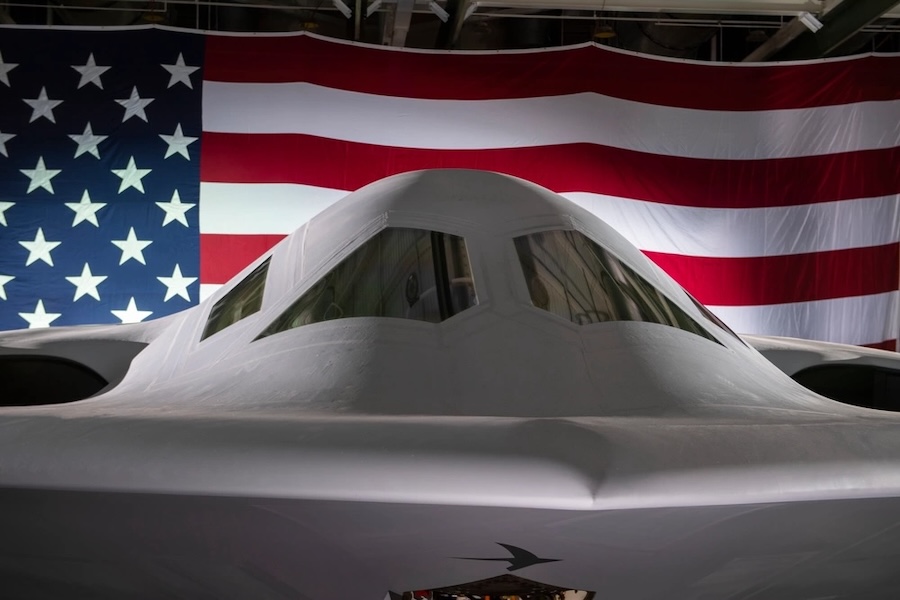
The B-21 is intended to replace both the B-2 Spirit and B-1B Lancer bombers as they are retired from service. Since its unveiling in late 2022, the aircraft has been widely described by U.S. defense officials as meeting or exceeding expectations while remaining on schedule.
Support for the B-21 has grown amid concerns about China’s expanding military capabilities and the need to modernize the U.S. nuclear triad. The aircraft is also seen as critical to maintaining U.S. airpower, including in recent operations across the Middle East and Western Hemisphere.
Commander of U.S. Indo-Pacific Command Adm. Samuel Paparo has advocated for a larger fleet. “I would favor 200 B-21 bombers, not just for the nuclear deterrence mission, but for penetrating strike capabilities,” he said during an April 21 congressional hearing.
Calls to expand the B-21 program contrast with the earlier B-2 program, which was scaled back from an initial plan of 132 aircraft to just 21 produced. Analysts say current demand trends point in the opposite direction.
“One hundred is a floor; it’s absolutely not a ceiling,” said Mark Gunzinger. “Demand for bombers in peacetime and in conflict has been in one direction: up. And today’s bomber force is about one-third the size of the force we had at the end of the Cold War.”
The B-21 is scheduled to enter operational service at Ellsworth Air Force Base in 2027. The program has received strong bipartisan backing in Congress, according to analysts.
“It’s evident congressional authorizers and appropriators strongly support the B-21, which is a model program,” Gunzinger said. “Support is broad and bipartisan. But in the end, the Air Force must ask for the bomber force it needs. It has to clearly specify what its requirements are.”
Manufacturer Northrop Grumman has announced plans to invest $2.5 billion to accelerate production of the aircraft. The Pentagon has allocated $6.1 billion for the B-21 in its fiscal 2027 budget request, focusing on development and initial production.
The B-21 will be capable of carrying nuclear weapons, contributing to the U.S. nuclear deterrent. Budget documents state it will be designed to operate in contested environments and counter emerging threats.
“Highly survivable, the B-21 Raider will be able to penetrate modern air defenses,” the Air Force budget documents state. “The B-21 will deliver the ability to operate in contested environments, counter emerging threats, and support the nuclear triad by providing a visible and flexible nuclear deterrent capability.”
Chairman of the Joint Chiefs of Staff Gen. Dan Caine expressed a more measured view on expanding the program. He said any increase would need to align with military planning and be validated through formal requirements processes.
“We’re glad to see B-21 on the flight path,” Caine said. “On the specific numbers, the one sort of big picture, strategic thing I want to say is we want to make sure as we think through what does airpower of the future look like based on the evolving threat, that we’re staying well in front of it. But I’m on board with assessing the numbers.”
Former Air Force Chief of Staff Gen. David W. Allvin has also indicated caution on committing to higher production levels. He noted that technological developments may influence future decisions on the size and composition of the bomber fleet.
“I think there are other technological advancements that we would see to be able to augment that and have a better mix … before we commit to that,” Allvin said.