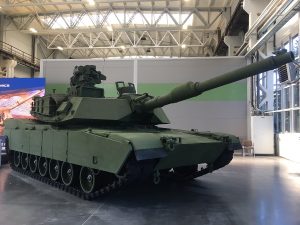
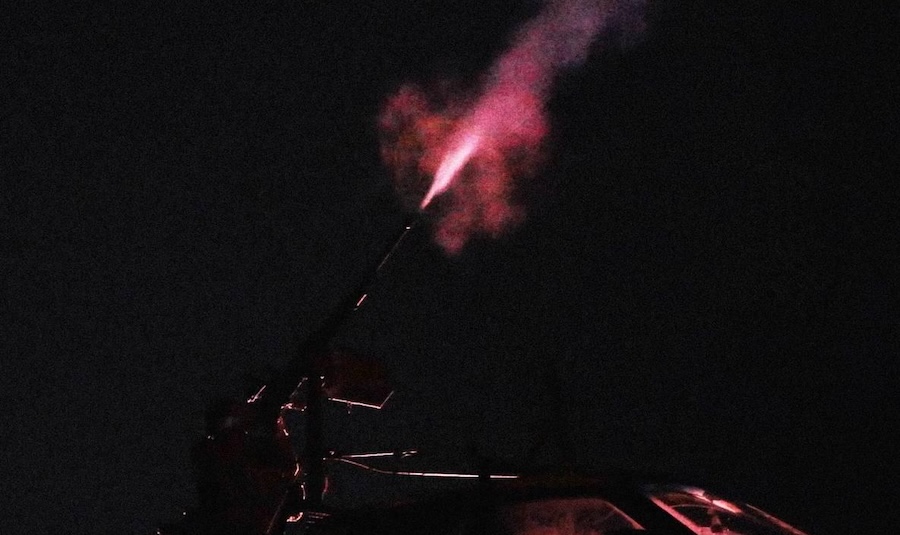
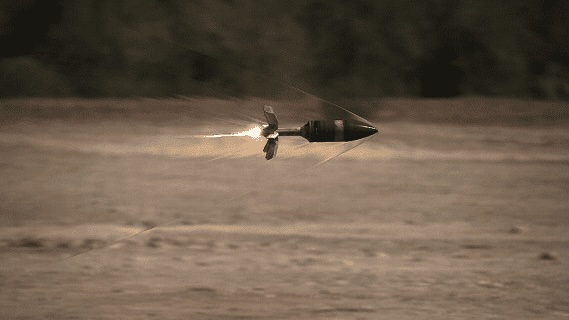
This latest round of testing focuses on new fire control software designed to enhance the accuracy and speed of the tank’s 120 mm gun, .50 calibre and 7.62 mm machine guns, and grenade launchers. The upgrades are being evaluated to ensure improvements do not compromise the overall performance of the tank in demanding combat scenarios.
“We verify that the software performs better than the previous version and that the vehicle computer will actually implement the correct parameters for proper projectile path when it is shooting and stable while it is performing other maneuvers,” explained Jose Jaramillo, test officer. “The terrain on the course shouldn’t affect the positioning of the turret.”
Tests included two 50-mile missions across YPG’s rugged desert courses, where evaluators measured the vehicle’s positioning system against precise waypoints. Weapon accuracy was assessed through four firing scenarios: stationary firing at both static and moving targets, and firing while on the move at static and moving targets. Impacts were evaluated visually and acoustically using a microphone array.
The summer testing conditions in Yuma, characterised by triple-digit temperatures, were chosen to simulate the extreme stress the tank systems may face in real-world operations. “The ideal time to test is in the summer: you’re putting a lot of stress on the systems in the natural environment,” said Jaramillo. “You can really replicate how much stress it could encounter when being operated by Soldiers out in the field.”
Source: U.S. Army.