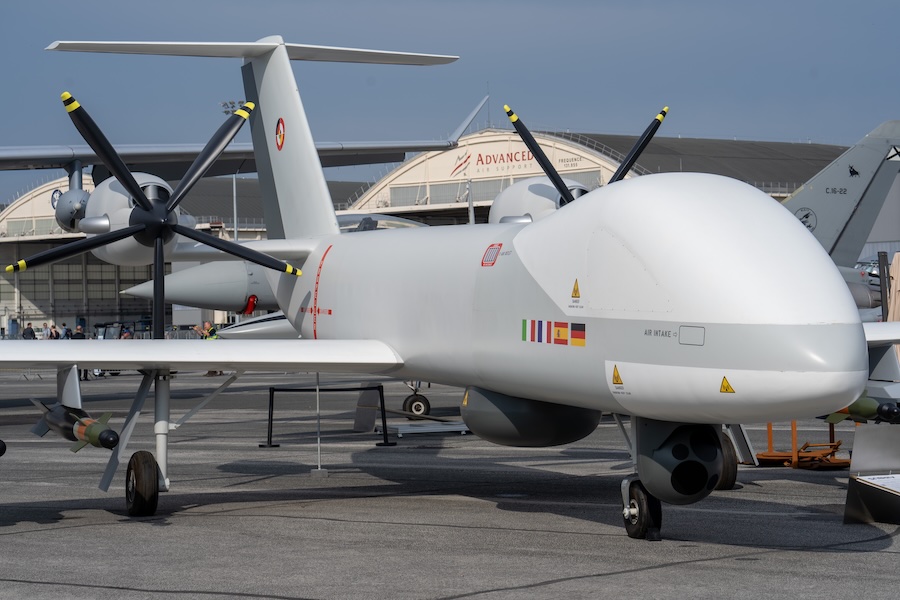
Japan has held observer status in the Eurodrone programme since 2023. Airbus said the aircraft is suited to countries such as Japan that need to monitor large maritime areas.
Compared with its nearest competitor, Airbus said Eurodrone offers very long flight endurance and can carry a larger mission payload. That payload could include sonobuoys and torpedoes for anti-submarine warfare missions.
Airbus said Eurodrone could allow Japan to complement its current crewed anti-submarine warfare fleet with an efficient uncrewed platform. The company said this could help strengthen Japan’s maritime security in a sovereign and sustainable manner.
The next step will involve discussions between Airbus and Kawasaki Heavy Industries on design, development and commercialisation options. The companies will examine a future Japanese maritime version of Eurodrone, including possible configurations and the integration of Japanese sensors and effectors.
The discussions will also cover potential workshare for Japanese industry during production and sustainment. Airbus said the aim is to ensure Japan could operate Eurodrone sovereignly and without restrictions, should it decide to acquire the RPAS.
The targeted collaboration with Japan is intended to support the Eurodrone programme. Airbus said it will also deepen the strategic framework of European-Japanese defence initiatives.
The company said insights from developing a Japan-specific variant are expected to provide operational and logistical advantages for future European naval versions of Eurodrone. These lessons could support wider maritime applications of the platform beyond the Japanese requirement.
Eurodrone is a four-nation programme involving Germany, France, Italy and Spain. It is led by the Organisation for Joint Armament Cooperation and is currently under development, with a first flight scheduled for 2029.
India is also an observer in the programme. Airbus said Eurodrone can cover missions including airborne intelligence, surveillance, target acquisition and reconnaissance, early warning, signals intelligence, maritime patrol and anti-submarine warfare.
The aircraft can carry a mission payload, excluding fuel, of up to 2.3 tonnes. Airbus said it can remain airborne for up to 40 hours.
Eurodrone is designed to be fully integrated into civil airspace. Airbus said its high levels of safety and redundancy make it suitable for operations over the open sea.