The companies said the long-range precision weapon was designed for mass production at a significantly lower cost than traditional precision strike weapons. They said the system addresses an urgent capability-based need for deterrence along NATO’s eastern flank.
Under the agreement, which builds on a memorandum of understanding announced in October, PGZ subsidiary WZL-2 and Anduril will produce thousands of SLB-500M systems for the Polish Armed Forces. The companies said the program will help build the precision-strike production capacity Poland needs.
The partners said current operational requirements can no longer rely only on scarce, high-end weapons. They said the mission requires affordable, long-range fires that can be produced quickly, fielded in large numbers and replenished at the speed of conflict.
The cooperation is intended to establish one of Europe’s first large-scale production lines for a new class of low-cost, scalable weapons. The companies said it will also bring new opportunities for defense reindustrialization to Europe.
As the project progresses, PGZ and Anduril plan to increase supply chain localization in phases by adding more Polish and European components. Their goal is to make the Polish Barracuda a majority European-made, SAFE-compliant product.
The production site in Bydgoszcz is described by the companies as a strategic asset for the effort. The city, known as the “NATO Capital of Poland” for its military training and defense-focused industry, will support Barracuda-500 production through WZL-2 facilities and its civilian manufacturing and logistics workforce.
“The cooperation contract with Anduril Industries Inc. represents a breakthrough both for our national defence and for the Polish defence industry,” said Adam Leszkiewicz, President of the Management Board. “It`s also a milestone in the development of the competences of the Polish Armaments Group (PGZ).”
“Together with our American partner, we will be able, within a short period of time, to produce and deliver several thousand low-cost yet technologically advanced autonomous long-range cruise missiles based on the Barracuda system,” Leszkiewicz said. “This is a completely new area of equipment for the Polish Armed Forces, and we expect positive interest in our new product, and potentially other markets.”
“We are building production capabilities and defining a technological development path for missiles that can constitute a crucial element of Polish security through deterrence and long-range engagement,” Leszkiewicz said. “An additional dimension of this cooperation will be the involvement of companies within the Polish Armaments Group in the further development of these missiles, including their adaptation and integration for the Polish and broader European markets.”
“The agreement also shows how important cooperation with the American defense industry is for PGZ,“ Leszkiewicz said. His remarks pointed to PGZ’s view that the agreement is both an industrial development project and a new capability area for the Polish Armed Forces.
“The future of deterrence belongs to nations that can produce advanced capabilities quickly, affordably, and in the quantities required to sustain and win a fight,” said Brian Moran, Anduril Vice President for Europe. “By bringing Barracuda production to Poland with PGZ, we are helping build a European industrial base that can replenish precision fires at the speed of relevance, and taking major steps toward the transformation of defense manufacturing on the continent.”
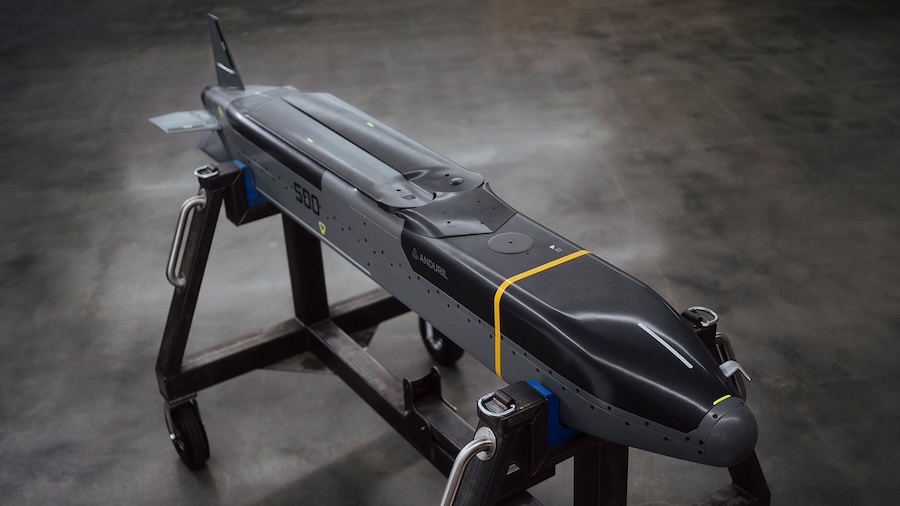
Anduril said the Surface-Launched Barracuda-500M is a trusted, in-demand solution to the allied challenge of munitions production. In May of this year, the U.S. Department of War announced a framework agreement with Anduril to rapidly scale production of the SLB-500M.
The SLB-500M is designed to be effective against a wide range of land and maritime targets. It is equipped with a 100-pound munition payload and offers more than 500 nautical miles of range.
Anduril said the Barracuda was designed for large-scale production using a simplified architecture, a resilient supply chain and common tooling. The companies said the Polish production effort will support the wider requirement for scalable long-range precision fires.