The group is led by aircraft carrier HMS Prince of Wales and includes destroyer HMS Duncan, tanker RFA Tidespring, F-35B Lightning jets, helicopters and uncrewed autonomous systems. HMS Prince of Wales and HMS Duncan are returning to Portsmouth for maintenance and crew leave before Operation Firecrest resumes in northern European waters in the autumn.
The first phase concluded with Exercise Neptune Strike, involving 10 NATO allies across air, maritime and land operations in the Atlantic. The exercise focused on integrating allied forces and demonstrating NATO’s ability to conduct coordinated operations across the region.
“Over the past three months, the Carrier Strike Group has been at the forefront of NATO’s defence of the Northern Flank – deterring Russian activity, protecting NATO airspace, and training with allies to make sure we are ready to respond, whenever and wherever we are needed,” Minister for the Armed Forces Louise Sandher-Jones MP said. “This is NATO-first in action, with our Armed Forces working around the clock to keep the UK and our allies safe.”
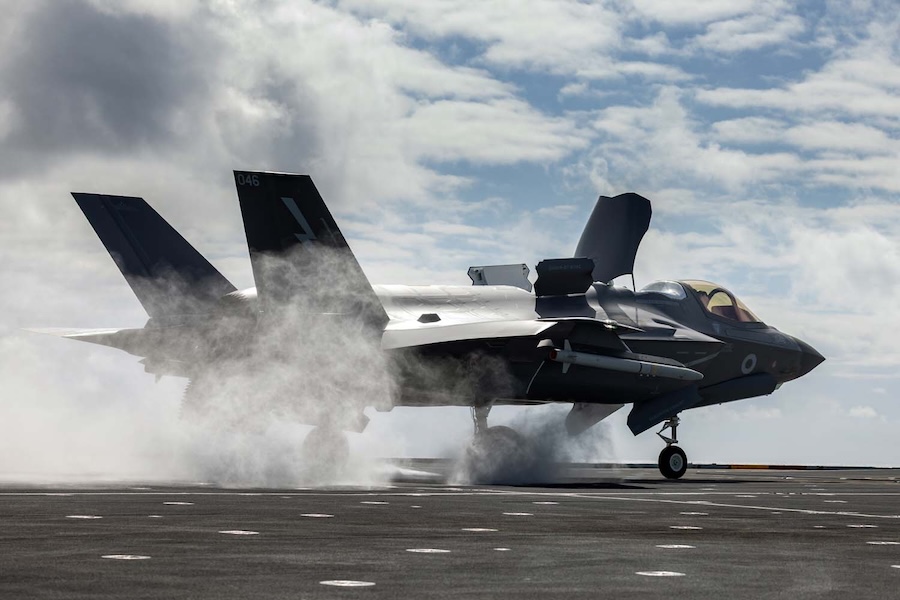
F-35B jets from 809 Naval Air Squadron carried out long-range missions during Neptune Strike. RAF Voyager and Italian 767 tankers extended their range for sorties over the North Atlantic and as far as Poland.
The task group’s ships concentrated on surface and underwater warfare during the exercise. Merlin and Wildcat helicopters provided support, while frigate HMS Somerset and a French destroyer also joined the group.
“Over the past three months, we have a proven the UK Carrier Strike Group capabilities over and over again, committing this capability to NATO and demonstrating our determination to defend NATO’s Northern flank,” said Commodore Richard Hewitt, Commander of the UK Carrier Strike Group. “We have shown how we can generate, sustain and when called upon, defend our NATO and JEF allies against unwanted threats in the High North and North Atlantic.”
“Neptune Strike has been a successful finish, demonstrating our capability and supporting NATO deterrence across the Euro-Atlantic,” Hewitt said. The exercise closed the first stage of a deployment that began in April.
The Carrier Strike Group has worked with 19 NATO and Joint Expeditionary Force allies during the mission. The Royal Navy said the activity was intended to strengthen regional partnerships and improve collective defence across the Euro-Atlantic area.
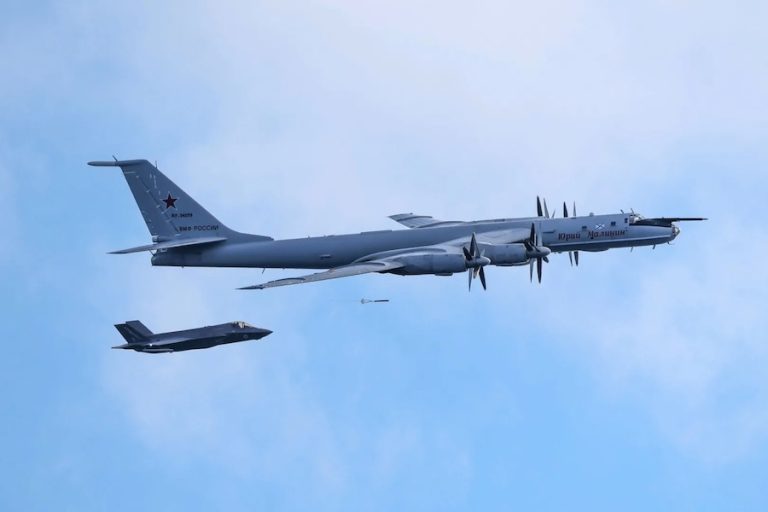
Operation Firecrest also included support for NATO’s Arctic Sentry enhanced Vigilance Activity. The group conducted NATO Air Policing over Iceland and the Arctic against incursions by Russian aircraft.
The Royal Navy said it was the first time that NATO air-policing missions had been flown by aircraft launched from a European aircraft carrier. The deployment placed carrier-based F-35Bs directly into NATO air-defence operations in the High North.
The group also participated in Exercise Ramstein Flag alongside 18 NATO allies. It later joined Dynamic Mongoose for anti-submarine warfare training and Exercise Tamber Shield for Anglo-Norwegian helicopter, missile and fast-attack boat operations in the fjords.
“Neptune Strike 26-3 demonstrates NATO’s ability to integrate maritime, air, land and multinational forces across one of the Alliance’s most strategically significant regions,” said Commodore Donald Mackinnon, Assistant Chief of Staff of Operations at NATO Joint Force Command Norfolk. “Operating in the High North and North Atlantic strengthens our readiness, reinforces interoperability among Allies, and ensures we can command and synchronise multi-domain operations as required.”
The group most recently visited Iceland, where it hosted the UK Defence Secretary and Iceland’s Foreign Minister and Defence Director ahead of NATO’s summit in Ankara. HMS Prince of Wales also visited Stavanger, while HMS Duncan called at Bergen, Aarhus and Dundee.