The signal followed a meeting in Tokyo between Canada’s defence minister and his Japanese counterpart. The Canadian minister said Ottawa was “interested in learning more information” about the programme and reportedly described it as “a promising initiative.”
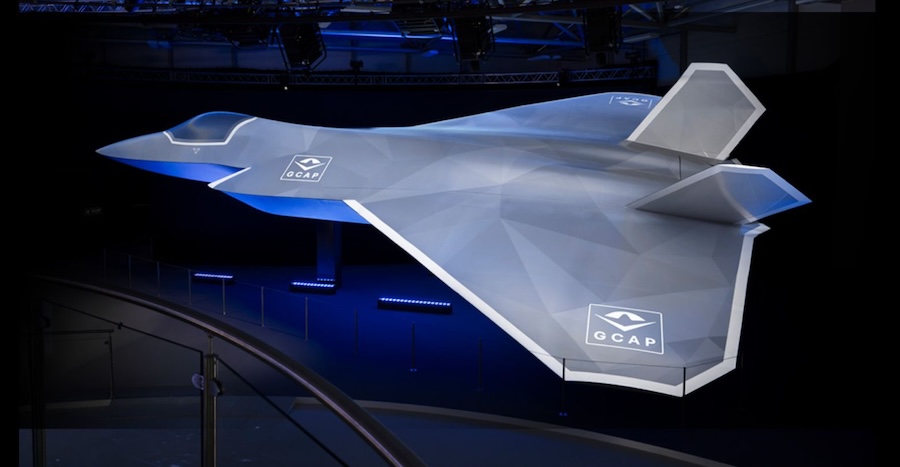
The Global Combat Air Programme is built around the future Tempest fighter. The aircraft is being developed with a wider combat air system, including future unmanned wingmen.
BAE Systems is shaping the Tempest demonstrator in Britain. A first flight is planned for late 2027, while the future operational aircraft is expected to use a new powerplant.
For Canada, the timing is politically sensitive. Ottawa announced plans in 2023 to buy 88 F-35s, but Prime Minister Mark Carney opened a review after taking office in spring 2025.
The review followed rising trade tensions and sharper political friction with Washington. It also revived debate over whether Canada should rely on one combat aircraft type.
Canada has already committed to 16 F-35A aircraft. Four have been fully paid for, while parts for eight more have also been purchased.
The first Canadian F-35s were expected in 2026 for pilot training. They were due to be based at Luke Air Force Base in Arizona.
The aircraft are intended to replace Canada’s ageing CF-18 Hornet fleet. Canada operates about 75 CF-18A/B+ jets and has added former Australian F/A-18A/B aircraft to support availability.
The cost of the planned F-35 purchase has also risen. The 88-aircraft plan was priced at $19 billion in 2019, but now stands at $27.7 billion, excluding weapons and infrastructure.
A split purchase would keep the F-35 at the centre of Canadian fighter modernisation. It could also leave room for another aircraft type, either Gripen E or a later Tempest purchase.
Saab’s Gripen E had been viewed as the strongest near-term alternative. Sweden has promoted the aircraft in Canada, including an offer for local production.
Saab is also linked to another Canadian air-domain requirement. Its GlobalEye airborne early warning and control aircraft has been positioned as a preferred candidate for Canada.
The Global Combat Air Programme would be a very different option. It would place Canada closer to a future sixth-generation fighter project, but only after a long wait.
If Ottawa later chose Tempest, it would likely still need more F-35s. The source article described a possible split near 60 F-35s, with Tempest arriving later.
That path would create a difficult timing problem. Canada would have to keep some CF-18s flying longer, if that remains feasible.
The Tempest concept could still appeal to Canadian planners. Its expected range and payload are presented as much larger than those of the F-35A.
Senior Global Combat Air Programme officials have said the aircraft may carry enough internal fuel to cross the Atlantic without air-to-air refuelling. Such range would matter for Canada’s vast territory and Arctic defence requirements.
The aircraft is being shaped partly for Indo-Pacific operations. Similar characteristics could help Canada manage long distances and growing Russian activity near the Arctic.
The industrial case is less clear. The main workshare in the Global Combat Air Programme has already been divided among the UK, Italy and Japan.
That means Canada may have limited room for a major industrial role. Observer status would still provide programme access and could support a deeper decision later.
Italian defence officials have publicly supported a Canadian observer role. One official said that if Canada joined, “we would be completely ready, because the more partners there are, the greater the chances of lowering costs.”
The same official described Canada as the country now showing the strongest interest. He said he would be “completely open” to Canada joining the programme as an observer.
The strategic question is whether Canada wants an option beyond the United States. Tempest could provide that, but it would bring higher costs, long timelines and uncertain industrial benefits.
The F-35 remains the nearer-term solution for Canada’s fighter recapitalisation. The longer the review continues, the more Ottawa must weigh cost, sovereignty, interoperability and Arctic air defence against the appeal of a future sixth-generation aircraft.