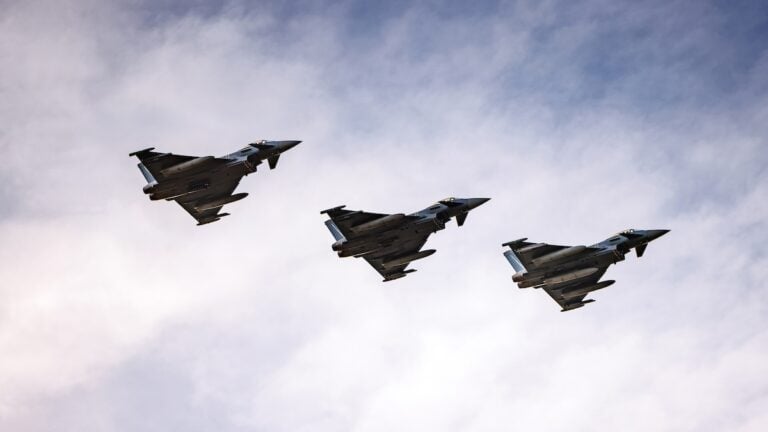
Air chiefs and senior representatives from 28 NATO allies and five partner nations met at Allied Air Command in Ramstein, Germany, on 27–28 October. Their discussions covered the new Integrated Air and Missile Defence design, the development of Agile Combat Employment and changes to command-and-control structures.
The alliance’s continuous air defence mission operates under Standing Defence Plan 12000, which applies in peacetime, crisis and conflict. It establishes common guidelines and procedures for detecting and engaging aerial threats to protect NATO territory, populations and forces from any direction.
NATO says the framework allows commanders to use available resources more flexibly and effectively across the range of airborne threats. It addresses current challenges, including one-way attack drones, while preparing for future threats.
“We must continue to train, share capabilities and deliberately plan against current and evolving threats,” said U.S. Lieutenant General Jason T. Hinds, commander of Allied Air Command. The discussions examined air defence posture in the context of the Supreme Allied Commander Europe’s Theory of Victory.
“This forum is our chance to exchange insights and strengthen our collective security,” Hinds said. “We are committed to one another, and through this commitment, we ensure our forces are ready to respond to any attack against the Alliance.”
Training and exercises were another focus, particularly their role in improving interoperability and making national capabilities more interchangeable. Senior representatives highlighted Steadfast Duel 2026 and Ramstein Flag 2026 as opportunities to test plans, accelerate decisions and strengthen command and control.
The exercises brought allied air forces together to practise integrating their capabilities in complex conditions and develop a shared understanding of operational requirements. NATO said that work supports its ability to operate as a cohesive force and maintain readiness across the Euro-Atlantic area.