

BAE Systems began work on the system in October 2025, with testing expected to begin as early as next month. Live-fire trials are planned for early summer this year as the company seeks to rapidly deliver a capability in response to customer demand.
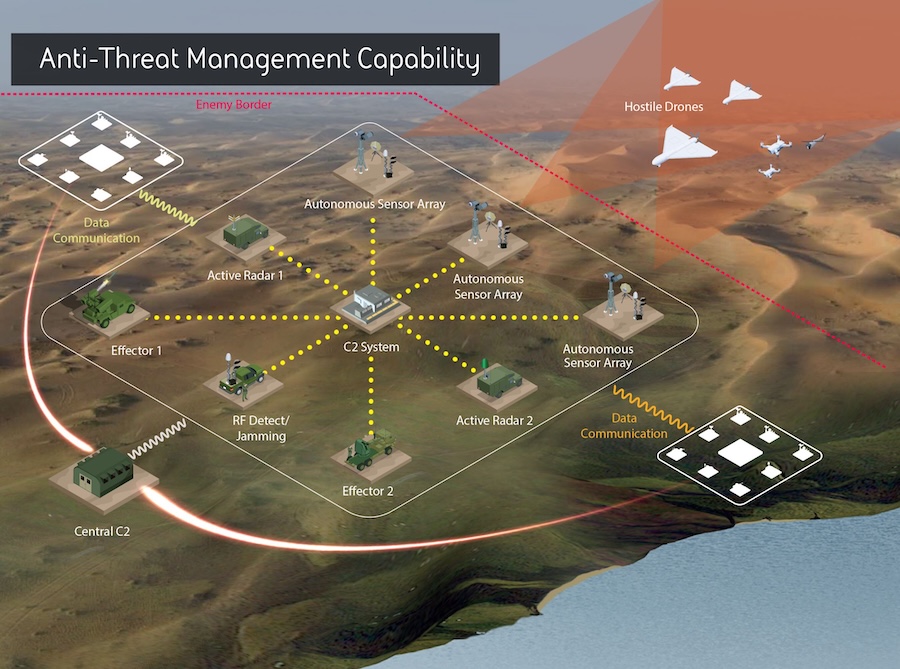
The BATS system is designed to reduce reliance on costly missile interceptors by enabling alternative responses to drone incursions. The system will combine smart software with electronic warfare and kinetic options to counter threats targeting national borders, military equipment, airports and urban areas.
According to BAE Systems, BATS will use a scalable, software-driven command and control decision engine to detect, identify and defeat uncrewed threats as they evolve. Its open architecture will allow customers to integrate existing and future counter-drone technologies, including sensors and effectors from multiple domains, into a single adaptable system.
When deployed, BATS will detect hostile uncrewed activity early by combining intelligence gathered from multiple sensors. The system will then analyse the data in real time, classify the threat level and provide rapid decision support to help operators determine the most appropriate response.
Andrea Thompson, Group Managing Director at BAE Systems’ Digital Intelligence business, said: “Drone incursions are a clear and present issue, putting citizens, military personnel and infrastructure at risk. The technology evolves faster than traditional defence systems can respond, with new behaviours, payloads and tactics emerging almost daily. That’s why we’re moving at pace to build a new system to support our customers in their efforts against this very urgent problem.”
Work on BATS is being carried out by experts from across BAE Systems, drawing on expertise spanning air, land and maritime domains. The company says the programme demonstrates how software-led innovation can be used to develop new capabilities quickly in response to emerging security challenges.