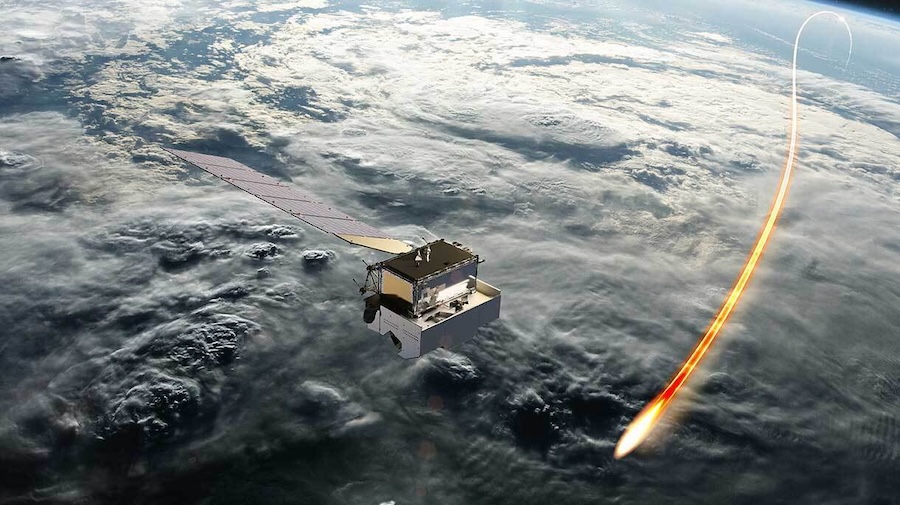
The payload systems are designed to detect, warn and track advanced hypersonic and ballistic missiles. They rely on infrared sensor technology to provide real-time monitoring of emerging threats.
The work supports priorities set by the U.S. Department of Defense. It also reflects a broader effort to enhance national missile warning capabilities.
Paul Wloszek, Vice President and General Manager of Spectral Solutions at L3Harris, said: “We cannot wait 15 years to address this modern threat. The solution requires technology that can monitor emerging threats on a global scale, and the best way to do that is with space-based technology that are proven and ready now.”
He added: “L3Harris is supporting the SDA mission with infrared sensors that can detect, identify and target sophisticated threats in real time.”
Hypersonic missiles, which travel at more than five times the speed of sound, present new challenges for existing defense systems. Current missile warning satellites were designed for predictable ballistic trajectories and are less effective against these advanced threats.
To address this, the United States is pursuing a faster and more flexible satellite deployment model. The Space Development Agency aims to deploy 158 tracking satellites in a timeframe previously required to build only a few.
This approach introduces incremental development through successive tranches. Each tranche is deployed approximately every two years, allowing rapid upgrades and integration of lessons learned.
L3Harris is supporting the Tracking Layer across multiple tranches. Four satellites from Tranche 0 are already in orbit, with 52 more in development across Tranche 1, Tranche 2 and Tranche 3.
The program has faced challenges, including integration issues and supply chain constraints. Adjustments have been made to address these issues, including changes in launch schedules and ground operations.
L3Harris has also implemented improvements in its production processes. The company invested $250 million to expand and modernize facilities in Indiana, Florida and Massachusetts.
Wloszek said: “We’ve made significant progress addressing supply chain constraints experienced on Tranche 1 to prepare for Tranche 2. We are demonstrating 10-15% improvements in supplier delivery schedules, which allow major assemblies such as payload systems and spacecraft buses to deliver in 22 months for Tranche 2 compared to 27 months on Tranche 1.”
The accelerated production model is intended to improve responsiveness to evolving threats. It also supports the development of scalable and resilient space-based defense systems.
The outcome of the program may influence future approaches to space capability development. It could establish a model for faster, iterative deployment across defense and commercial space sectors.
L3Harris and its partners continue to advance satellite launches and system performance. Each new tranche is expected to incorporate improvements and enhance overall defense capabilities.