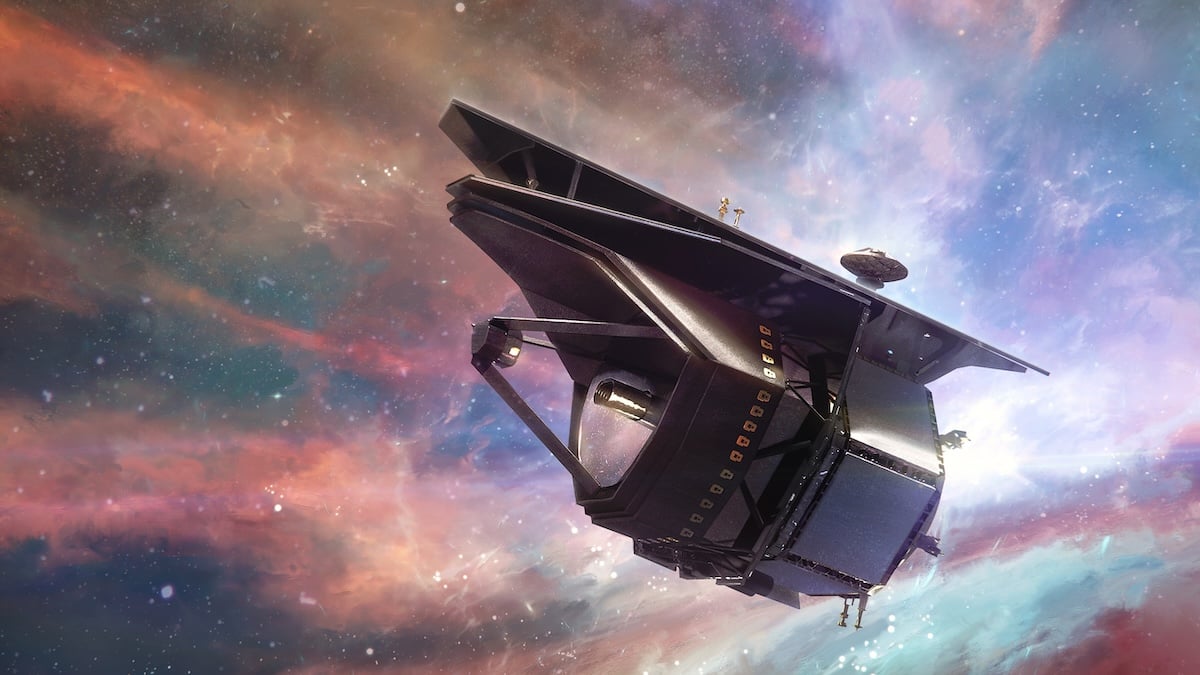
BAE will supply its Evolve+ spacecraft bus and lead assembly, integration and testing of the observatory. It will also lead mission operations and ground support for JPL, which manages the project.
PRIMA’s 1.8-meter telescope is designed to detect far-infrared light from regions of the universe obscured by dust. Those observations would fill a gap between the James Webb Space Telescope and ground-based radio observatories, helping scientists study how stars, planets, galaxies and water formed over time.
“We are excited to continue our decades-long partnership with JPL through the PRIMA mission that will enable NASA to make significant discoveries on the history of the universe,” said Bonnie Patterson, vice president and general manager of civil space at BAE Systems. “The PRIMA mission will also help fill observation gaps with other NASA astrophysics missions, including the James Webb Space Telescope and other observatories, also supported by BAE Systems.”
PRIMA, short for PRobe far-Infrared Mission for Astrophysics, is in Phase B development. BAE said the project will move toward full implementation after NASA’s confirmation review.
The mission will draw on space industry suppliers from France, Italy, Canada, South Korea, Japan and the United Kingdom. BAE has worked on several other NASA observatories, including Hubble, Chandra, Webb and the Nancy Grace Roman Space Telescope.