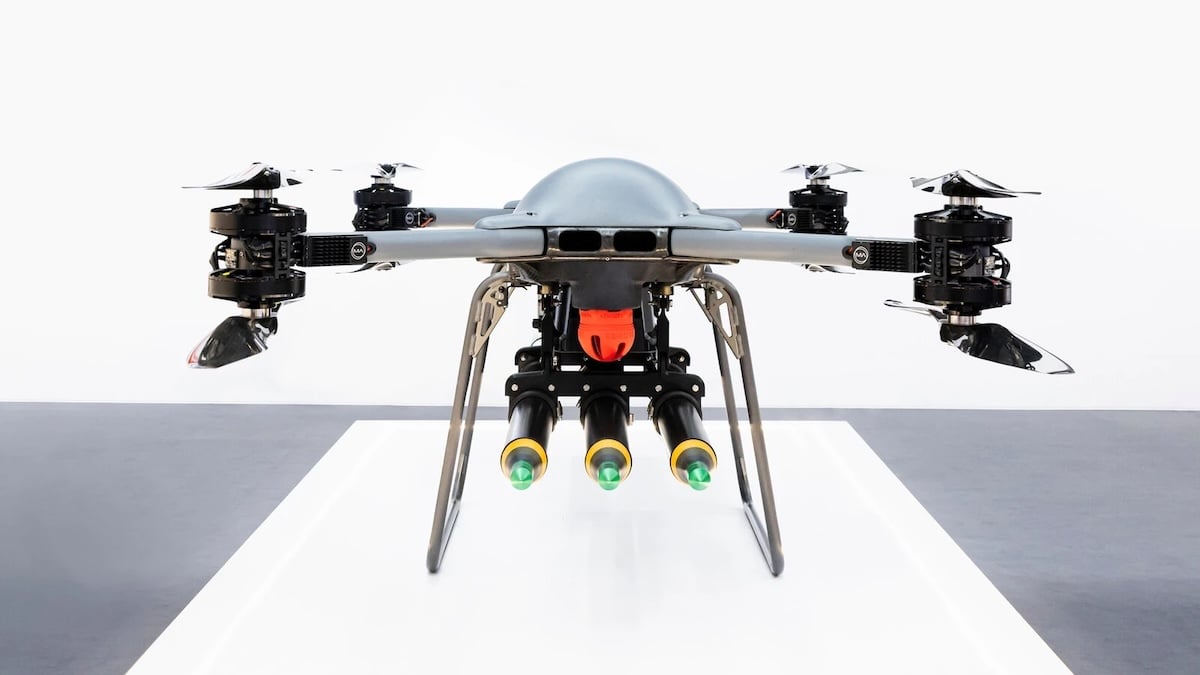
The aircraft carried a three-pod launcher during the late-September experiment at Eglin Air Force Base, Florida. BAE Systems conducted the trials with Maryland-based SURVICE Engineering as part of a US research and engineering joint readiness experimentation exercise.
“Our customers are facing drone threats right now, so we’ve worked at pace with our partners to move from concept to a proven system, which can engage multiple targets in a single mission,” said Thomas Lancashire, head of UAS Business Development at BAE Systems’ FalconWorks division. The demonstration built on a single-shot firing from an adapted T-150 in July last year.
The TRV-150 is a version of subsidiary Malloy Aeronautics’ British-built T-150, adapted by SURVICE to meet U.S. Army requirements. FalconWorks developed and integrated the APKWS modification kit, while the latest trials used a production-ready three-pod launcher.
The platform already supports tactical logistics operations with UK armed forces. It transported supplies between ships during the Royal Navy Carrier Strike Group’s eight-month Indo-Pacific deployment last year.
“Supporting the warfighter has been at the core of SURVICE’s mission since its founding over 45 years ago. Bringing the TRV-150 to the US warfighter and now adding APKWS as a proven, precise, and cost-effective capability to our TRV-150 UAS platform is exactly the type of innovation SURVICE was designed to deliver,” said SURVICE President Gregory Thompson.
The team now intends to extend the T-150’s counter-drone role to the maritime environment. The aim is to help protect customers against similar threats at sea.
“Military technology is evolving faster than ever and it’s vital that effective capabilities reach those who protect us as quickly as possible,” Lancashire said. “In today’s environment, the speed at which we deliver equipment can be just as important as the system itself.”