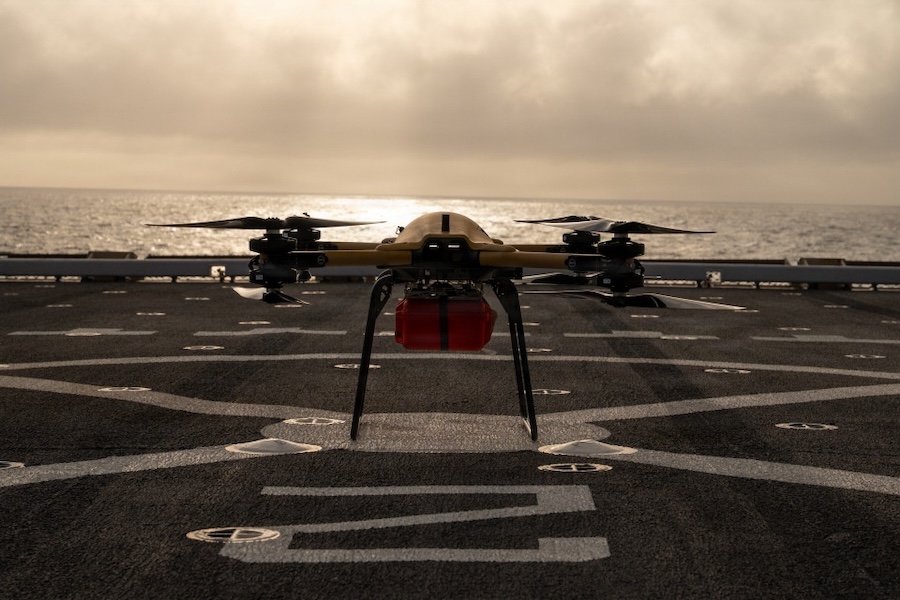
The testing was carried out by the Portfolio Acquisition Executive for Robotics and Autonomous Systems Aircraft Management Program Office and Air Test and Evaluation Squadron 24. The evaluation focused on how the system operates within complex shipboard environments through dynamic interface testing.
The trials followed engineering and development work by the TRV-150C test team, aimed at ensuring the system can support operational requirements. Initial flight operations provided data to support further refinement of the capability.
The program office secured a deployed version of the system for testing and coordinated certifications, funding and flight clearances. Air Test and Evaluation Squadron 24 established the schedule, refined procedures and developed the initial concept of operations.
During a two-week testing period, the TRV-150C completed multiple launches and recoveries at sea. The results demonstrated the feasibility of unmanned cargo delivery in a maritime environment.
“This achievement is a direct result of operating forces identifying a critical need – the ability to move parts and supplies between ships, to the shore, and back again, without relying on manned aircraft or traditional landing craft,” said Zacharias Hornbaker. “The PMO’s response was immediate and collaborative quickly bringing UX-24 to the table. It is a testament to how operational units, the PMO, and the NAVAIR test community can unite to rapidly evolve the future of expeditionary Fleet logistics and sustainment.”
The testing prioritized integration with shipboard operations, which was identified as a more complex challenge than shore-based missions. Future development is expected to focus on shore-to-ship resupply concepts.
The demonstration represents an initial proof-of-concept for deploying the system across the fleet. Program officials said further work will focus on refining procedures and developing training to support operational use.