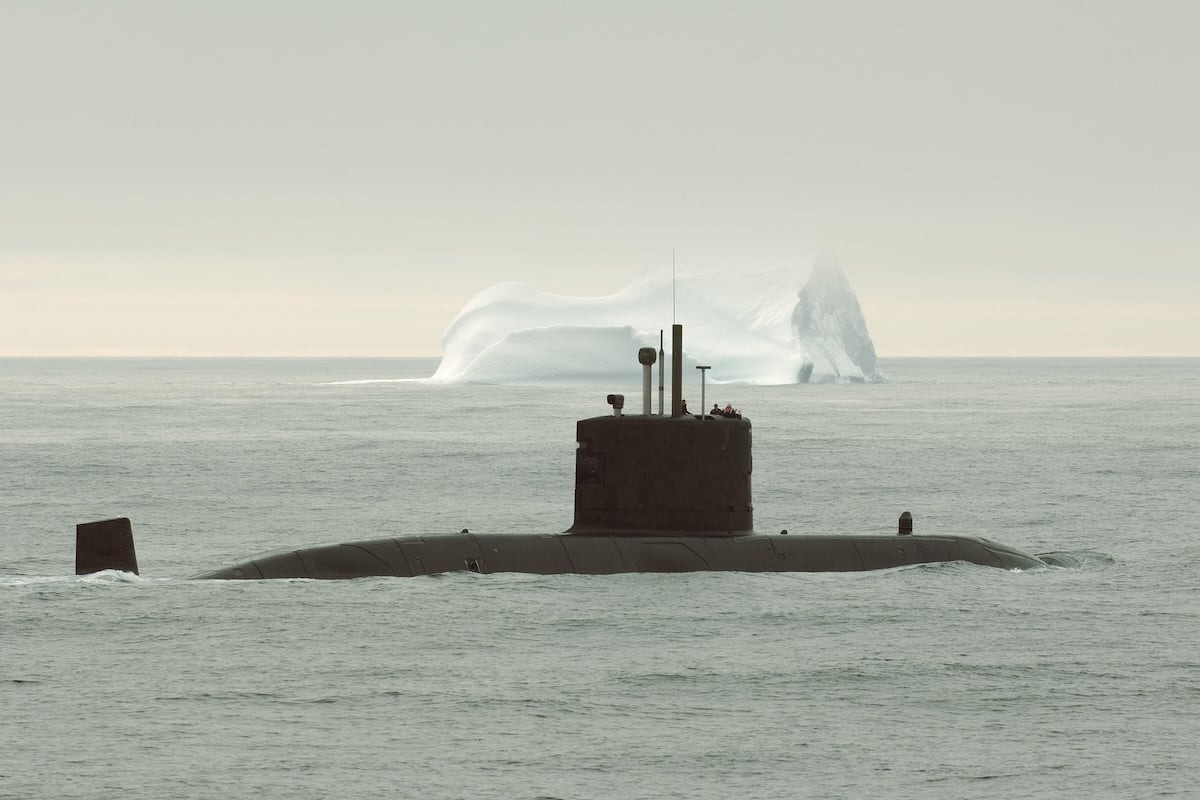
Naval forces from more than 30 allied and partner countries took part in the June and July exercise, known as RIMPAC, where Corner Brook sank the former USS Mobile Bay with a Mark 48 heavyweight torpedo. The submarine also trained with the Republic of Korea Navy and Canadian Fleet Pacific units in anti-submarine and anti-surface warfare.
‘The opportunity to train and operate alongside partners such as the Republic of Korea Navy, the United States Navy, and participants from more than 30 nations during Exercise Rim of the Pacific reinforced the value of working together to enhance our collective readiness and interoperability,’ said Lieutenant-Commander Clark Hubbard, the submarine’s commanding officer. ‘Operating a submarine demands exceptional teamwork under challenging conditions, including extended periods in confined spaces, limited communication with loved ones, and a demanding operational tempo.’
From mid-September to late November, Corner Brook took part in Canada’s Operation LATITUDE and NATO’s ARCTIC SENTRY. The submarine and three Canadian surface vessels, Ottawa, Max Bernays and Robert Hampton Gray, worked alongside US forces under LATITUDE to improve surveillance and defence across North America’s northern approaches.
The submarine also helped monitor Canada’s maritime approaches under Operation LIMPID. The Canadian Armed Forces use the standing mission to detect threats early across the air, maritime, land and aerospace domains.
Lieutenant-General Steve Boivin, commander of Canadian Joint Operations Command, said, ‘His Majesty’s Canadian Submarine Corner Brook’s deployment demonstrated the enduring strategic value of submarine operations to Canada’s defence and security activities. Operating from the Indo-Pacific to Canada’s Arctic and northern approaches, the submarine enhanced maritime domain awareness, contributed to continental defence, and delivered a discreet and effective capability in strategically important regions.’
Rear-Admiral David Patchell, commander of Maritime Forces Pacific, said the crew spent more than five months at sea. ‘Maritime security is a shared responsibility, and this deployment underscored the importance of cooperation,’ he said.
Some crew members qualified as submariners during the deployment, and others earned advanced qualifications. ‘This deployment represents a significant milestone for Canada’s submarine force,’ said Captain (Navy) Alex Kooiman, commander of the Canadian Submarine Force.