
The United States, in coordination with Israel, began military operations against Iran on February 28, 2026, under the Operation Epic Fury designation. The conflict has included air, maritime and missile combat engagements across the Middle East, with the pace of activity declining during an April ceasefire before some strikes resumed.
The Department of Defense, which is “using a secondary Department of War designation” under Executive Order 14347 dated September 5, 2025, has not released a comprehensive assessment of combat losses in the operation. During a May 12 hearing, Acting Pentagon Comptroller Jules W. Hurst III said the department’s cost estimate for military operations in Iran had risen to $29 billion.
“A lot of that increase comes from having a refined estimate on repair or replacement costs for equipment,” Hurst said.
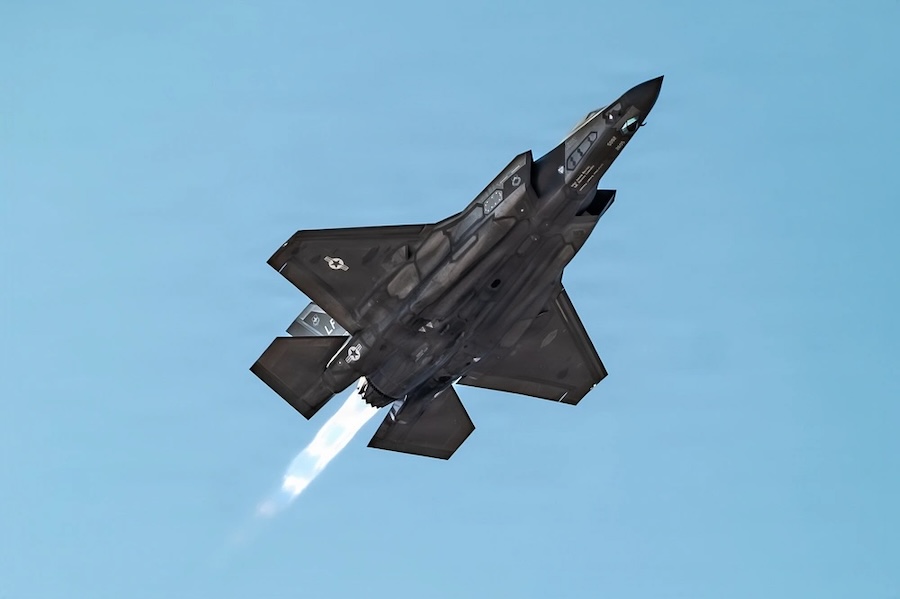
The aircraft listed in the report include four F-15E Strike Eagle fighters, one F-35A Lightning II, one A-10 Thunderbolt II, seven KC-135 Stratotankers and one E-3 Sentry airborne warning and control aircraft. The list also includes two MC-130J Commando II special operations aircraft, one HH-60W Jolly Green II combat search-and-rescue helicopter, 24 MQ-9 Reaper drones and one MQ-4C Triton drone.
According to the report, U.S. Central Command said three F-15E aircraft were shot down and destroyed by friendly fire over Kuwait on March 2. All six crew members ejected safely and were recovered.
CENTCOM also reported that another F-15E was shot down and destroyed during combat operations over Iran on April 5. Both aircrew were safely recovered during separate search-and-rescue operations.
A March 19 news report said Iranian ground fire damaged one F-35A during combat operations over Iran. In an April 6 news conference, Chairman of the Joint Chiefs of Staff Air Force Gen. Dan Caine said enemy fire struck one A-10 on April 3, after which the aircraft crashed and was destroyed during search-and-rescue operations, while the pilot ejected and was recovered safely.
The report said two KC-135 aerial refueling aircraft were involved in a March 12 incident over friendly airspace. One aircraft crashed in Iraq, killing all six aircrew, while the second made an emergency landing at an undisclosed location in the region where U.S. forces are hosted.
A March 14 news report said five KC-135s were damaged on the ground at Prince Sultan Air Base in Saudi Arabia during an Iranian missile and drone attack. A March 28 report said one E-3 Sentry was also struck and damaged at the same base, and a May 7 report said the aircraft had been parked on an unprotected taxiway.
Two MC-130J Commando II aircraft supporting search-and-rescue operations for a downed F-15E were reportedly destroyed on the ground in Iran after becoming unable to depart. All aircrew were safely evacuated, according to the report.
Caine said on April 6 that one HH-60W helicopter sustained damage from small-arms fire on April 5 while supporting search-and-rescue operations for the downed F-15E in Iran. A separate April 9 report said the U.S. military had lost 24 MQ-9 Reapers since the start of U.S. operations against Iran.
An April 14 news report citing a U.S. Navy document said one MQ-4C Triton crashed in a mishap. CRS said the reported losses could raise oversight questions for Congress on information access, budget effects, force sufficiency, industrial base capacity and operational risk.
The report said it remains unclear whether the Defense Department has provided Congress with a full accounting of aircraft losses in Operation Epic Fury. Lawmakers may assess whether they have enough information and time to evaluate the operational effects of those losses and any Pentagon plans to develop or procure replacements.
CRS said aircraft losses could create unplanned costs for replacement, repair or sustainment. Congress may consider whether to approve, reject or modify reprogramming actions, supplemental appropriations, or adjustments to planned procurement and readiness accounts.
The report also said it is unclear how the losses could affect the Defense Department’s ability to meet current operational requirements, maintain global force posture and respond to unforeseen contingencies. Losses of aging and limited high-demand aircraft, such as the E-3 Sentry, could create capability gaps or increase risk in other theaters.
Congress may also examine whether production lines and supply chains can replace lost aircraft within the timelines required by the Defense Department. CRS said lawmakers may seek information on whether foreign military sales, production limits or competing demands could affect the department’s ability to regenerate capacity.
The reported losses may also offer insight into the survivability of U.S. aircraft in contested environments. CRS said Congress may assess whether the incidents reflect changes in adversary capabilities and whether U.S. operational concepts, tactics, techniques, procedures or basing posture should be adjusted.
Source: Congressional Research Service.