
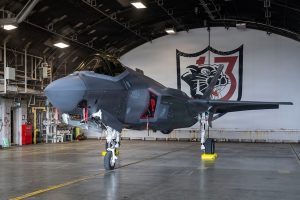
The first aircraft, designated JF-501, arrived in the United States in January 2026 at Ebbing Air National Guard Base in Arkansas. Airworthiness procedures and acceptance inspections began there, while Finnish pilots and maintenance personnel initiated training activities in the United States.
Pilot training started in February at Eglin Air Force Base in Florida, alongside simulator and theoretical instruction. Maintenance personnel have also completed initial training phases, with additional Finnish personnel scheduled to continue training throughout the year.
Flight operations with Finnish aircraft are expected to begin in the United States in late spring. The first aircraft will then be transferred to Lapland Air Wing in Rovaniemi in autumn 2026, while Karelia Air Wing in Kuopio is scheduled to receive F-35A fighters in 2028.
“Getting ready for the introduction of the F-35 capability advances according to plans in all sectors,” said Timo Herranen. “The ongoing preparations involving the system in its entirety are being achieved in Finland and the United States advancing on schedule.”
“I can be happy for the programme moving forward, but a great deal of work is yet to be done before we get to receive the first fighter jets in Finland,” he added.
In 2025, production of Finland’s first aircraft progressed at Lockheed Martin facilities in Texas, with JF-501 completing its maiden flight in December before being handed over to Finland. Infrastructure development at Finnish air bases and procurement of key weapons systems also advanced during the year.
The F-35 is expected to enhance joint operations across Finland’s armed forces by improving situational awareness and enabling new mission types. The aircraft will support operations involving the Army and Navy through multi-domain integration across land, sea, air, space and cyber environments.
“The Army, Navy and Air Force will fight together with significant capabilities brought by the F-35,” Herranen said. “We prepare tactics and, for example, exchange of information and use of fire in close cooperation by war gaming and exercises, among other things.”
“In this respect, the F-35 can be called a force multiplier and quarterback: its sensors detect and relay information that was not available earlier and generate it for the use of the Army and Navy,” he added.
Deliveries of Finnish F-35A aircraft are continuing, with eight jets expected to be stationed in the United States for training until early 2028. Subsequent aircraft will be delivered directly to Finland, while production of additional units is already underway.
“We will keep a watchful eye on the advancement of the production, because it is essential to the building up of our F-35 capability,” said Henrik Elo. “In addition to the fleet itself, there are, of course, lots of other material that will be delivered to Finland, including weaponry, simulators and ground support material.”
The F-35 fleet received type certification in February 2026, transferring responsibility for continued airworthiness to Finland. Modifications, including installation of drag chute systems and future upgrades to Block 4 configuration, will be carried out domestically.
Industrial participation remains a central element of the programme, with Finnish companies contributing to production and maintenance. Assembly of F135 engines has begun in Finland, and domestic partners are expected to support long-term sustainment and supply security.
“The maintenance activities of the F135 engine to be conducted there starting from 2030 will strengthen the domestic security of supply of our fleet,” Elo said.
Training of Finnish personnel continues in the United States, with approximately 150 individuals undergoing initial instruction across multiple disciplines. This includes pilots, maintenance crews and specialists in logistics, mission support and information systems.
“The training at Eglin is a package that works well,” Elo said. “Cooperation with counterparts has been fluent, and the studies have progressed as planned.”
Infrastructure development at Finnish air bases is progressing in parallel, with facilities in Rovaniemi nearing completion ahead of the aircraft’s arrival. Simulators and support systems will be operational to enable training to begin immediately after delivery.
“All in all, the building of infrastructure and changes made at the bases and the industry have progressed well and according to schedule,” Elo said. “However, in order for plans to materialise, numerous details remain to be achieved according to a prior schedule.”
The introduction of the F-35 capability will also involve close cooperation with allied nations. Norway, Denmark and the Netherlands are expected to support training efforts, while U.S. personnel will provide technical assistance during the initial phase.
“The introduction into service of a new main fleet is always a big moment – that is when a new era begins,” Herranen said. “Training starting in Finland is a very significant milestone towards full capability.”
Finland’s F-35 capability is expected to reach initial operational capability in early 2028, with full operational capability planned by the end of 2030. Until then, the Air Force will operate both F/A-18 Hornet and F-35 fleets in parallel.
“The Defence Forces and our cooperation partners work relentlessly to achieve the introduction into use of the F-35,” Herranen said. “The whole time, the aim is to reach operational readiness and, along with the service introduction of the F-35, to keep up constant readiness with the Hornet fleet.”
Source: Finnish Air Force.


![Airbus demonstrates Bird of Prey drone interceptor engaging kamikaze UAV in first autonomous flight test [VIDEO]](https://defence-industry.eu/wp-content/uploads/2026/03/airbus-demonstrates-bird-of-prey-drone-interceptor.jpeg)