Backlog reached a record $292 billion, up 27% from the second quarter. Net earnings rose 14% to $1.8 billion, with sales growth across all four business segments.
The company increased its forecasts for sales, earnings per share and free cash flow for the second consecutive quarter. Chairman, President and CEO Jim Taiclet attributed the performance to growth across the portfolio.
“In the third quarter each of our four segments posted growth year-over-year, sales topped $20.7 billion and net earnings exceeded $1.8 billion, increases of 11% and 14% respectively,” Taiclet said. “We delivered $3 billion of free cash flow in the quarter, and increased our backlog to a record $292 billion, allowing us to raise our dividend for the 24th year in a row.”
Missile production lifts revenue
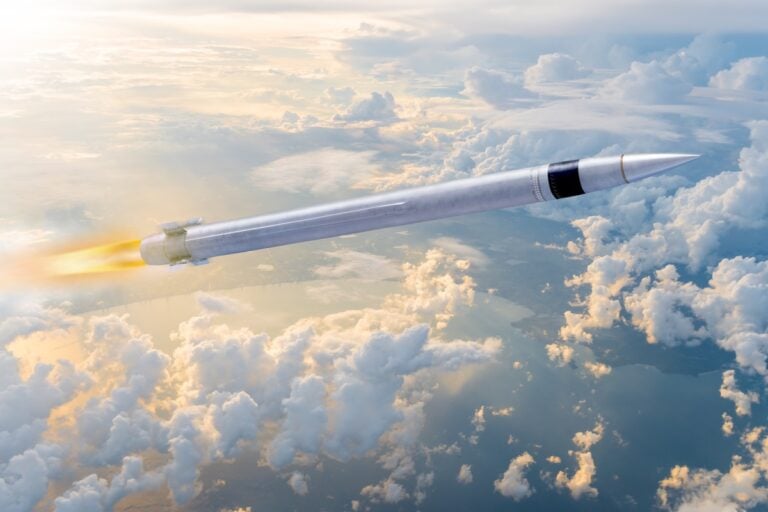
Missiles and Fire Control sales rose 24%, driven by increased production of air defense and precision-strike weapons. PAC-3 and THAAD added $480 million in sales, while GMLRS and Precision Strike Missile programs contributed another $330 million.
The segment’s operating profit also increased 24%, primarily reflecting higher volume. Across Lockheed Martin, business segment operating profit rose by $200 million, supported by missile production and Aeronautics growth.
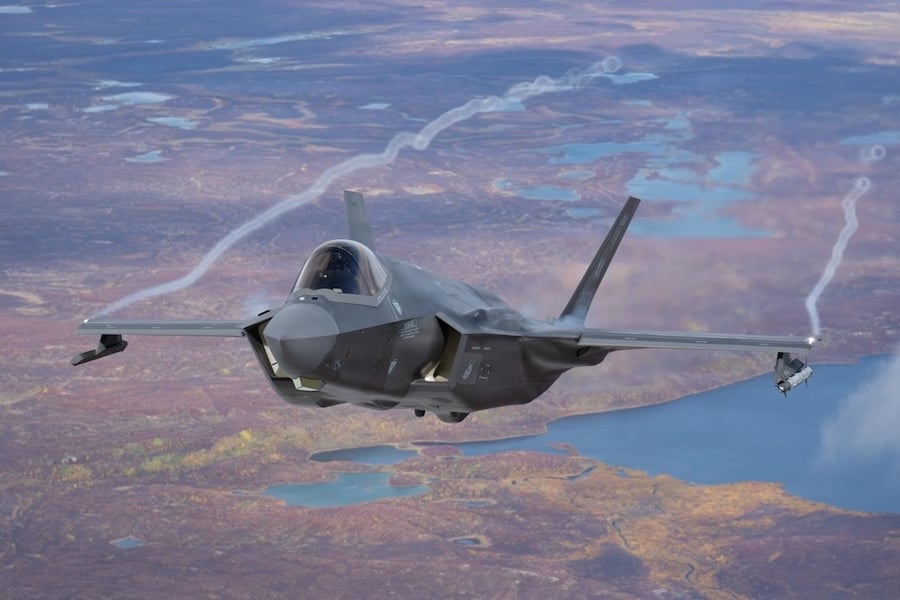
Aeronautics sales increased 13%, including $710 million in additional F-35 production and sustainment revenue. Higher C-130 sales partly reflected the recognition of pre-contract costs following an award, while lower F-16 volume and unfavorable profit adjustments offset some growth.
Lockheed Martin said costs under the Lot 20 advance acquisition contract began exceeding existing authorization and funding during the quarter. Negotiations with the U.S. government continue on production contracts for Lot 20 and subsequent lots.
Without additional authorization and funding, the company said future operating results, cash flows and financial condition would suffer. The warning accompanies higher revenue from the aircraft program.
Free cash flow fell to $3 billion from $3.3 billion a year earlier. The company attributed the decline primarily to higher customer receipts in the comparable 2025 quarter.
Rotary and Mission Systems sales grew 3%, mainly on higher radar program volume. Space sales rose 4%, with Fleet Ballistic Missile and Next Generation Interceptor growth partly offset by lower national security space revenue.
Lockheed Martin spent $439 million on capital expenditure and $599 million on independent research and development during the quarter. Taiclet said the company was integrating artificial intelligence and autonomy into established systems through internal development and partnerships with other technology businesses.