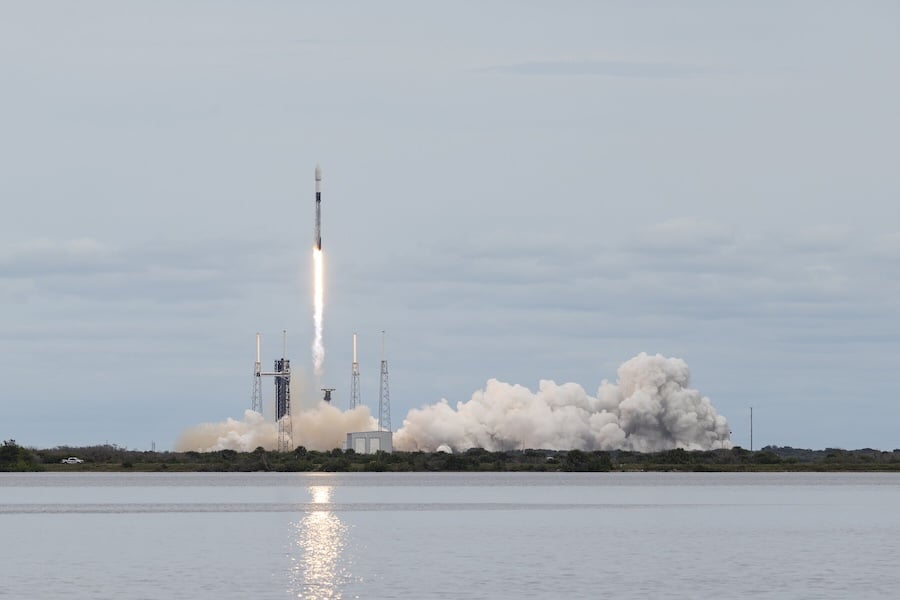
It launched at 10:47 a.m. ET aboard Northrop Grumman’s Cygnus XL spacecraft, on top of a SpaceX Falcon 9 rocket from Space Launch Complex 40 at Cape Canaveral Space Force Station in Florida. The data it collects is meant to help work out how structures could be built and repaired beyond Earth.
“This is a gamechanger, giving future missions greater flexibility in what they build and how they operate,” said Kevin Au, vice president of Exploration, Weather, Commercial and Power at Lockheed Martin. “As NASA prepares to build a sustainable Moon Base, JOINS-type welding will be both an endpoint – proving robotic welding in space — and a launchpad for what comes next.”
Some of the hardware planned for future missions, such as lunar rover shelters, communications towers and frameworks for large space telescopes, may simply be too big to launch in one piece. If it can be welded and assembled where it is needed, in orbit or on the lunar surface, that limit starts to matter less.
Repairs are the other draw. The same techniques could keep existing spacecraft and infrastructure useful for longer.
When the payload reaches the station, Voyager’s Bishop Airlock will be used as a staging area and testbed. From there, the JOINS hardware will be exposed to the space environment.
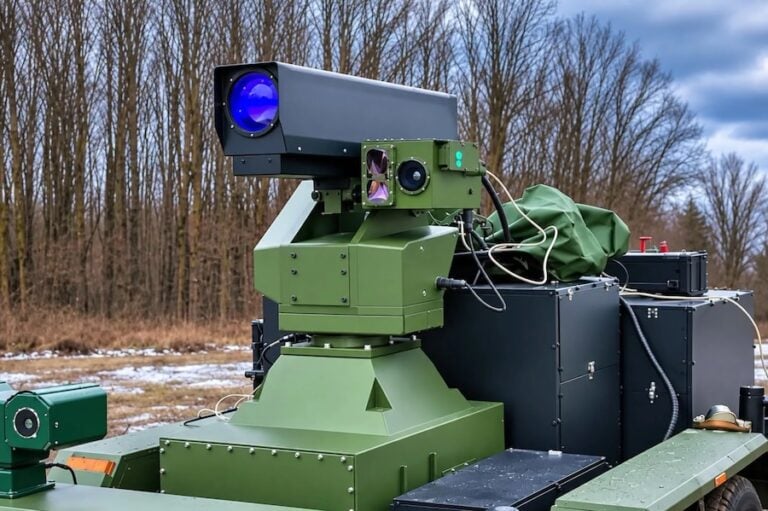
The welding itself is planned for 2027, when Lockheed Martin’s operations team, backed by Voyager, will try two methods: laser beam welding and friction stir welding. Running both gives engineers a basis to judge how well each suits future applications.
Cameras and other onboard inspection systems will watch the welds and send the data to the payload’s mission control in Houston. The physical test samples are expected to come back to Earth months later for a closer look.
Engineers will then check what they saw in orbit against what they find on the ground. That weld-and-inspect cycle is an important step toward qualifying in-space joining technologies for operational use.
Lockheed Martin is running JOINS under a $9.1 million NASA Tipping Point award mechanism. The company is putting in its own money as well to mature the technology.
The demonstration is part of Lockheed Martin’s wider roadmap for in-space servicing, assembly and manufacturing, and its push to deliver first-of-its-kind technology for complex challenges. What the company learns from JOINS will also feed into STRATOS, its collaboration with NASA on robotic assembly technologies.