
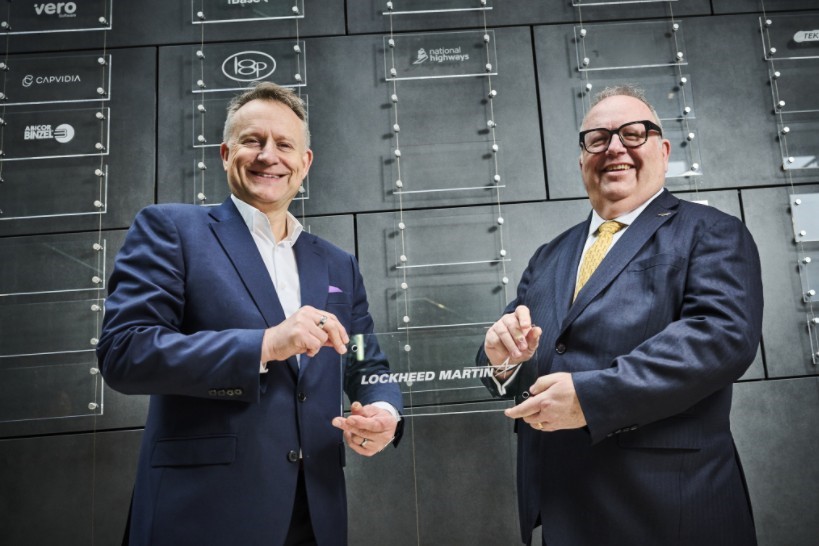
The initiative is designed to support the sovereign development and delivery of advanced technologies for UK customers by leveraging Skunk Works expertise. It introduces a grassroots collaboration model focused on small and medium-sized enterprises while building on existing partnerships with government, academia and industry.
Lockheed Martin said the program will target priority areas identified in the UK’s Strategic Defence Review, including artificial intelligence, autonomy, cyber, materials and space manufacturing. Initial projects will focus on delivering immediate capabilities from existing technologies while promoting best practices and innovation across the defense ecosystem.
The announcement follows recent UK-based activities by Skunk Works, including the TIQUILA uncrewed aerial system program for the British Army. Additional efforts include Project DEIMOS demonstrations involving interoperability between Royal Air Force F-35 aircraft and NATO allies, as well as collaboration with BAE Systems’ FalconWorks on uncrewed autonomous air systems.
As part of its Tier 1 membership, Lockheed Martin will collaborate with the Manufacturing Technology Centre on research, capabilities and investment programs. The company will also play a leading role in managing projects addressing key challenges in defense supply chains.
“Lockheed Martin recognises that for the UK Government, defence is an engine for growth, and cooperation of this type delivers for the UK, the US and their allies – moving technology faster, driving supply chain resilience and creating shared economic growth for all parties,” said Paul Livingston.
OJ Sanchez, Vice President and General Manager of Lockheed Martin Skunk Works, said, “The Technology Roadmap initiative with UK industry and partners such as MTC will help us build on the long legacy of transatlantic excellence to deliver mutual security benefits today and into the future.”
Sir Rick Thompson, Managing Director of Defence at the Manufacturing Technology Centre, said, “Lockheed Martin joining the MTC as a Tier 1 member sends a clear signal about the strength of the UK’s defence industrial base and our innovation ecosystem as it continues to grow in response to an increasingly uncertain world. By working with partners like Lockheed Martin, we can help companies across the supply chain adopt the technologies they need to compete, scale and seize the opportunities created by the government’s Defence Industrial Strategy as a driver of growth.”
Projects conducted with the Manufacturing Technology Centre will focus on scalable and adaptable manufacturing with reduced costs and lead times. These efforts will include additive manufacturing, automation, augmentation and digital integration to accelerate the delivery of new technologies.
The initiative is also intended to accelerate technology readiness levels among SMEs and support the transition of emerging concepts into deployable solutions. This aligns with Lockheed Martin’s SMEUnite initiative, which includes more than 180 British companies.
Headquartered in London, Lockheed Martin UK contributes approximately £2 billion annually to the UK economy and supports around 26,000 jobs. The company said its long-standing partnership with the UK, spanning more than 85 years, continues to focus on strengthening industrial capacity, resilience and economic impact across both sides of the Atlantic.