
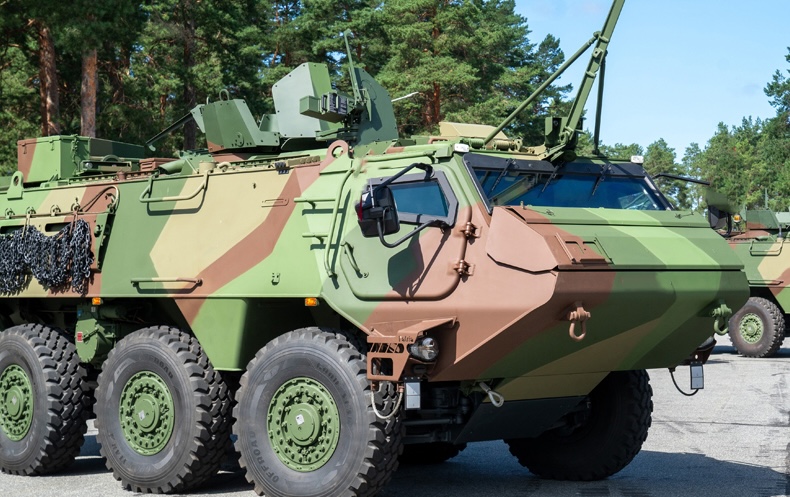
The agreement complements the Life Cycle Management (LCM) contract for the CAVS 6×6 signed in 2024 by Latvia, Finland and Patria. Sweden and Denmark subsequently joined that framework agreement.
According to Patria, the new LCS contract defines national sustainment procedures, services and products tailored specifically for Latvia’s vehicle fleet. It also brings both local and Original Equipment Manufacturer (OEM) level sustainment activities together under a single contractual framework.
The arrangements are designed to fully support Latvia’s security of supply requirements. At the same time, they remain aligned with the broader Life Cycle Management framework established for the multinational CAVS programme.
Pekka Ruutu, Executive Vice President of Patria’s Sustainment Solutions business area, said the agreement will strengthen the long-term operational capability of Latvia’s forces. “This agreement strengthens Latvia’s long-term readiness by combining capabilities of the national defence industry with Patria’s OEM expertise.”
He added that the support structure is intended to ensure lasting reliability of the armoured fleet. “The LCS framework ensures reliable, efficient and future-proof sustainment for the Latvian CAVS fleet for years to come,” Ruutu said.
Patria also highlighted Latvia’s efforts to strengthen its domestic defence support capabilities as part of the programme. These include local assembly and sustainment infrastructure for the armoured vehicles.
Ugis Romanovs, Patria’s Country Manager for Latvia, emphasised the role of national industry in securing operational readiness. “Through the CAVS programme, Latvia’s security of supply in armoured 6×6 vehicles will be exceptionally strong, supported by ongoing local vehicle assembly since 2022, a completed maintenance, repair and overhaul (MRO) technology-transfer programme in 2025, and the establishment of a dedicated spare parts stock capable of supporting both peacetime and crisis conditions.”
The CAVS programme is led by Finland and currently includes seven participating nations. Finland, Latvia, Sweden, Germany, Denmark, the United Kingdom and Norway are members of the initiative.
Vehicles developed under the programme are also operational in Ukraine. The system’s development is led by Patria, which has more than four decades of experience in protected troop transport and system integration
The programme places a strong emphasis on industrial cooperation among member states. Most of the vehicle production is carried out through local industry within participating countries, with each new member strengthening the overall security of supply for the entire collaborative system.