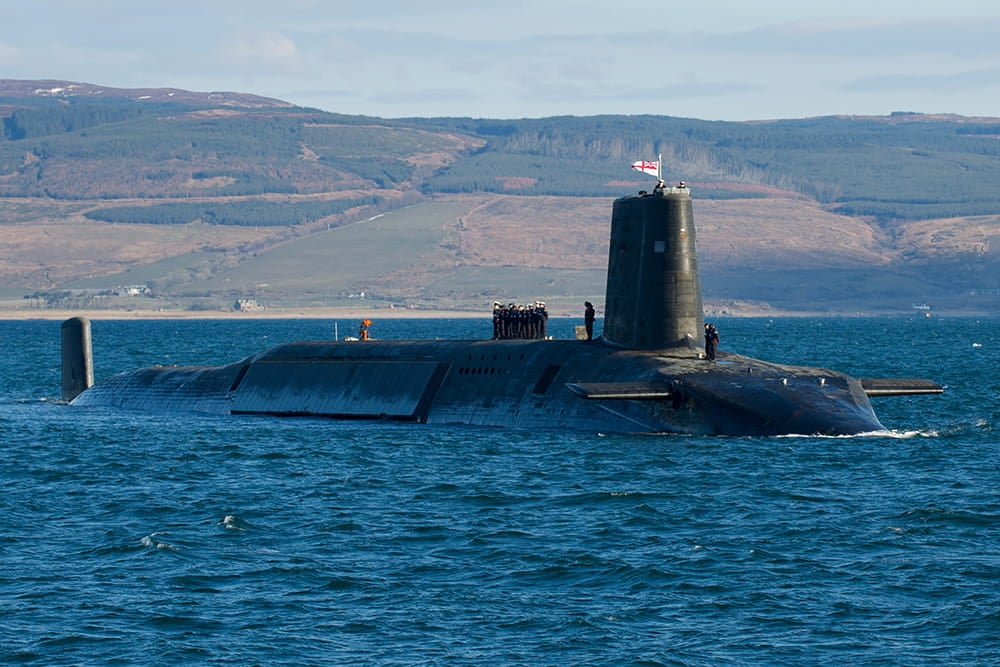
Britain has maintained continuous deterrent patrols for more than 57 years, and the Royal Navy says they help protect both the UK and its NATO allies. Patrol locations and other operational details are kept secret, and the navy’s Vanguard-class submarines are designed to remain undetected at sea.
Defence Secretary Wes Streeting and First Secretary of State Louise Haigh met the returning crew and thanked around 140 submariners aboard the 15,000-tonne vessel. They also toured the submarine and received an operational briefing.
“For 57 years, these tours have been a cornerstone of our national defence,” Haigh said. “For the crew it means months at sea, away from their families and the luxuries of home, and round-the-clock vigilance.”
The government’s Defence Investment Plan commits £63 billion over four years to the Defence Nuclear Enterprise, including a multi-decade upgrade of the Clyde base. The enterprise supports more than 47,000 highly skilled jobs and involves more than 6,000 UK-based suppliers.
The government plans to spend around £47 billion on submarines, maintenance and infrastructure, alongside investment in the sovereign warhead programme and the skills needed to sustain the deterrent. The plans include investment in bases under Project Royal Oak and in shipyards, with work spanning Clyde, Barrow and Devonport.
“It was the greatest honour to welcome them home and to meet their families, whose own incredible sacrifice is fundamental to our national security,” Streeting said. “We are steadfast in our commitment to the nuclear deterrent.”