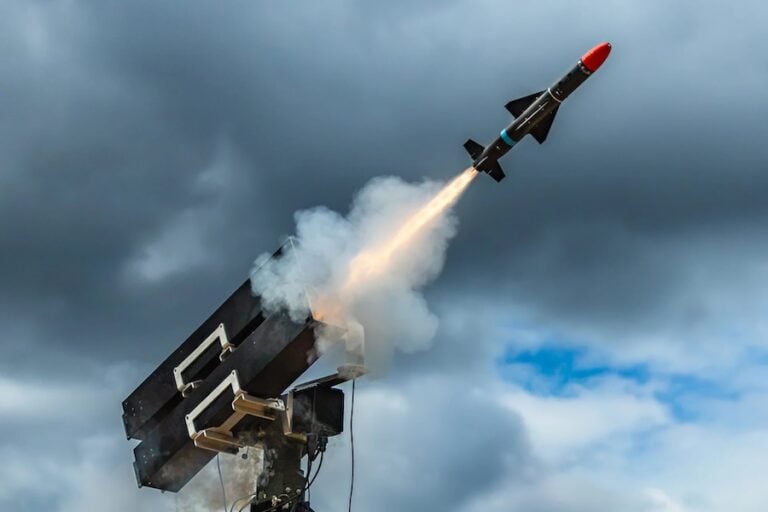
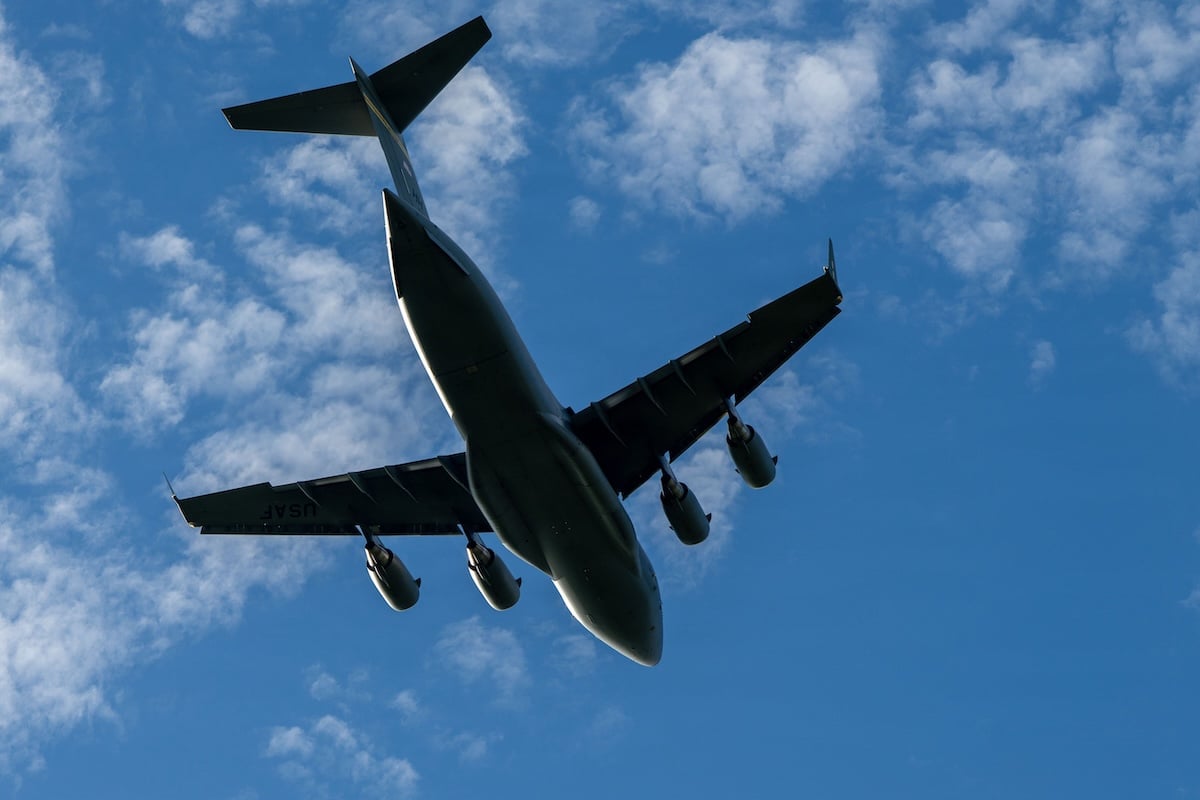
Air Force Chief of Staff Gen. Kenneth S. Wilsbach discussed the palletized version of the Family of Affordable Mass Missiles, known as FAMM-P, at the Airlift/Tanker Association’s 2026 symposium on Nov. 6. Air Mobility Command chief Lt. Gen. Dan Tulley said C-17s and C-130s could use the missiles to deliver “mass fires on the adversary.”
The missiles ride in a container carried on a standard airdrop platform. After the aircraft releases the container and its parachute opens, the missiles separate, ignite their engines and fly toward their targets.
Wilsbach said each FAMM-P missile “costs about a tenth” of a Joint Air-to-Surface Standoff Missile, or JASSM, and put the lead time at “months, not years.” He said adding the weapon to cargo aircraft would blur the line between combat and airlift missions and urged mobility crews to prepare for the change.
The Air Force is seeking $355 million in its fiscal 2027 budget to buy 1,000 weapons under the broader FAMM program. Its five-year budget projections call for 28,000 missiles at a cost of $12.6 billion.
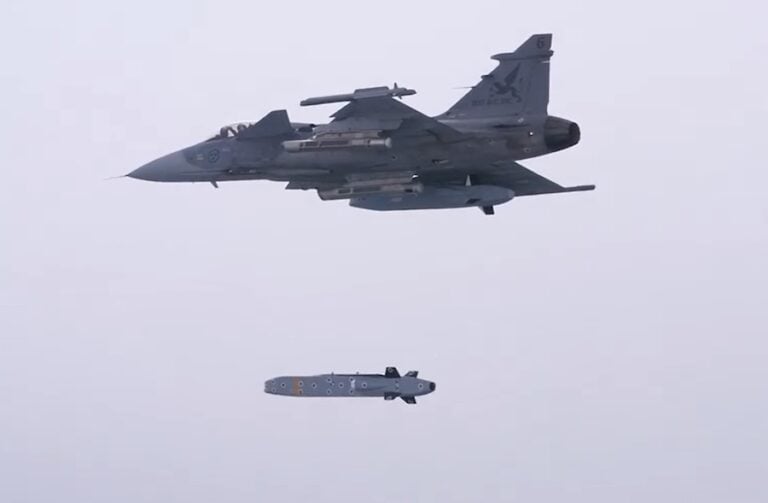
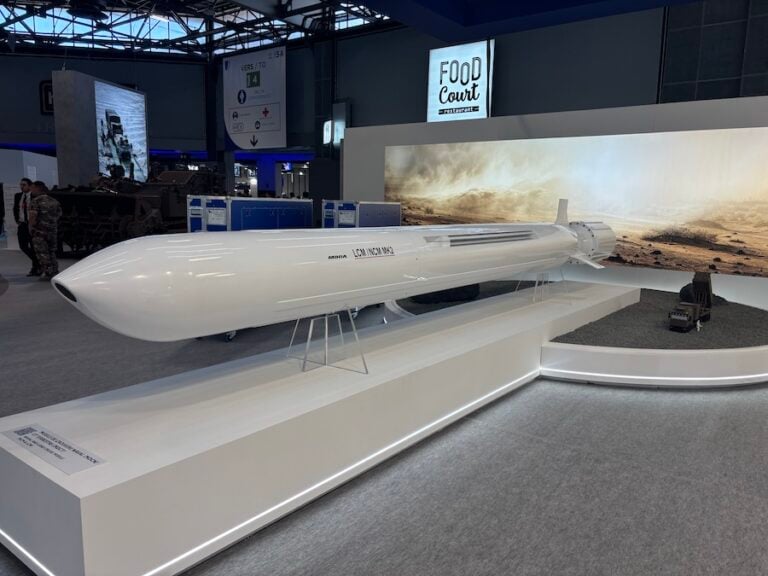
The Pentagon announced framework agreements in July for multiyear deals with three companies to develop and produce two versions of the weapon. The lugged version mounts on fighters, while the palletized version is designed for airdrop from cargo aircraft.
The program traces its roots to the Air Force Research Laboratory’s Rapid Dragon experiments, which began in 2019, and an effort previously known as Franklin that aimed to produce cruise missiles for $100,000 each. In April, the Air Force Life Cycle Management Center renamed the palletized effort Dragon Cart and made it a formal acquisition program.
U.S. strike aircraft used roughly 1,100 JASSMs during Operation Epic Fury, about a quarter of the estimated prewar inventory, according to an April report cited by Air & Space Forces Magazine. The report put the time from order to delivery for JASSMs at two years.
Source: Air & Space Forces Magazine.