
The companies said the integration would provide a new option to deter potential adversaries. They described the effort as the first integration of autonomous surface vessels with hypersonics.
The collaboration is intended to accelerate distributed hypersonic capabilities by pairing Saronic’s autonomous surface vessels with Castelion’s low-cost hypersonics. Both companies were founded in late 2022 and are targeting a demonstration in 2027.
“Launching a Castelion hypersonic from a Marauder MUSV significantly changes the approach for any adversary calculating where and how the U.S. can strike,” said Dino Mavrookas, Co-Founder and CEO of Saronic. “Deterrence is ultimately a function of capability, capacity, and credibility.”
“Saronic and Castelion are working to increase all three by combining autonomous maritime and hypersonic strike capabilities that are more scalable, more affordable, and faster to field,” Mavrookas said. The companies said unmanned launch platforms could give commanders more ways to generate credible strike capacity.
Hypersonic systems launched from unmanned platforms would reduce reliance on scarce and expensive crewed launch assets, according to the companies. They said distributed launch across more lower-cost platforms could increase magazine depth, improve operational flexibility and create more challenges for adversaries.
The companies said the approach would present adversaries with more launch locations, trajectories and timing challenges. They said this could make hypersonic forces harder to predict, harder to suppress and easier to scale.
The path to an at-sea launch in 2027 will require both companies to move beyond the limits of land-based ranges and crewed maritime assets. They said this is needed to accelerate the flight test cadence.
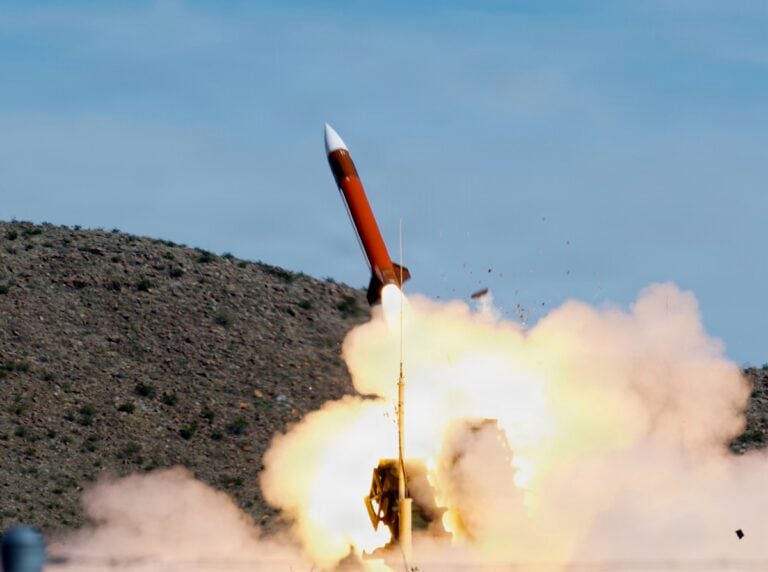
Saronic’s autonomous surface vessels have already supported this work. In late 2025, Saronic supported a Castelion Blackbeard flight test by operating the 24-foot ASV Corsair as an autonomous at-sea telemetry collection and communications node.
The two teams are now advancing joint risk-reduction efforts. These are intended to support continued flight test operations and build toward the 2027 maritime launch demonstration.
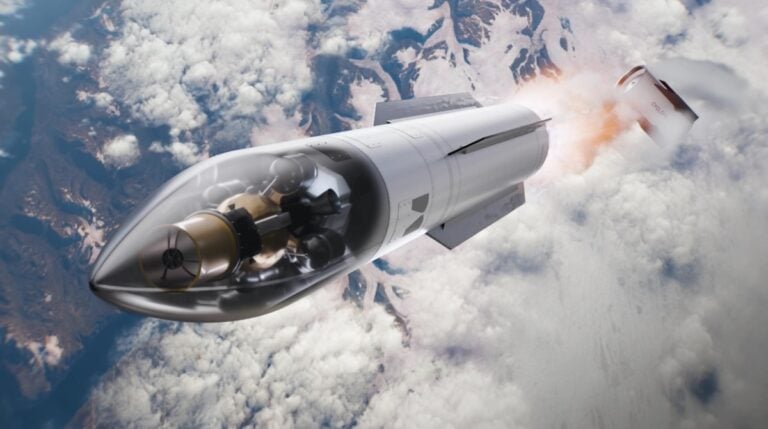
“Blackbeard and Marauder will give our warfighters more shots, from more places, with fewer constraints.” said Bryon Hargis, Co-Founder and CEO of Castelion.
Both companies said they have used rapid hardware and software iteration to deliver real-world results. Castelion moved from clean-sheet design to more than 25 flight tests in under two and a half years.
Saronic brought Marauder from design to on-water trials in under a year. The company is also building three more hulls at its shipyard in Franklin, Louisiana.
Both companies have invested in production infrastructure to sustain and accelerate progress. Castelion is expanding production capacity to several thousand Blackbeard missiles annually.
Castelion’s Project Ranger campus is a 1,000-acre hypersonic manufacturing facility in New Mexico backed by more than $250 million in private capital. The company said the site is intended to produce hypersonic systems at the speed and scale required for effective deterrence.
Saronic is carrying out a $300 million shipyard expansion in Louisiana. The project will add 300,000 square feet of production capacity and is expected to be complete by the end of 2026.
The expanded Louisiana shipyard is expected to provide the capacity to deliver 20 Marauders annually. Saronic said this is one part of a wider strategy to scale production capacity.
The company’s Austin, Texas facility adds 400,000 square feet of production capacity designed to produce thousands of small autonomous surface vessels per year. Saronic’s planned next-generation shipyard, Port Alpha, is intended to support a new era of American shipbuilding and help revitalize the U.S. maritime industrial base.
The companies said their investments provide a path for the United States and its allies to field the combined capability at relevant scale and speed. The planned 2027 demonstration is intended to show how autonomous maritime systems and hypersonic weapons can be combined for distributed strike operations.