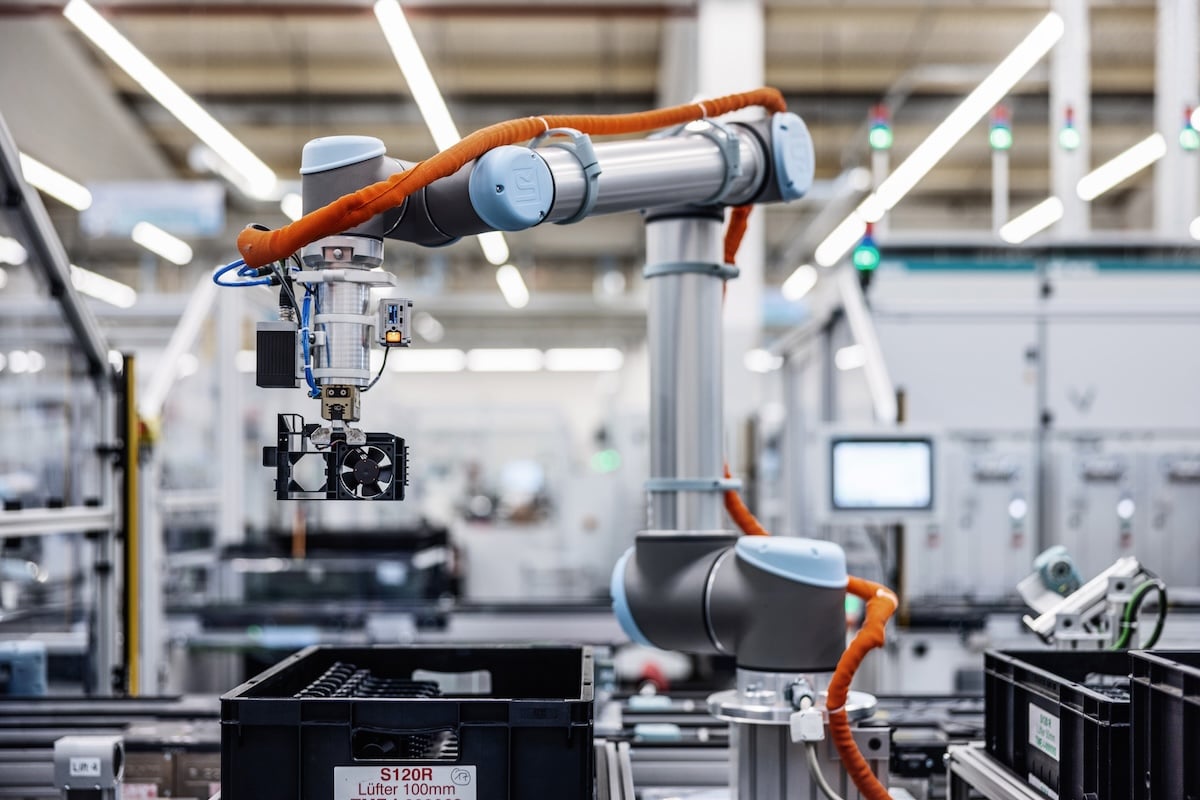
The companies are demonstrating the approach at Siemens’ electronics factory in Erlangen, Germany. The project targets up to 85% less manual engineering work in inspection programming, fewer false defect alerts and improved first-pass yield.
“Manufacturers shouldn’t have to wait for the first physical circuit board to start preparing inspection,” said Rev Lebaredian, vice president, Physical AI Simulation at NVIDIA. “By combining Siemens’ industrial software and manufacturing expertise with NVIDIA Cosmos, we can generate synthetic images of good and defective boards to prepare inspection virtually—helping manufacturers bring new products into production faster.”
Introducing a new circuit board or product variant traditionally requires a physical sample before optical inspection can be prepared and trained. Siemens and NVIDIA are moving more of that preparation into the design and simulation stage.
Siemens’ Teamcenter supplies the board design, bill of materials and component information. Its Process Preparation X software checks and assembles that data into a digital twin of the printed circuit board assembly.
That model provides the reference for a photorealistic virtual “golden board,” representing the intended product. NVIDIA Cosmos Data Factory generates synthetic defect images so inspection machines can be calibrated before physical boards are available.
The workflow also extends to AI-supported secondary inspection during production. When an automated optical inspection system flags a potential fault, the additional analysis helps distinguish a genuine defect from a false alert.
“By leveraging a ‘virtual’ golden board, electronics manufacturers can change production dramatically quicker without taking the line out of production,” said Mark Hindsbo, executive vice president operations software at Siemens. “This enables electronics manufacturers to respond more quickly to change and helps reach production readiness at scale and speed – while helping to reduce manual engineering effort, accelerate AOI readiness and improve manufacturing quality.”
The Erlangen project targets a roughly 40% reduction in false alerts and more than a 5% improvement in first-pass yield. Those figures, alongside the engineering-effort reduction, are objectives rather than reported results.
The factory serves as Siemens’ “Customer Zero” site for broader work with NVIDIA on adaptive, autonomous and AI-powered production. Its goal is to accommodate production changes three to five times a week without disruption.