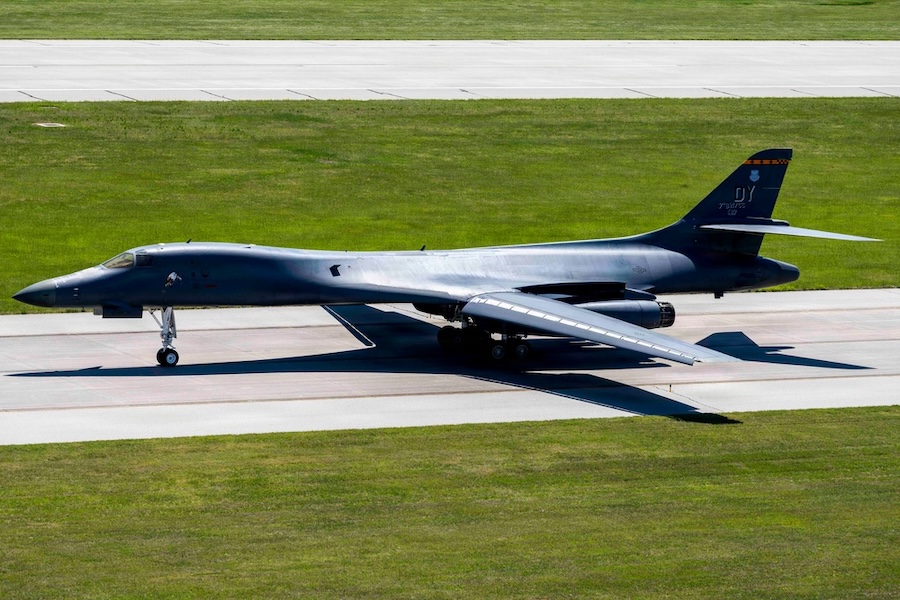
The bomber arrived at McConnell Air Force Base in September 2025 as part of the BackBONE Project, a program focused on extending the service life of the B-1 fleet. The repair involved replacing the aircraft’s 33-foot Forward Intermediate Fuselage component, located in the upper spine section of the bomber.
According to the Air Force, the structural repair was originally expected to require 12 months to complete. Officials said the joint Air Force and NIAR team completed the work approximately three and a half months ahead of schedule.
Abigail Ngo, program manager with the Air Force Life Cycle Management Center’s B-1 Program Office, said, “When we started work on the aircraft, we were looking at a 12-month repair.”
“All in all, we were three-and-a-half months ahead of schedule,” Ngo added. “That is a good news story in itself—just the speed at which we were able to do a really hard thing.”
The Air Force stated that a major factor in the accelerated repair timeline was the use of a high-fidelity digital twin model of the aircraft. Since 2020, NIAR has been scanning retired B-1 aircraft and legacy technical drawings to develop detailed three-dimensional digital models.
According to the Air Force, the repair process was first sequenced digitally and then tested physically on a prototype before work began on the operational bomber. Engineers also used laser measurement systems to transfer aircraft measurements directly to the fixture used to build the replacement fuselage section.
Joe Stupic, senior material leader and division chief of the B-1 Program Office, said, “We’re glad to return the aircraft to the fleet early.”
“It was a big team effort, a great win, and the field gets back a better jet,” Stupic added. “A jet that will require fewer inspections because of this repair.”
After quality audits were completed, maintenance teams from the 22nd Maintenance Group at McConnell and the 7th Maintenance Group from Dyess Air Force Base restored the aircraft’s systems for its return flight to Air Force Global Strike Command. The Air Force said the project establishes a new benchmark for complex sustainment work on legacy aircraft.
According to the service, digital engineering and repair strategies are expected to play an increasingly important role as the Air Force continues extending the operational life of the B-1 bomber fleet. The Air Force said the project demonstrated how advanced digital modeling can improve readiness and reduce maintenance timelines for aging aircraft platforms.