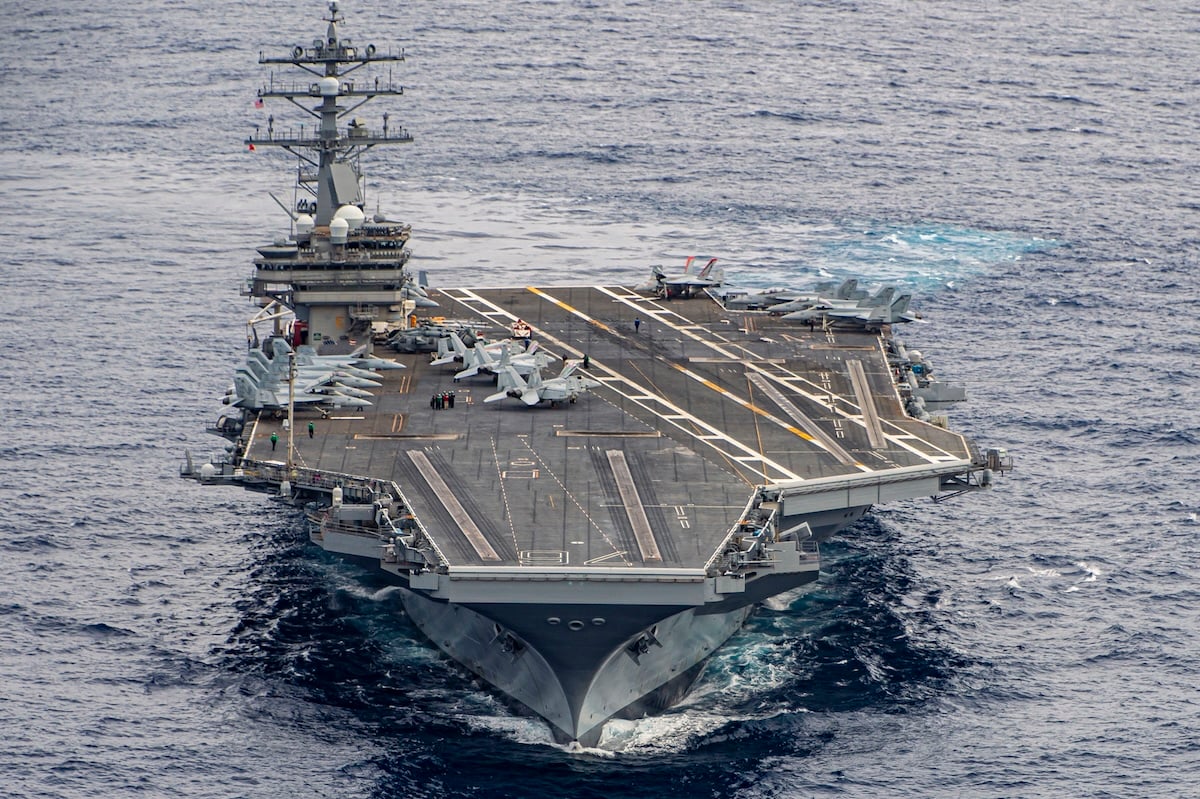
Operators in the carrier’s Unmanned Air Warfare Center used an MD-5C Ground Control Station to establish the beyond-line-of-sight connection. The link ran through a proliferated low Earth orbit satellite network.
The Navy said it was the first underway connection between a carrier-based Unmanned Air Warfare Center and an MQ-25A. The trial formed part of a series of exercises to validate the procedures, networks and interfaces needed to control the unmanned tanker.
The Stingray will provide aerial refueling for the carrier air wing, allowing more F/A-18E/F Super Hornets to concentrate on strike missions. The Navy expects the aircraft to extend the air wing’s operational reach.
“The MQ-25A Stingray’s carrier-based refueling capabilities enable F/A-18 Super Hornets to fly farther and longer,” said Acting Secretary of the Navy Hung Cao. “The integration of this unmanned aerial refueler demonstrates the transformational change our manned and unmanned asset integration provides the Fleet.”
Earlier pierside and at-sea tests involved the Unmanned Carrier Aviation Mission Control System team and the MQ-25 Integrated Test Team. The latter brings together personnel from the Navy, Boeing and Lockheed Martin.
“We have redefined naval power projection,” said Capt. Daniel Fucito, program manager for the Unmanned Carrier Aviation Program Office, PMA-268. “This first-ever underway connection between a carrier-based UAWC and an MQ-25A aircraft proves that the Carrier Air Wing of tomorrow is a reality today.”
The MD-5C combines the Navy’s command, control, communications, computers and intelligence network with Lockheed Martin’s MDCX hardware and software and other government-produced equipment. It provides command and control of the MQ-25A and will also support future unmanned carrier aircraft.
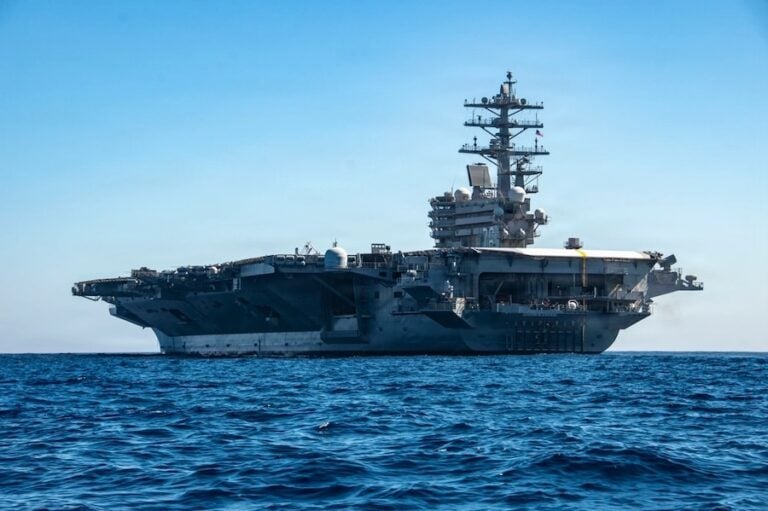
The Navy describes the Stingray as a pathfinder for the wider introduction of unmanned aircraft aboard carriers. The Ronald Reagan trial demonstrated remote control from a ship underway, with the test aircraft at a facility ashore.