Dyess AFB is home to the 7th Bomb Wing and supports the long-range strike mission. The base enables rapid global response and provides military leaders with flexible options to deter, compete and respond to threats around the world.
“This visit allowed us to showcase how our Airmen generate and sustain long-range strike operations every day,” said U.S. Air Force Col. Seth Spanier, 7th Bomb Wing and installation commander. “From aircraft generation to aircrew training and mission support, our Airmen ensure Dyess remains ready to meet combatant commander requirements worldwide, today and well into the future.”
During the two-day immersion, Correll received mission briefs from wing leadership and toured operational facilities. He also met with Airmen responsible for generating and sustaining bomber capabilities.
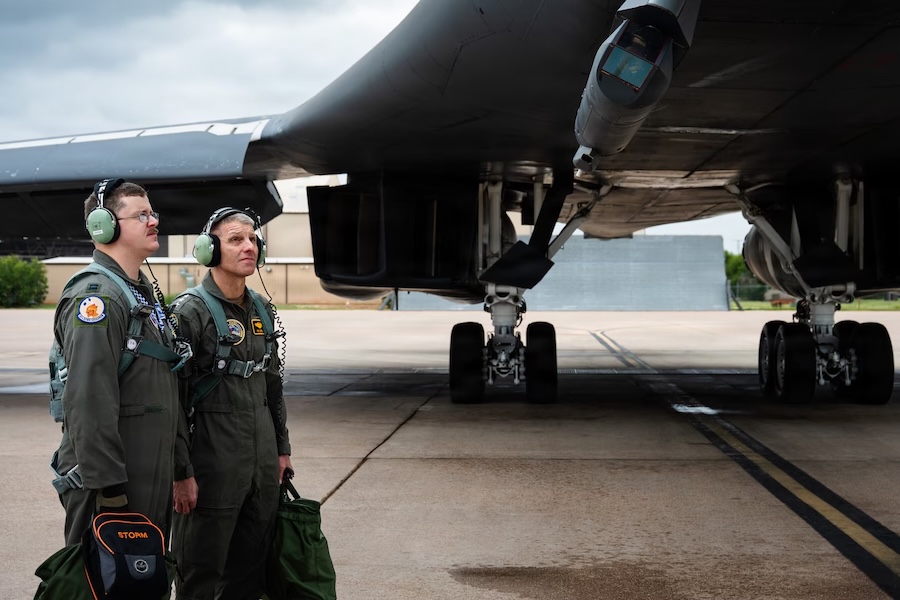
A highlight of the visit was a flight aboard a B-1B Lancer with the 28th Bomb Squadron. The flight allowed Correll to experience the bomber’s complex operational environment and long-range capabilities firsthand.
Airmen across operations, maintenance and mission support demonstrated how coordinated aircraft generation supports continuous bomber availability. USSTRATCOM said that work is underpinned by decision-quality data and supports global taskings while highlighting the lethality of the 7th Bomb Wing.
“I met Airmen today who clearly understand how their daily efforts drive strategic integration across the Joint Force,” Correll said. “That connection between their work on the flightline and our ability to provide flexible, effective strategic options is what makes this team so lethal.”
Dyess is working to keep the B-1B Lancer ready and lethal while also preparing for future capabilities. The base has begun modernization and planning efforts for the beddown of the B-21 Raider.
Those efforts include infrastructure development and mission support alignment. They are intended to support a seamless transition to the next-generation stealth bomber.
“We are sustaining the highly capable force we have today while actively preparing for its replacement,” Spanier said. “Our Airmen are proving they can balance the heavy operational demands of the B-1 while simultaneously laying the groundwork to operationalize the B-21 Raider and maintain our strategic advantage.”
Dyess’ focus on both current readiness and future integration aligns with USSTRATCOM’s strategic deterrence priorities. The command said the base’s work supports the continued availability of bomber forces while preparing for modernized weapon systems.
“The strength of our strategic deterrence rests on the shoulders of our people,” Correll added. “By sustaining our current bomber fleet while preparing to transition to modernized weapon systems, the Airmen at Dyess are ensuring we maintain our asymmetric warfighting advantage against any evolving threat.”