Two of the aircraft delivered in the first half went to France, while 10 were supplied to export customers. Dassault did not identify the foreign recipients.
The company’s Rafale order backlog stood at 208 aircraft at the end of June. That provides a sizeable production base as Dassault continues deliveries to France and overseas customers.
The order book could expand further before the end of the year. In July, an intergovernmental agreement was reached covering the planned purchase of 16 Rafales by Ukraine.
India is also continuing negotiations over a potential order for 114 aircraft. Iraq has separately expressed interest in the Rafale.
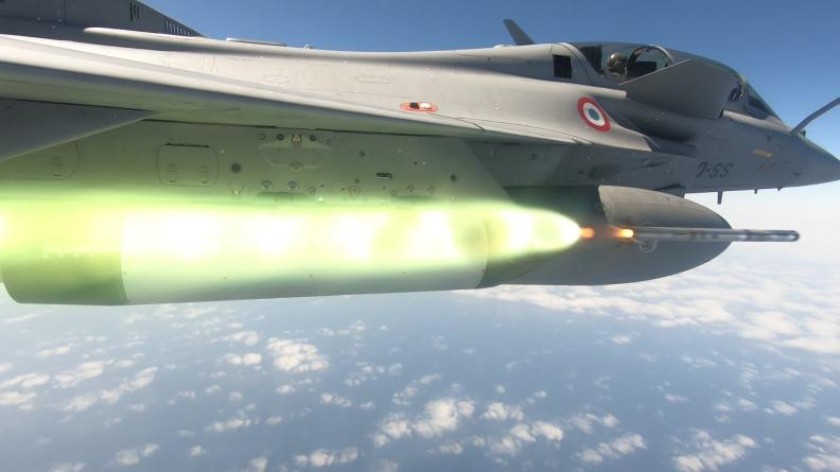
The programme is also moving forward on weapons integration. France has completed work to integrate a new 68 mm guided rocket with the Rafale.
France’s Directorate General of Armaments, or DGA, said testing and trials were completed on 7 July. The project began on 31 December 2025 and was carried out with Dassault Aviation and Thales.
The weapon is intended to engage long-range loitering munitions and unmanned aerial vehicles. Its integration adds another option for countering lower-cost airborne threats.
The 68 mm guided rocket is also cheaper than weapons currently used against more advanced targets at short and medium ranges. That gives Rafale operators a lower-cost engagement option for missions where more expensive munitions may not be required.
For Dassault, the first-half figures point to a combination of higher planned deliveries and a large existing order book. At the same time, the new weapon broadens the Rafale’s role in counter-drone operations while further export discussions remain under way.